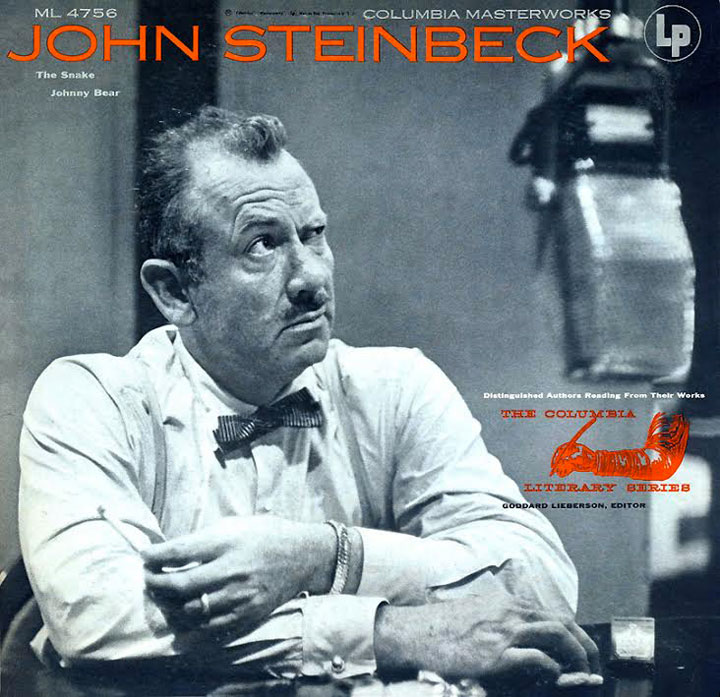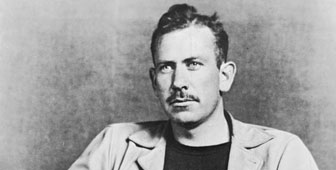
Some Walls Are Built as Bridges: San Jose State University Celebrates John Steinbeck and Civil Rights

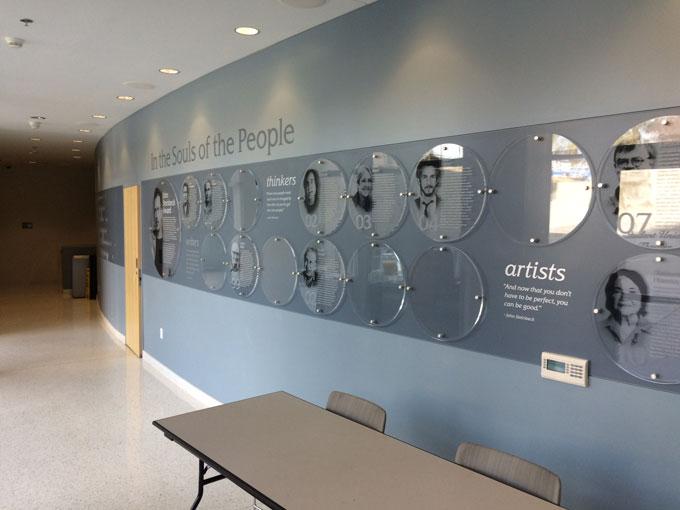
Image of John Steinbeck award wall at San Jose State University

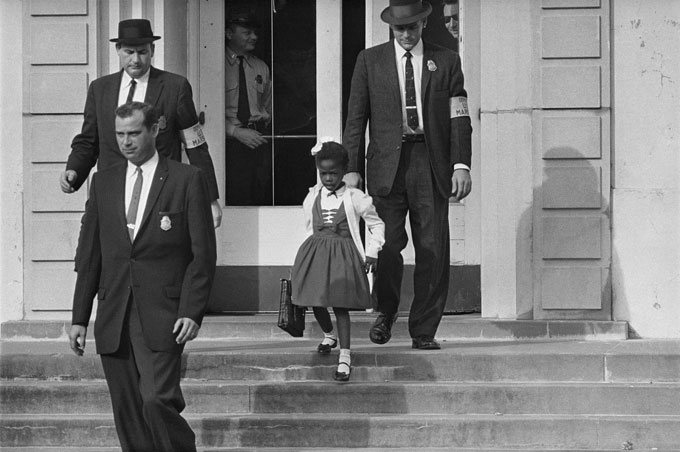
Some walls separate. Others connect. Admirers at San Jose State University have built a handsome wall to commemorate John Steinbeck’s enduring connection with social justice and civil rights, a tie that is celebrated in the John Steinbeck “In the souls of people” Award, given 15 times since 1996 to artists, actors, writers, and activists whose work involves social change. The award ceremony is always a happy occasion, and the February 24 event honoring civil rights leader Ruby Bridges, the brave little schoolgirl described in Travels with Charley, was no exception.

The John Steinbeck award ceremony is always a happy occasion, and the February 24 event honoring Ruby Bridges, the brave little schoolgirl described in Travels with Charley, was no exception.

The Steinbeck award commemorative wall was created by the San Jose University Student Union and is located in the busy student activity building where most award events are held. Explains Nick Taylor, director of the Martha Heasley Cox Center for Steinbeck Studies at San Jose State University, “The wall consists of a series of disks tracing the timeline of the Steinbeck Award, with background on the rationale for each selection and a few details about each ceremony.” The California civil rights leader Dolores Huerta, an advocate for farm workers’ rights, is a past recipient. Bruce Springsteen received the first award in 1996.

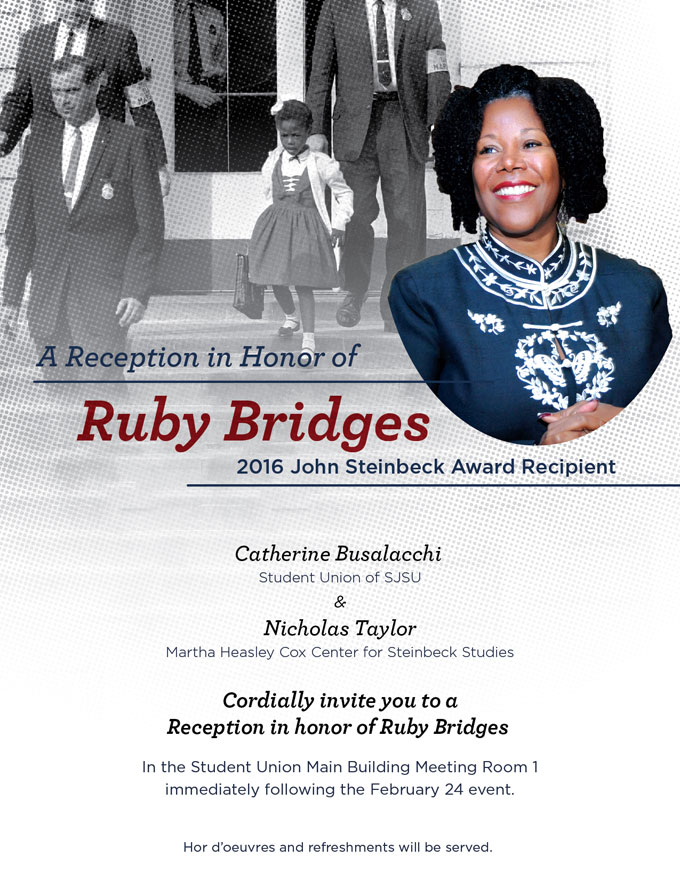
Image of February 24, 2016 John Steinbeck award event announcement

Jim Kent, a member of the John Steinbeck center’s advisory board, traveled to San Jose from Denver for the February 24 event. “As a fan of Travels with Charley,” he said, “I was thrilled to meet the young lady Steinbeck observed as she braved white hecklers during the integration of the New Orleans elementary school where she was the first black student, back in 1960.” A social ecologist who uses Steinbeck in his work empowering citizens to control their own environments, Kent was helping to write federal legislation for Lyndon Johnson’s War on Poverty when the Civil Rights Act of 1965—which owed much to writers like John Steinbeck—passed Congress. “Ruby Bridges was the perfect choice for this year’s award,” he added. “Like Steinbeck, she is a master storyteller. She attracted a capacity crowd made up of all ages and races, and her elegance inspired five standing ovations. There’s clearly a hunger for continued engagement with civil rights in our time. This was proof.”

Notes from a Broken Nation: Carmel, California’s Michael Katakis Shatters the Myth of American Exceptionalism

Cover image from "A Thousand Shards of Glass," by Michael Katakis

Good news from Down Under. A Thousand Shards of Glass, a collection of essays, letters, and journal entries by the travel writer-photographer Michael Katakis, has been published in paperback and eBook by The Author People, an Australian outfit with a pioneering approach to book publishing. Founded in 2015 by Lou Johnson and Tom Galletta, the firm is dedicated to connecting authors with their audiences, wherever they may be around the world.

The most recent collection of essays, letters, and journal entries by the travel writer-photographer Michael Katakis has been published in paperback and eBook by The Author People, an Australian outfit with a pioneering approach to book publishing.

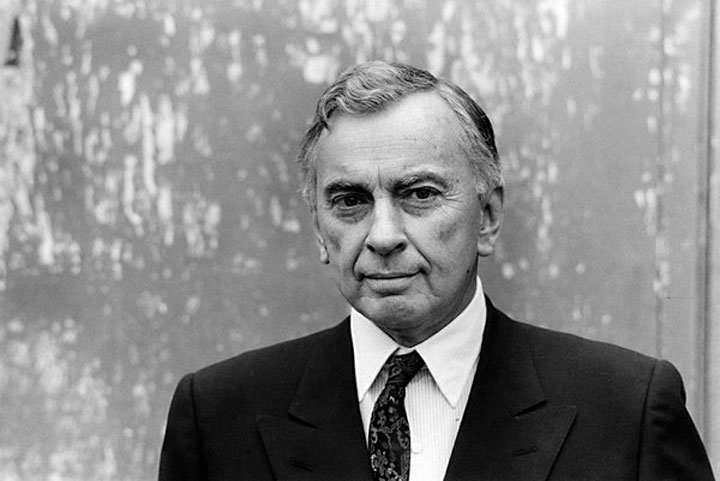
I first read A Thousand Shards of Glass in 2014, the year Simon & Schuster released a hardback edition of the book in Australia and the United Kingdom while ignoring its intended market—the United States. Since then, I’ve met Michael Katakis in Carmel, California, his part-time home, and I admire his perceptiveness as a thinker, writer, and photographer. Like John Steinbeck and Ernest Hemingway, he’s an American author with a distinctive point of view, writing for a country described by Gore Vidal as “the United States of Amnesia.”

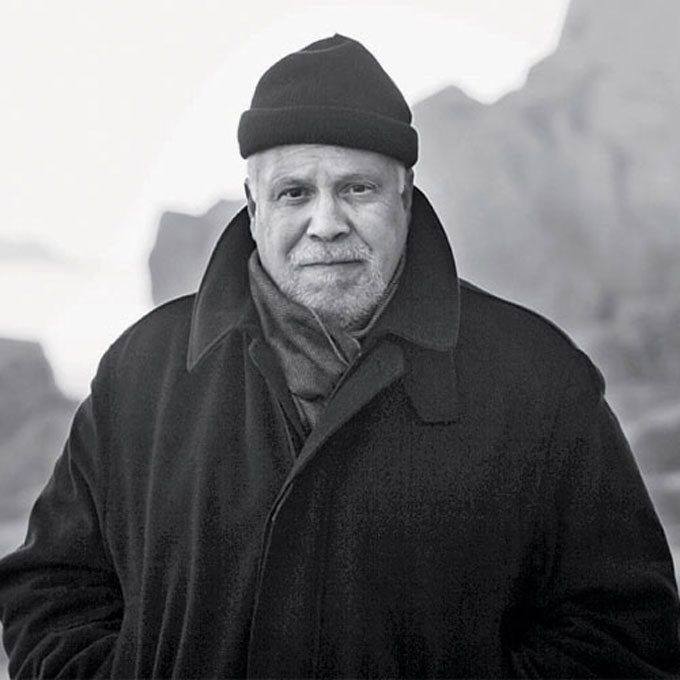
Image of Michael Katakis

Steinbeck, Hemingway, and Vidal come up frequently in conversation with Katakis, an imposing figure with a similar intensity. In his talk, as in his career, his range of knowledge and engagement is impressive. He’s the manager of Hemingway’s literary estate, and an expert on the author. He knows much (but, diplomatically, says little) about Carmel, California, a place Steinbeck once characterized as a haven for hacks. During a chance meeting with Vidal in Los Angeles when Katakis was a warm-up singer for the Herb Alpert band, the young musician felt his life change, and he became a photographer and writer with a Vidalian urge to explore, and to question.

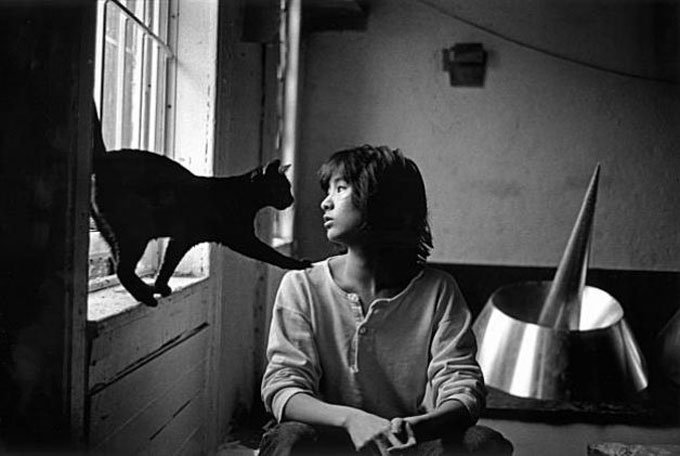
Katakis’s famous photo of Maya Lin, the artist of the Vietnam Veterans Memorial, became contentious when he challenged an act of censorship by the National Portrait Gallery and asked for the picture’s return.

His famous photo of Maya Lin, the artist of the Vietnam Veterans Memorial, became contentious when he challenged an act of censorship by the National Portrait Gallery and asked for the picture’s return. His books include Photographs and Words with Dr. Kris Harden, co-authored with his late wife, a beloved anthropologist and ideal life-mate. Traveller: Observations from an American in Exile, published in 2009, has a foreword by Michael Palin, a fellow traveler and friend.

Image of Maya Lin by Michael Katakis

Like Vidal, Katakis thinks that the myth of American exceptionalism is not only foolish, but dangerous. Like Vidal, he favors living abroad and seeing Americans as others see us: self-involved but unreflective; self-righteous, but also hypocritical; militantly religious and religiously militant; obsessed by money and addicted to oil; shrewd in deal-making, yes, but easily duped by flag-pin politicians.

Like The Grapes of Wrath, Katakis’s book telegraphs its message through the metaphor contained in its title.

Like a Hemingway novel that anchors the ideas expressed in experience, A Thousand Shards of Glass consists of a series of episodes—9/11, Kris’s death, meeting Gore Vidal—described in short sentences and simple words to convey their meaning. Like The Grapes of Wrath, Katakis’s book telegraphs its message through the metaphor contained in its title. As the author explained it to an Australian interviewer in 2014, “In order to understand America one must realize that it is not a country, it’s a store where everything is for sale, every principle, ethic and friend.” The job of a serious writer, then—like that of the photojournalist—is to reveal the face under the makeup, the reality behind the myth.

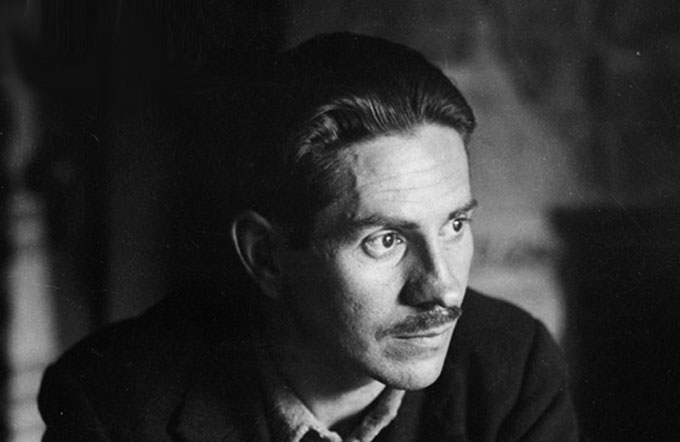
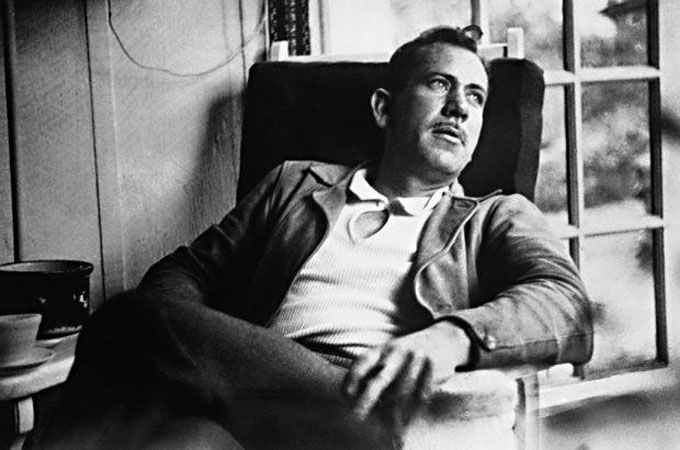
Image of John Steinbeck

Katakis’s picture of America, like Steinbeck’s, isn’t always pretty. Kris, diagnosed with a brain tumor in the prime of life, becomes a tragic victim of the pre-Obama American health care horror show. Vidal is first encountered on a TV set decades earlier, talking with Eugene McCarthy about America’s disastrous involvement in Vietnam. Since then the US has doubled down, a nation of true believers where (to paraphrase Christopher Hitchens) religion ruins everything and (Vidal again) history teaches nothing. Clint Eastwood, the former mayor of Carmel, California, insults an empty chair at the 2012 Republican convention, an embarrassment Katakis recalls when he passes Eastwood in a hospital hallway.

Like a Hemingway novel that anchors the ideas expressed in experience, A Thousand Shards of Glass consists of a series of episodes described in short sentences and simple words to convey their meaning.

Bush’s phony Iraq war is fought in the name of Americans by 1% of the population living at the opposite end of the economic spectrum from Wall Street’s 1%. Hitchens, a guiding light to Katakis, loses his luster after 9/11, buying into Bush’s war in the Middle East for reasons Katakis ascribes to Hitchens’s upbringing as the son of a World War II vet. Katakis’s journal entry on 9/11 begins “. . . today hard terrorism hit soft terrorism.” Another, written four years later, describes Bush’s Rasputin, Karl Rove, dancing at a White House Correspondents’ dinner to the delight of reporters who are still high on the Bush & Company cool aid. Eventually, even the Beltway woke up and smelled the coffee, but Karl Rove’s victory dance is a useful reminder of how madness overtook America before Iraq imploded and sobriety set in.

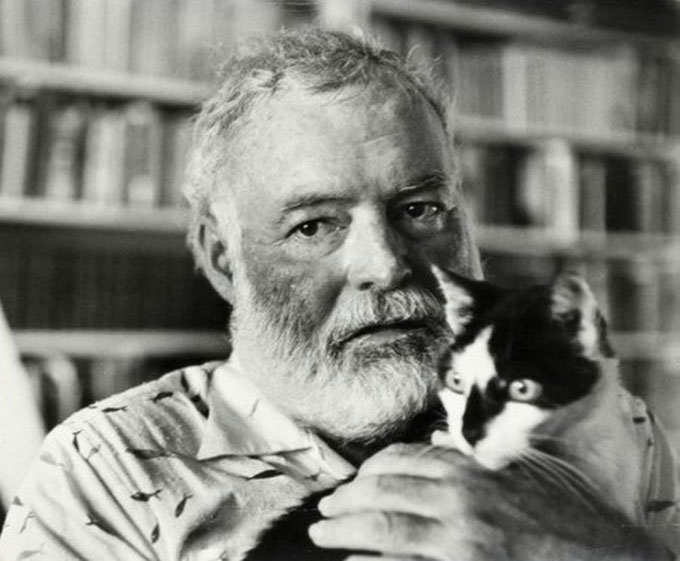
Image of Ernest Hemingway

Which raises the challenge posed by the book: do Americans never learn? Katakis explores the problem of American amnesia with people he meets in London, Paris, and Italy; like Hemingway and Vidal, he has perfect pitch in conversation, and he records what others say us with an infallible ear. His diagnosis of America’s mania for guns is framed by a fraught encounter with a woman from Eastern Europe, in London, following the Newton, Connecticut school shooting. “I think we Americans are afraid of each other, of everything,” he explains, despite “the fictional narrative of America that we have been selling for some time now.”

Quoting Hemingway, Katakis compares the global dominance of America’s ‘consumer corporate state’ with Britain’s East India Company two centuries ago—an undertaking of naked power wearing the fig leaf of moral righteousness.

Savoring Paris as Hemingway did decades earlier, he celebrates “the poetry of living” encountered abroad, the daily joie de vivre Americans have lost in “our obsession with our devices.” Quoting Hemingway, he compares the global dominance of America’s “consumer corporate state” with Britain’s East India Company two centuries ago—an undertaking of naked power wearing the fig leaf of righteousness. He and Kris move to Europe to protest Bush’s war, and to enjoy the poetry of living now lost in America, “the land of lists.” Their idyllic life abroad is interrupted by her father’s death; her diagnosis prevents their return. Numbed by her death, Katakis writes, “I have come to know that most Americans are sleepwalking.”

Image of Gore Vidal

Like Vidal and Hitchens, Katakis is hard not to quote, and A Thousand Shards of Glass contains equally memorable sentences in abundance. So does a conversation with Katakis, as I learned over lunch in Carmel, California late last year, when I asked him if he thought the Bernie Sanders insurgency showed that Americans are finally waking up. He said yes, repeating the comment, quoted earlier, that he made to the Australian interviewer about America’s self-illusion in 2014. When his wife died he lost the “true north” in his life, but he’s getting his bearings again, and a note of hope for an awakening has emerged in his writing.

Cover image from "Why Orwell Matters," by Christopher Hitchens

Fans of Hemingway, Steinbeck, Orwell, Vidal, and Hitchens—the bright constellation in Katakis’s dark sky—will delight in his references and allusions to their writing in A Thousand Shard of Glass. Bernie Sanders supporters will discover that, on almost every issue, Katakis was there first, before the presidential campaign brought American exceptionalism into question on problems of foreign and domestic policy. In response to my followup question about presidential politics before writing this review, Katakis said this:

I have often wondered what it means to be moral or how to live an ethical life in accelerated and morally ambiguous times which have seemingly allowed for rationalizations of thoughts and conduct by individuals and institutions, that just a short time ago, would have been considered unacceptable and injurious to the common good. Marcus Aurelius wrote that “the soul becomes dyed with the color of it’s thoughts,” suggesting one of the steps toward morality was the self control of our darker selves. Gore Vidal wrote that ‘we’ Americans, ” learn nothing because we remember nothing.” That is painfully demonstrated by any objective observer watching the 2016 Republican presidential primary. We have lost our way. If we remembered our own history, we would hear in the voice of Donald Trump, and his supporters, the voices of Father Coughlin and Senator Joseph McCarthy. They would hear the fear mongering and the insults that have been the tried and true tactic of scoundrels who have never offered anything but a scorched earth.  But we Americans, in our ignorance and conceit, do not know our history and, as a collective, are not a good people. To those dark voices among us I can think of no more eloquent response than that of Mr. Joseph Welch to Senator Joseph McCarthy on June 9, 1954: “You have done enough. Have you no sense of decency sir? At long last, have you left no sense of decency?”

John Steinbeck invited his readers to participate in his fiction. Overhearing Gore Vidal changed Michael Katakis, helping him to become a writer. Participate in the result of that inspiration by reading A  Thousand Shards of Glass. You’ll change, too.

Santa Clara, California Drops The Ball on John Steinbeck And Dorothea Lange

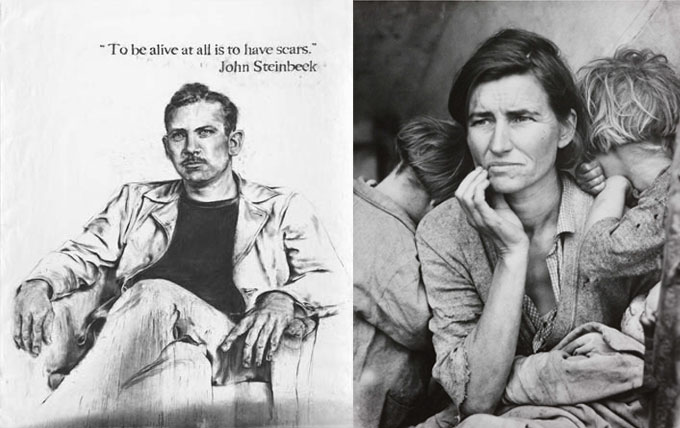
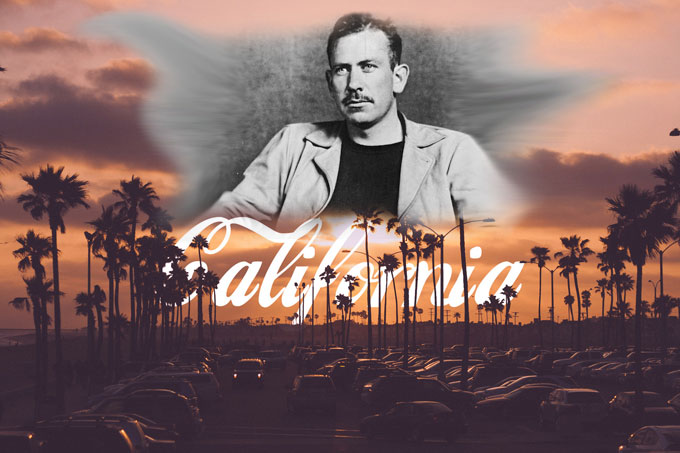
Composite image of John Steinbeck's portrait and Dorothea Lange's "Migrant Mother"

John Steinbeck knew Dorothea Lange, the iconic Depression-Era photographer who documented the plight of itinerant farm workers like Steinbeck’s Joads, and Lange’s images illustrated the cover of Their Blood Is Strong, the collection of columns Steinbeck wrote about migrants in the run-up to The Grapes of Wrath. Eighty years later, Lange and Steinbeck have come together again in an unlikely place—the art collection on display at Levi’s Stadium, the $1 billion facility built recently in Santa Clara, California for the San Francisco 49ers football team. The irony of exhibiting Steinbeck’s portrait and Lange’s “Migrant Mothers” on the walls of a publicly subsidized sports palace seems lost upon the team’s owners and Santa Clara’s mayor, who resigned on February 9, hours after the 2016 Super Bowl was played at Levi’s Stadium.

Image of Levi's Stadium in Santa Clara, California

The journalist Gabriel Thompson, a Steinbeck Fellow at San Jose State University, writes eloquently about the history of community organizing, and about today’s low-wage economy. An email he sent last week noted the jarring juxtaposition of Steinbeck and Lange with big-money sports on the walls of Levi’s Stadium, and it provided a link to the investigative piece he wrote for Slate about working as a food server during the Super Bowl. “The portrait hangs directly across from the office of the food service contractor that operates at Levi’s,” he said, adding that Lange’s “Migrant Mother” (originally titled “Pea Pickers”) is also on display. He included a link to a stadium PR story that makes this pitch for buying a box seat:

Gather 19 of your closest friends and rent a suite that gives you and your crew premium parking right next to the stadium, entry to Michael Mina’s Tailgate, upscale catering with an in-suite food and beverage credit, and access to the Trophy Club, where you’ll receive a complimentary glass of champagne and appetizers upon arrival. The suites are outfitted with comfy leather theater-style seats, Internet access and plenty of flat screen monitors to ensure you don’t miss any of the action. Prices vary by game but expect to shell out between $20,000 and $40,000 for the ultimate in VIP hospitality.

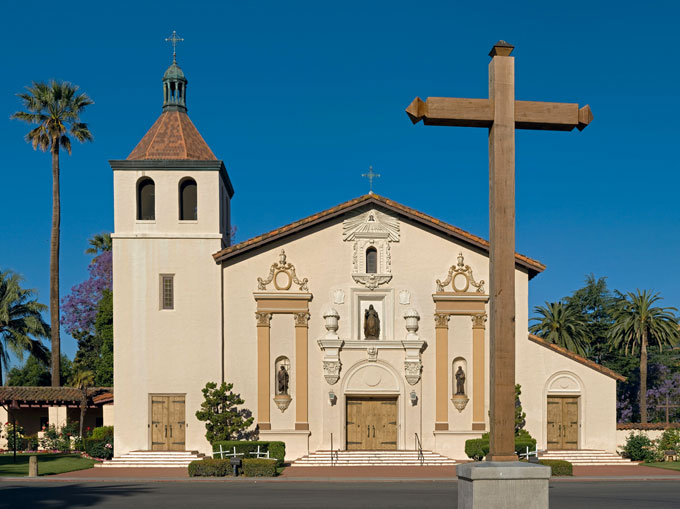
Image of Mission Santa Clara in Santa Clara, California

John Steinbeck, a critic of conspicuous consumption, celebrated common men and women in his writing. During college he worked for the Spreckels sugar company, which operated ranches in the rich agricultural area between King City and Santa Clara, California, south of San Francisco. Later, Santa Clara’s fragrant orchards gave way to development; today the city of 110,000 is home to tech giants including Intel, along with Santa Clara University, where a center for business ethics fronts a quiet entrance plaza anchored by the Mission Santa Clara church. Levi’s Stadium is across town, on land provided by the city not far from Intel and Mission College, a public institution. A local referendum to stop the San Francisco 49ers project failed, following a massive media and mail campaign and heavy lobbying by city leaders. According to news sources, controversy surrounding lost soccer fields—and suspicious side deals—continues to dog Santa Clara officials who went to bat for the project.

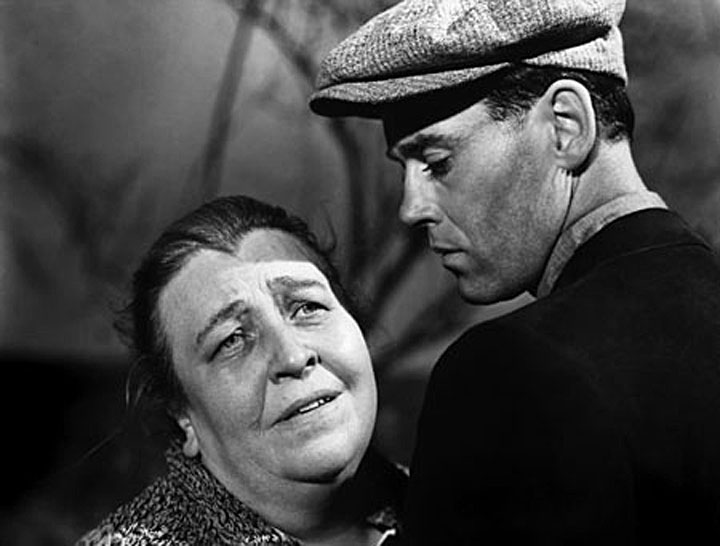
Image of Ma and Tom Joad from The Grapes of Wrath

Steinbeck would recognize the present problem with Santa Clara. He wasn’t much of a sports fan, or civic booster, and his father became treasurer of Monterey County after the incumbent embezzled public funds. Today, Santa Clara residents are scratching their heads over the sudden resignation of their mayor, a former code-enforcement officer—an act, according to San Jose Mercury News columnist Scott Herhold, that disqualifies the ex-mayor from further office, “including secretary of his homeowners’ association.” According to the paper, the three women on the seven-member Santa Clara city council are asking hard questions about Levi’s Stadium, and the Hispanic city manager is complaining about racial discrimination.

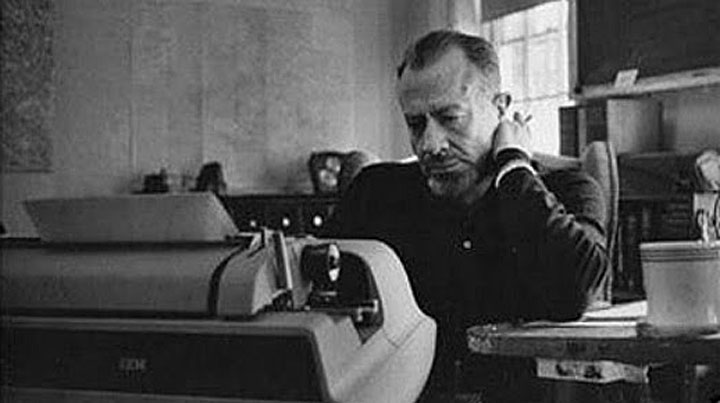
Photographic image of John Steinbeck at work

Steinbeck would also recognize the unintentional irony—and the awful syntax—in another assertion, pulled from the PR piece quoted earlier, about the costly amenities at Levi’s Stadium:

Being that this stadium is located in the most-cultured half of California, an emphasis on art is a given. Spread throughout the elite Citrix Owners Club, the Brocade Club, BNY Mellon Club East and West and SAP Tower of suites, this collection, curated by Sports and The Arts specifically for Levi’s Stadium, is comprised of over 200 pieces of original artwork and 500 photographs that celebrate the history of the San Francisco 49ers as well as California’s stunning landscape. You’ll find charcoal sketches of notable figures such as John Steinbeck and Jack Kerouac as well as timeless psychedelics of the storied Fillmore made famous by Bill Graham. However, the portraits stadium-goers still pose next to the most are those of Joe Montana throwing to Jerry Rice and current quarterback Colin Kaepernick on the run.

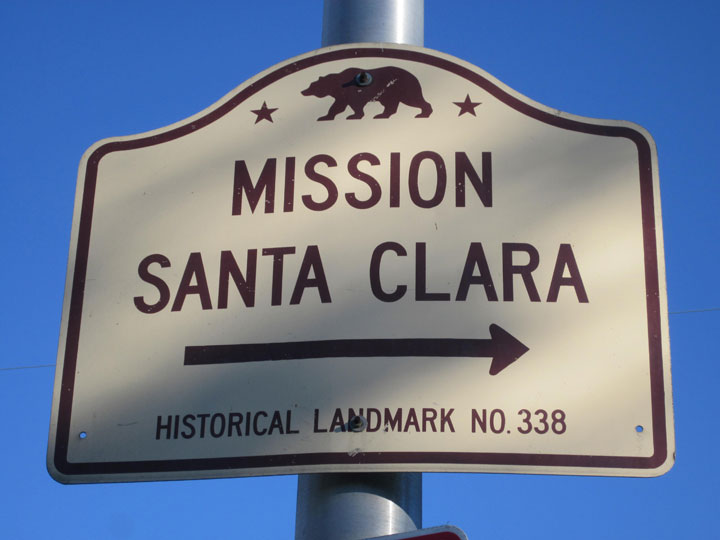
Image of Mission Santa Clara sign in Santa Clara, California

When the city of Salinas wanted to name a school or library for John Steinbeck, he suggested choosing a bowling alley (or whorehouse) instead. For followers of the Levi’s Stadium story from Salinas and Monterey, there’s an upside to Santa Clara’s cluelessness about Steinbeck: Cannery Row may be tacky, and the National Steinbeck Center needs money, but neither place violates the spirit of John Steinbeck and Dorothea Lange like the San Francisco 49ers’ opulent new home in Santa Clara, California, where Steinbeck and Lange hang within view of noshing VIPs, high above ordinary football fans who can’t afford a five-figure seat.

Photo of Levi’s Stadium in Santa Clara, California by Michael Fiola (Reuters).

John Steinbeck’s Monterey, California: The Way It Was

Image of John Steinbeck and Monterey, California

I was surprised when my friends Matt and Vivian told me about a silk opera cape that John Steinbeck wore long ago to a posh cocktail party in Pebble Beach. I didn’t doubt them (I knew them too well for that), but really—an opera cape with a red lining? It happened when they were visiting me at home during the time I lived in Monterey, California. Vivian noticed a book by Steinbeck on my writing table.

“Oh, we know him,” Vivian said, explaining how she and her husband Matt had catered the Pebble Beach affair, and how John sat alone in the corner at the party wearing a cape. “Anyone who wanted his attention had to go to him,” she added. “I thought he was being a snob. But when the party wound down he got up and spoke.”

Steinbeck said, “I’ve seen your side of the hill,” recalled Vivian. “Now who wants to see how the rest of the world lives?”

“And so off we went to Steinbeck’s house in Pacific Grove,” Vivian added, “where he showed us how to drink wine out of a gallon jug you propped on your shoulder.”

Listening to the story, I felt sure Steinbeck was giving the Pebble Beach crowd a two-fingered salute that night long ago. But I was left wondering about the cape, which seemed out of character for the writer. Years later I read a letter from Steinbeck to his soon-to-be second wife, Gwendolyn Conger, describing how a group of kids in Pacific Grove appeared at a neighborhood party dressed in capes. He said he thought it might be amusing if he were to venture out wearing one, too. Eventually he did. Mystery solved.

Image of George Harrison

Celebrities Pass Through and Come Calling in Monterey

The more I think about my life surrounded by artists on Huckleberry Hill—a hill overlooking Pacific Grove and Monterey, California—the more I regret not asking more questions and listening to more stories about John Steinbeck during the 1930s and 40s. Years later, during my time there, celebrities who today would be followed by a gaggle of fans and reporters managed to live, work, and visit in peace. Famous writers in the region’s rich history included John Steinbeck, Robinson Jeffers, Dennis Murphy (the son of a childhood friend of Steinbeck’s), Eric Barker, and Hunter S. Thompson.

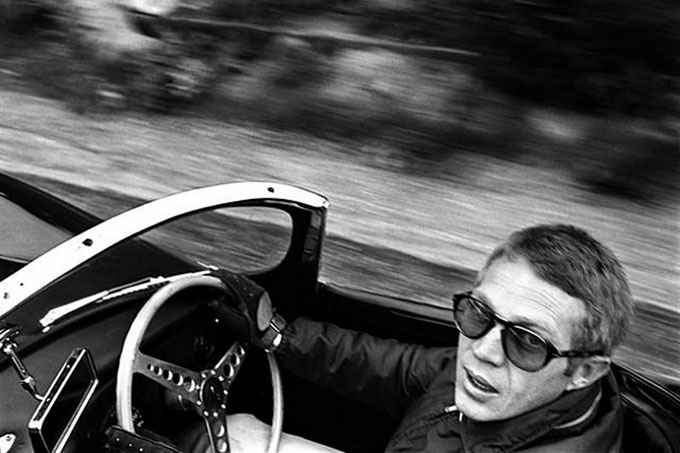
Image of Steve McQueen

Among the motion picture stars who came to town were Marlon Brando, Steve McQueen, Shirley Temple Black, Doris Day, Bing Crosby, Joan Fontaine, Clark Gable, Kim Novak, and Frank Sinatra. Singers, too: Bobby Dylan and Joan Baez. Artists galore: Bruce and Jean Ariss, Ephraim Doner, Liza Wurtzman, John Steinbeck’s portraitist Barbara Stevenson Graham, who painted under the nom de plume Judith Deim. The art collector Bill Pearson, who owned a gallery in New Monterey, plus a flock of colorful cartoonists: Eldon Dedini, Hank Ketcham, and Gus Arriola. Photographers, some famous—Ansel Adams Edward Weston, Imogen Cunningham—and others less well known: Morley Baer, John Livingston, Al Weber, Brett Cole, and Ruth Bernhard. Lesser literary lights called Monterey or Pacific Grove home as well: Ward Moore and Milton Mayer and Winston Elstob and Martin Flavin and Bob Bradford and Lester Gorn, to name a few.

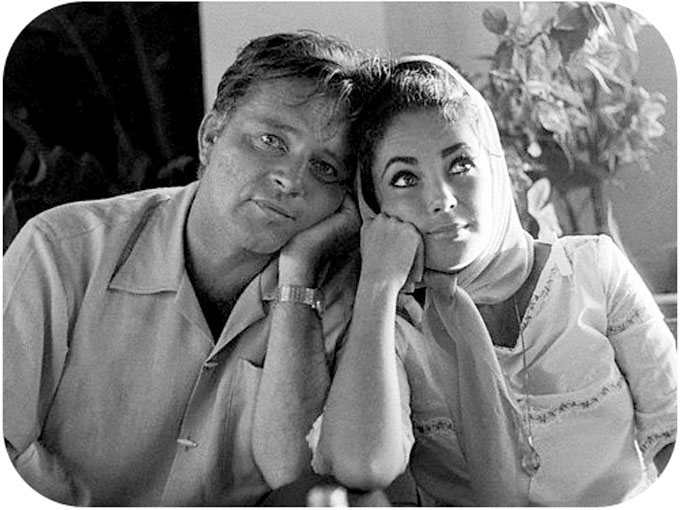
Image of Richard Burton and Elizabeth Taylor

For the most part, prominent residents and visiting celebrities alike were treated by the denizens of Pacific Grove and Monterey, California, as friends or neighbors or passers-by who deserved privacy, like everyone else. Alcohol was often in evidence, and it was tolerated, even in formerly-dry Pacific Grove. Before my time the poet Dylan Thomas had passed through, driven by a wealthy woman from Berkeley in a yellow convertible. I was there when Liz Taylor and Richard Burton drank and argued and threw martini glasses at one other in a local bar. The racing driver Augie Pabst drove a car into a downtown motel swimming pool. Harold Maine, the author, visited a friend and drank all the aftershave in the bathroom. At the pub I owned in Monterey, Kenneth Rexroth leaned over and whispered, for my ears only: “I write poetry to fuck girls.” During the 1967 Monterey Pop Festival virtually every important rock musician in America paraded through my doors. The great jazz monologist Lord Buckley (“The Naz”) crashed one of my parties and gave a fireside performance that lasted well past dawn.

Image of Janis Joplin and the Holding Company

When a very young Diana Ross came to my bar, the Bull’s Eye Tavern, with the Supremes, a pub patron helpfully pointed out that they might not be of drinking age. I just shrugged. I figured that if I got tagged for serving these minors, the publicity would be worth a fortune. When Janis Joplin and Big Brother and the Holding Company hit town, they parked their canary-yellow Ford Anglia outside the Bull’s Eye and came in to drink, play darts, and play music. (Better music than darts, as I recall.) To me, it was clear from the size and condition of the car they left at the curb why Janis sang “Oh Lord, won’t you buy me a Mercedes Benz?”

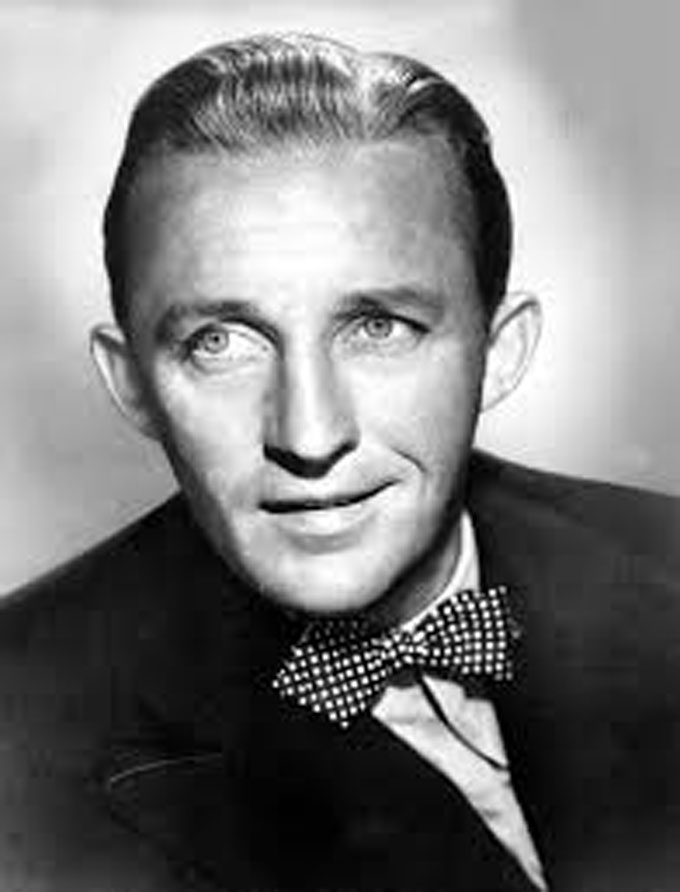
Image of Bing Crosy

Singers, Gangsters, and Royalty—All in Town for Fun

The Duke and Duchess of Windsor once stood six feet from me, gazing down at a flower garden I was constructing at a home in Pebble Beach. We exchanged smiles, as I was to do on a different occasion looking into the face of an aged and wrinkled Clark Gable. Bing Crosby saw me one afternoon and mistook me for his son. “Gary! What in the hell are you doing there?” he shouted in my direction. At the time I thought he had a vision problem, though it seems the problem may have had more to do with drink, as the man was rarely sober. He owned a house in the area that served as a party retreat for his boys. One day a young soldier from Fort Ord appeared at the Polygon Bookshop on Cannery Row. Leafing through a book of photos by Ansel Adams, he said wanted to be a photographer and would give his right arm to meet Adams. Winston Elstob, the writer who co-owned the Polygon with Jim Campbell, picked up the phone and dialed Ansel’s number. Within 30 minutes Adams arrived at the bookshop in his old blue Cadillac and spent an hour or more talking with the lad.

Image of Joan Baez and Bob Dylan

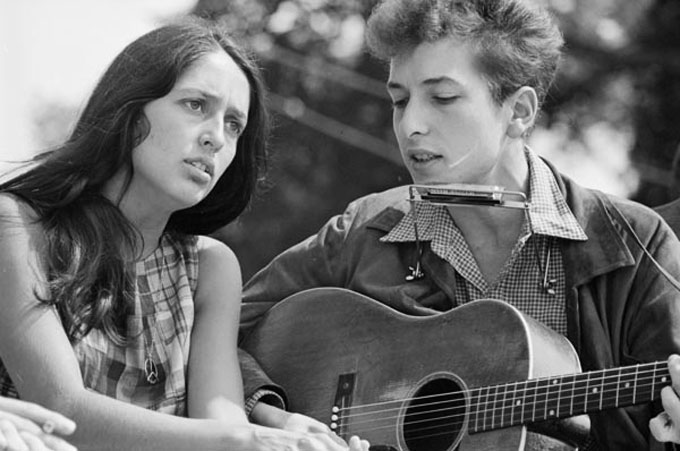
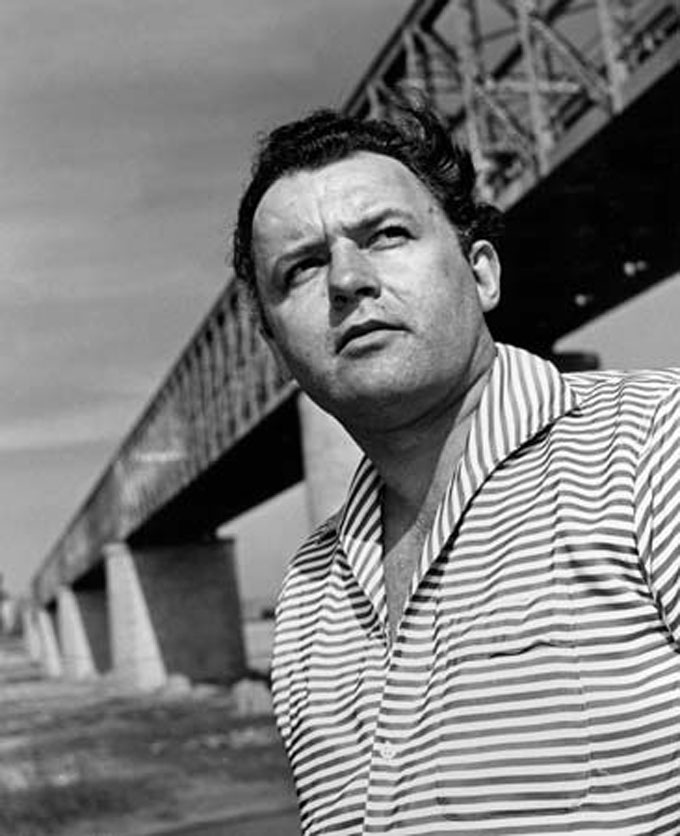
Cannery Row was a Monterey magnet, then as now. One evening I dropped into a coffeehouse bar where Bobby Dylan and Joan Baez, along with Richard Farina and Joan’s sisters Pauline and Mimi, sat in a corner singing quietly, playing guitars, and plucking a dulcimer. Los Angeles, a day’s drive, was a draw for locals like me—and vice versa. While visiting friends there, I met a screenwriter named Lionel Oley. Liking what I had to say about life in Monterey, he immediately moved north to join the Monterey-Pacific Grove fun. I located a rental house for him around the corner from mine on Huckleberry Hill, and his boyhood friend Rod Steiger often visited. After returning to Los Angeles from one trip to Monterey, Steiger observed that it never rained in LA, then took off his trench coat and handed it to me.

Image of Rod Steiger

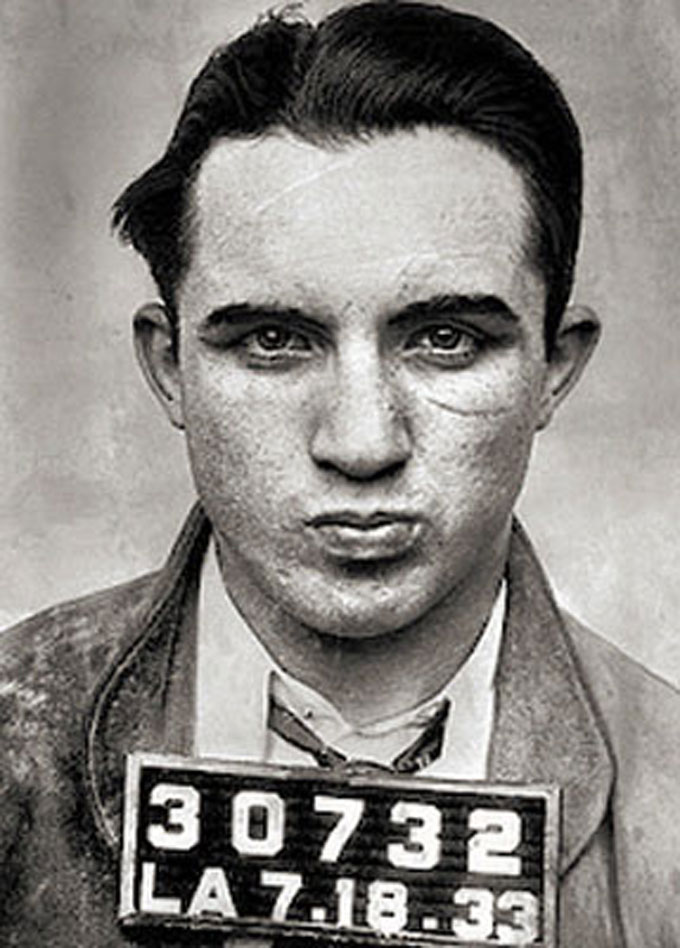
Lionel’s girlfriend moved up to Monterey as well, bringing with her a friend who was the mistress of the gangster Mickey Cohen. Mickey became a frequent caller, driving up from Los Angeles in his big bullet-proof car. The attractive business card he handed me identified him as the proprietor of a Los Angeles ice cream parlor. It was difficult going anywhere with Mickey because he would spend half an hour or more obsessively washing his hands, then go back inside to the bathroom to wash them again. Knowing his violent past, I was sure he was scrubbing away imaginary blood. One time, sitting in the back of Mickey’s car, the girlfriend rubbed her palm across the thick glass window and said, “I wish someone would start shooting so we could see if this damned stuff works.” Mickey shuddered visibly.

Image of Mickey Cohen

When Living in Monterey Was Like a Motion Picture

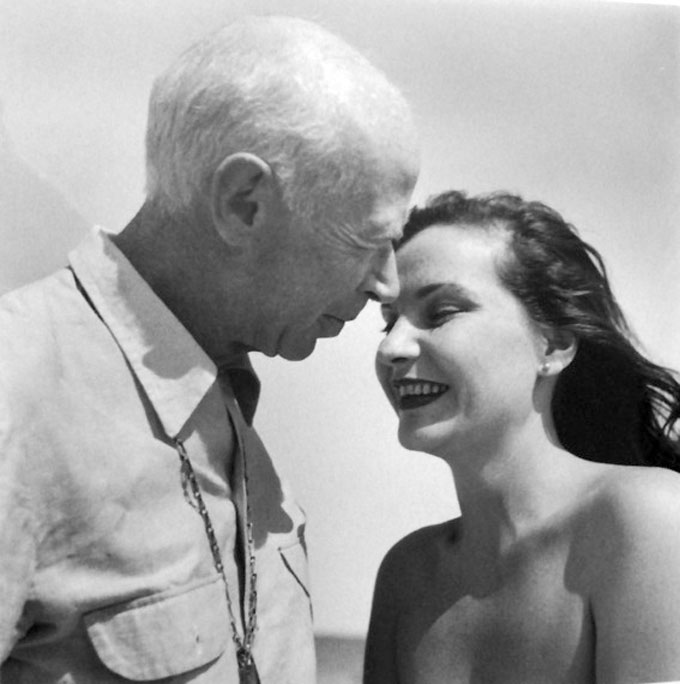
John Steinbeck’s Big Sur, down the coast from Pacific Grove and Monterey, California, was a powerful lure for writers and artists. The author Henry Miller, Big Sur’s genius loci, would sit on his sofa opening a large mailbag delivered to his mailbox at the foot of Partington, his wife Eve at his side, putting the letters with money into one pile and those without cash in another. The wonderful English poet Eric Barker lived nearby in a house on a cliff overlooking the ocean.

Image of Henry Miller and Eve
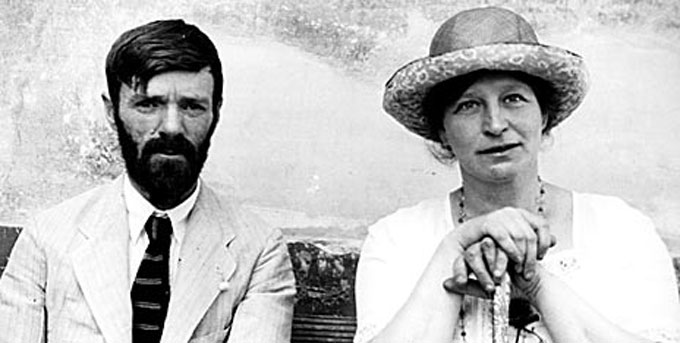
I was writing, too. One day a man named Roland—a friend of my friends, the artists Bruce and Jean Ariss—approached me at Big Sur’s legendary Deetjen’s inn holding a photograph album. Years earlier he had lived in Taos, New Mexico, near D.H. Lawrence and Lawrence’s wife Frieda. He asked if I would I help him write a book about the experience, showing me photos taken in the late 1920s that included one of Frieda mounted on a horse, looking quite large. I said yes, and we agreed to meet at my house on Huckleberry Hill the next day to get started.  Alas, poor Roland never arrived: he died of a heart attack that night.

Image of D.H. Lawrence wife wife Frieda

Motion picture people were attracted to the Monterey area for obvious reasons. During my time, a would-be actor named Ron Joy lived next door to my neighbor Lionel. Bucking the northbound trend, Ron headed south to Hollywood, where he failed as an actor but eventually achieved success as a movie magazine photographer. After getting engaged to Nancy Sinatra, he drove her up to Monterey in his little red MG roadster. If you’ve ever ridden 400 miles up and 400 miles down Highway 1 in the bucket seat of an MG, you, too, will understand why she stutters and looks so jumpy in her movies. I had a house party one night, and somehow Ingrid Bergman’s daughter Pia Lindstrom and a girlfriend from Sweden heard about it. They were staying at a Monterey motel and took a cab to my home, where they arrived unannounced and ended up spending the entire weekend. The Bull’s Eye Tavern prospered.

Image of Bull's Eye Tavern ad

After Playboy magazine published an item about the Bull’s Eye that said my pub was the only place to go in Monterey, George Harrison and Ringo Starr appeared one evening with an entourage that included Neil Aspinall, Mal Evans, and Derek Taylor. After I closed, I invited them all to my house, where George told me that the Beatles were history. “Listen again to ‘Here Comes the Sun,’” he confided. After returning to London, he made me an honorary member of the Apple Corps, and I still have the ceramic green apple broach George sent me to prove it.

Image of Clint Eastwood

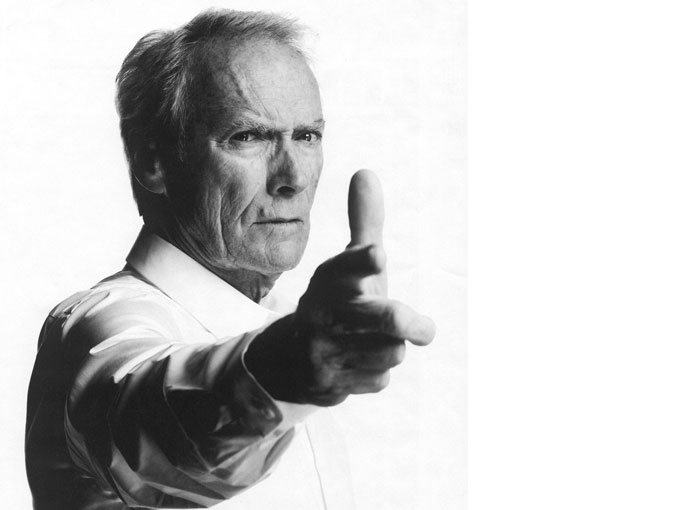
Carmel, south of Pacific Grove, has had its share of celebrities, too. The same week the Beatles came to my bar, Clint Eastwood—later the mayor of Carmel—walked into the Bull’s Eye with his friend, the golfer Ken Green. Even then, long before Dirty Harry, Clint was known to throw a punch at people with beards and long hair. “John,” he assured me, “I wouldn’t bust up your place. You’re a writer, and I respect that.” (Lucky me.) At a garden party in Carmel Highlands, the actor-screenwriter-producer John Nesbitt invited me to move to Los Angeles to work on his film series, The Passing Parade. Laughing, I said I wouldn’t give up a day in Monterey for a year in LA, even to work for him.

Image of Marilyn Monroe on location in Monterey, Calfornia

Because of its beauty and location, the Monterey-Pacific Grove-Carmel coast drew motion picture directors and stars almost from the beginning. When work was over, actors and writers sometimes stayed behind to live and play. During my years on Huckleberry Hill, it seemed that a picture was being shot every month somewhere between Monterey and Big Sur. If you were in the right place at the right time, there was a good chance of getting work as an extra, though a common complaint was that filming was one of the most boring jobs in the world. Shooting sometimes began before dawn and extended through the night. The tedious part for an extra was standing by as the director shot and re-shot the same scene—a little like Mickey Cohen, my gangster acquaintance, washing his hands while the rest of us waited.

Image of Frank Sinatra
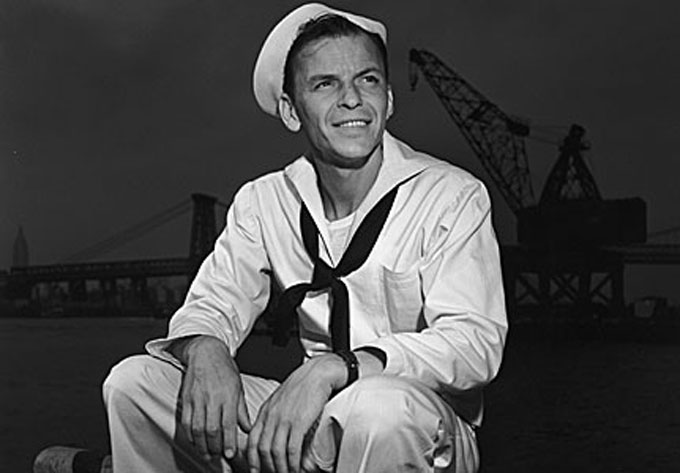
Inadvertently, I almost appeared in a scene from a motion picture called Kings Go Forth when I happened to be in Martin’s Fruit Stand on the Carmel Valley Highway as the crew was shooting in an orchard behind the store. Frank Sinatra sauntered over, dressed in an army uniform for the scene, to buy an apple. Thinking back recently to my encounter with Ol’ Blue Eyes, I found a website that lists hundreds of films made around Monterey, California. My memory was further refreshed by the Monterey County Film Commisssion’s map showing where specific scenes were shot.

Image of William Saroyan

John Steinbeck, Bill Saroyan, and the Company They Kept

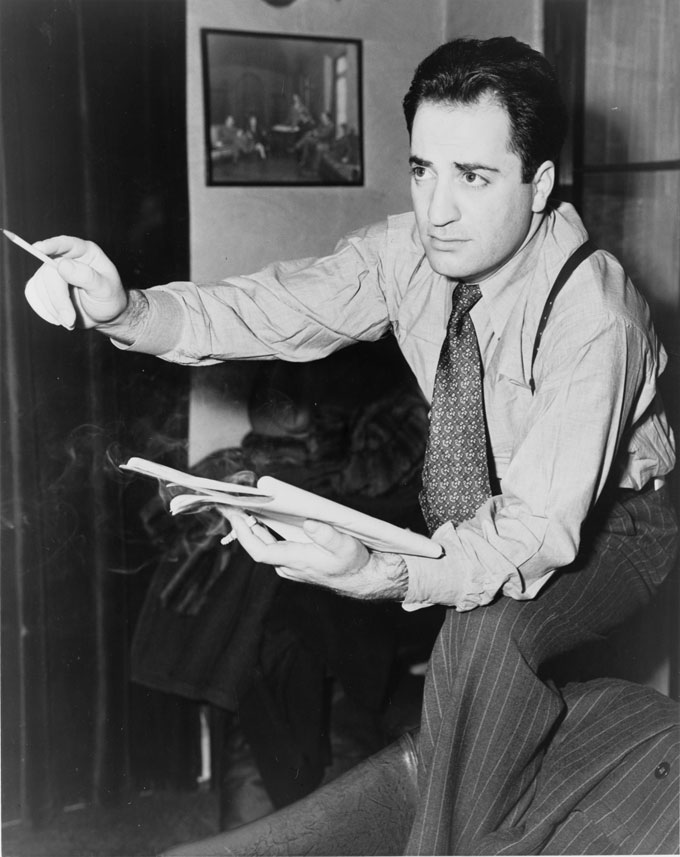
Like John Steinbeck, a handful of major writers, artists and actors of note lived in Monterey before they became famous. In Steinbeck’s era (and mine), the community offered kinship, support, and a quality of privacy that, for celebrities today, would require a wall and bodyguards to achieve. My home in Steinbeck’s old neighborhood and my pub downtown attracted an assortment of characters—famous, infamous, and struggling—not unlike Doc’s lab in Steinbeck’s day. We were all of us, in our own way, aiming for the top. Some succeeded and moved on, like Steinbeck. Others failed. I was among those who eventually left; though success spoiled Monterey for Steinbeck, my memories are mostly happy ones. If my friends Bruce and Jean Ariss were still alive, I’d talk with them about their friends Carol and John Steinbeck: about Ed Ricketts; about Steinbeck’s fellow California writer William Saroyan; about Burgess Meredith, Charlie Chaplin, and the composer John Cage, all friends of Steinbeck at one time or another. If I were rewriting the past and directing this particular picture, I’d get poor Roland to the Monterey hospital in time, and I’d add a scene for Roland to share his stories about D.H. and Frieda Lawrence in Taos—a place, like Monterey, where the stars shone brightly in a bygone era.

Ruby Bridges to Receive Steinbeck Award at San Jose State University, February 24

Image of Ruby Bridges

Near the end of Travels with Charley, John Steinbeck celebrates the inspiring courage of Ruby Bridges, the six-year-old schoolgirl who advanced the cause of civil rights by breaking the Southern segregation barrier at a New Orleans elementary school 56 years ago. San Jose State University will honor Bridges’s lasting contribution to civil rights on February 24 by conferring the Steinbeck “In the souls of the people” Award—a program of the school’s Martha Heasley Cox Center for Steinbeck Studies—on the 61-year-old author, activist, and advocate, who has been called the first foot soldier in the modern civil rights movement.

Image of Ruby Bridges in New Orleans, 1960

Steinbeck wrote Travels with Charley in sadness, and occasional shock, at the state of America in 1960, when he was 58, and he chose the South as the last stop on his journey of rediscovery and reconciliation because he recognized racism and civil rights as the fundamental conflict to be resolved if the country he loved was to survive. Watching grown white women curse the diminutive black girl entering William Frantz Elementary School in New Orleans turned his stomach, as it did Americans reading newspaper accounts of the widely reported event. Though Ruby Bridges isn’t identified by name, Travels with Charley captures her image, braving the kind of mob Steinbeck depicted better than anyone, like a contemporary news photograph:

The big marshals stood her on the curb and a jangle of jeering shrieks went up from behind the barricades. The little girl did not look at the howling crowd but from the side the whites of her eyes showed like those of a frightened fawn. The men turned her around like a doll, and then the strange procession moved up the broad walk toward the school, and the child was even more a mite because the men were so big. Then the girl made a curious hop, and I think I know what it was. I think in her whole life she had not gone ten steps without skipping, but now in the middle of her first skip the weight bore her down and her little round feet took measured, reluctant steps between the tall guards. Slowly they climbed the steps and entered the school.

Image of John Steinbeck

Thanks in part to Travels with Charley, Ruby Bridges became an icon of civil rights for succeeding generations—a platform she has used brilliantly as a writer and speaker to advance the values of tolerance, understanding, and equality embraced by Steinbeck in his time. “John Steinbeck expressed concern over an injustice and wrote sympathetically of me when I was a young girl,” she explains. “In a way, we’ve come full circle. I now get to honor him by receiving an award bearing his name. I’m so proud to be part of this.”

Ruby Bridges will speak and accept the Steinbeck Award a public event—“An Evening with Ruby Bridges”—beginning at 7:30 p.m. on February 24 in San Jose State University’s Student Union Theater on the school’s downtown San Jose, California campus. Tickets are available at the Event Center Box Office (408-924-6333) or at Ticketmaster.com.

Setting the Stage for John Steinbeck’s Grapes of Wrath: Richard Henry Dana at 200

Image of Moby Dick illustration by Rockwell Kent

Cover image from Two Years Before the MastRichard Henry Dana, Jr., the author of Two Years Before the Mast, was born 200 years ago in Massachusetts, the home of Dana’s famous Founding family, and of John Steinbeck’s paternal grandparents as well. Growing up, Steinbeck read Dana’s autobiographical account of life along the California coast in the early 19th century–as noted by the artist Tom Killion, the earliest writing, in English, that describes the California coast from the perspective of the sea. New England roots, adventure fiction, California coast: cause enough for Steinbeck fans to celebrate Richard Henry Dana’s bicentennial. But Two Years Before the Mast is also a masterpiece of social-protest literature, like The Grapes of Wrath, and helped set the stage for Steinbeck’s novel. Details of Dana’s life are worth mentioning in 2015, two centuries after his birth and 75 years since the appearance of The Grapes of Wrath. They connect Dana’s era and output with those of Steinbeck—and with the New England artist Rockwell Kent, who wrote popular books of travel, illustrated books by others (including Moby Dick, above), and espoused socialism, pacifism, and opposition to American foreign policy during Steinbeck’s lifetime.

Richard Henry Dana and the Power of Fiction to Change

Image of Richard Henry Dana, Jr., author of Two Years Before the MastBorn into a Boston Brahmin family of politically progressive lawyers, writers, and legislators, Dana grew up at a time when flogging was routine punishment on ships like the Pilgrim, the California-bound brig he sailed as a merchant seaman after dropping out of Harvard at the age of 19. Like John Steinbeck—who became a college-dropout merchant seaman, briefly, in 1925—young Dana employed fiction as a vehicle to focus public attention on an egregious injustice experienced personally, the brutal mistreatment of sailors at sea. The Grapes of Wrath, written 100 years after Dana drafted Two Years Before the Mast, dramatizes the mistreatment of Dust Bowl migrants through the struggles of a fictional family caught in a Dickensian system of injustice and oppression; Dana’s autobiographical novel describes the pain and suffering of his fellow-sailor Sam, “a human being made in God’s likeness—fastened up and flogged like a beast!” Following the publication of Two Years Before the Mast in 1840—exactly 100 years before Steinbeck’s Sea of Cortez expedition along the Baja, California coast—flogging at sea finally ended, a process Dana helped hasten in his career as a maritime lawyer and legal writer. Though he never wrote another novel, he returned to the California coast in 1859, adding a postscript to later editions of Two Years Before the Mast describing the changes he observed.

Image of untitled print by Rockwell Kent

Two Years Before the Mast exposed an evil practice, just as Harriet Beecher Stowe’s Uncle Tom’s Cabin and Julia Ward Howe’s “John Brown’s Body”—the source of Steinbeck’s “Grapes of Wrath” title—excoriated slavery and advocated abolition, the other great cause to which Richard Henry Dana devoted his long life. The Emancipation Proclamation made slavery illegal in the United States in 1863, and Dana served as U.S. counsel at the trial of Jefferson Davis, the president of the Confederacy, after the Civil War. Ironically, a bloody war fought 75 years later served to integrate poor families like the Joads into the American economy, ending the conditions dramatized in The Grapes of Wrath. Like The Grapes of Wrath, Two Years Before the Mast was written in a turbulent time, and has never been out of print. Dana’s classic, still rewarding reading for Steinbeck fans, is full of resemblances to elements in Steinbeck’s work, including memorable descriptions of the California coast, meditations on social and economic policy, and an Easter Sunday chapter reminiscent of Sea of Cortez.

Dana, Steinbeck, and Rockwell Kent: An American Legacy

Image of Rockwell Kent, American artist-activistUnlike John Steinbeck, Richard Henry Dana was a polished speaker who advocated progressive policy from a position of social strength and achieved celebrity without being demonized. A closer parallel to Steinbeck in this regard can be found in the life of Rockwell Kent, a gruff adventurer who was born in 1882, the year Dana died, and who managed to outlive Steinbeck by two years. Kent’s writing, autobiographical in source, was realistic. His art was visionary, allegorical, and mythic. His illustrations of works by Chaucer, Shakespeare, and Melville—the American author most influenced by Dana, and an inspiration for Steinbeck—are particularly powerful, so impressive that one wishes he’d been commissioned to illustrate The Grapes of Wrath, a book he read with the recognition of a kindred spirit. Like Steinbeck, Kent rejected conservative politics, revealed religion, and conventional morality. Like Steinbeck, he espoused free living and engaged in social issues with a passion uncharacteristic of his parents and peers. Like Steinbeck, he married repeatedly, traveled relentlessly, and found an appreciative audience in Russia, where he journeyed in 1967 after a fight with the federal government over his passport. In a televised Cold War confrontation, Kent defied Senator Joseph McCarthy, pleading the Fifth Amendment not because he was a communist (he wasn’t), but to show solidarity with American artists and authors blacklisted for being sympathetic to socialism (which he was).

Image of drawing by Rockwell Kent

Though Kent failed to produce a magnum opus comparable to The Grapes of Wrath or Two Years Before the Mast, he deserves attention as an artist-activist equal in passion to John Steinbeck and Richard Henry Dana and—based on his courage—even worthier of praise. A biography of Rockwell Kent equal in scope to Jackson Benson’s life of Steinbeck should be written to increase appreciation of Kent’s achievement, preferably from the angle being taken by William Souder in his new book about Steinbeck: “Mad at the World.” Meanwhile, Dana’s bicentennial has produced a splendid biography by former Vermont Supreme Court Chief Justice Jeffrey L. Amestoy, aptly titled Slavish Shore: The Odyssey of Richard Henry Dana Jr. The recent Vermont Public Radio interview with Amestoy about the writing, publication, and impact of Two Years Before the Mast will strike a familiar note with fans of Steinbeck and The Grapes of Wrath. From rural New England to the California coast, the social-protest theme in American literature is an enduring legacy. It began with Richard Henry Dana 200 years ago.

“The Valley of the World”: John Steinbeck’s Salinas Valley in Color Photography Inspired by East of Eden

Composite image of East of Eden photos by David A. Laws

More than 60 years after it became a national bestseller, John Steinbeck’s novel East of Eden remains one of the writer’s most widely read works of fiction. Set in California’s Salinas Valley, where the author grew up and is buried, East of Eden recreates a turbulent era in American life, the period from the Civil War to World War I, through two generations of a pair of Salinas Valley families whose individual lives intersect dramatically during an era characterized by change and conflict in the Salinas Valley and on the world stage. In describing the novel’s setting as “the valley of the world,” John Steinbeck clearly meant East of Eden to be read as allegory, like the Old Testament story mirrored in its title, and as autobiography—intended, he said, for his two young sons, growing up far from the Salinas Valley after World War II. In 2010, the Steinbeck scholar Michael J. Meyer asked David A. Laws, a gifted photographer known for his bright images of John Steinbeck’s Salinas Valley, to take a series of photos to illustrate a book of literary essays on East of Eden. Meyer died in 2011, but the process of collecting and editing essays by various scholars of John Steinbeck was picked up and completed by Henry Veggian, a professor at the University of North Carolina at Chapel Hill. The result was East of Eden: New and Recent Essays, published by Editions Rodopi (now Brill) in 2013 and reviewed here.—Ed.

Images of the Salinas Valley Inspired by East of Eden

My contribution to East of Eden: New and Recent Essays appeared as a black-and-white photo essay—“Literary Landmarks of East of Eden”—comprised of 15 images that I look of locations around the Salinas Valley inspired by passages from John Steinbeck’s epic novel. The text I wrote remains the copyright of Rodopi, but I retained ownership of the following images, published here for the first time from my original color files. Although much has changed since John Steinbeck returned to his hometown in the early 1950s to recall the “sights and sounds, smells and colors” of the Salinas Valley that fill East of Eden, and even more since Adam Trask arrived in search of his own Eden, these images are recent examples of the scenes and settings that informed the author and that continue to convey the essence of those times. Page references quoting the novel are from the edition of East of Eden published by Penguin Books in 2002, John Steinbeck’s centennial.—David A. Laws

Image of ranch in the Gabilan Mountains by David A. Laws

Ranch in the “wilder” foothills of the Gabilan Mountains

“I would like to write the story of this whole valley, of all the little towns and all the farms and ranches in the wilder hills.”—Steinbeck: A Life in Letters, ed. Elaine Steinbeck and Robert Wallsten (Penguin Books, 1976), p. 73

Image of Fremont Peak by David A. Laws

Fremont Peak from Elkhorn Slough, Moss Landing

“The river mouth at Moss Landing was centuries ago the entrance to this long inland water.”—East of Eden, p. 4

Image of Monterey County Courthouse bas-relief by David A. Laws

Bas-relief sculpture by Jo Mora, Monterey County Courthouse, Salinas

“Then the hard, dry Spaniards came exploring through, greedy and realistic. . . . Of course they were religious people, and the men who could read and write, who kept the records and drew the maps, were the tough untiring priests who traveled with the soldiers.”—East of Eden, p. 6

Image of King City ranch by David A. Laws

Dwarfed oaks near the Hamilton’s “old starvation ranch,” King City

“There were no springs, and the crust of topsoil was so thin that the flinty bones stuck through. Even the sagebrush struggled to exist, and the oaks were dwarfed from lack of moisture.”—East of Eden, p. 9

Image of Plaza Hall in San Juan Bautista by David A. Laws

The Plaza Hall in San Juan Bautista played the role of the King City hotel in the 1981 “East of Eden” TV mini-series.

“One morning she complained of feeling ill and stayed in her room in the King City hotel while Adam drove into the country. He returned about five in the afternoon to find her nearly dead from loss of blood.”—East of Eden, p. 133

Image of live oaks on Salinas ranch by David A. Laws

Live oaks shade the road to the entrance of a ranch on Williams Road, Salinas.

“Later Samuel and Adam walked down the oak-shadowed road to the entrance to the draw where they could look out at the Salinas Valley.”—East of Eden, p. 293

Image of Highway 198 near San Lucas by David A. Laws

Tracks to the “worn and rutted hills,” Highway 198 near San Lucas

“They left the valley road and drove into the worn and rutted hills over a set of wheel tracks gullied by the winter rains. The horses strained into their collars and the buckboard rocked and swayed. The year had not been kind to the hills, and already in June they were dry.”—East of Eden, p. 137

Image of field worker mural near Salinas by David A. Laws

John Cerney’s field worker mural at The Farm, Highway 68, Salinas

“’This will be a valley of great richness one day. It could feed the world, and maybe it will.’”—East of Eden, p. 145

Image of La Gloria Schoolhouse, King City, by David A. Laws

La Gloria Schoolhouse, Monterey County Agricultural and Rural Life Museum, King City

“In the country the repository of art and science was the school, and the schoolteacher shielded and carried the torch of learning and of beauty. The schoolhouse was the meeting place for music, for debate. The polls were set in the schoolhouse for elections. Social life, whether it was the crowning of a May queen, the eulogy to a dead president, or an all-night dance, could be held nowhere else.”—East of Eden, p. 146

Image of eucalyptus windbreak near Greenfield by David A. Laws

Eucalyptus gum-tree windbreak near Greenfield

“’I don’t know whether you noticed, but a little farther up the valley they’re planting windbreaks of gum trees. Eucalyptus—comes from Australia. They say the gums grow ten feet a year.’”—East of Eden, p. 164

Image of former Monterey County Bank Building by David A. Laws

Former Monterey County Bank building, Main Street, Salinas

“At eight-thirty on a Wednesday morning Kate walked up Main Street, climbed the stairs of the Monterey County Bank Building, and walked along the corridor until she found the door which said, ‘Dr. Wilde—Office Hours 11-2.’”—East of Eden, pp. 240-241

Image of Garden of Memories Cemetary, Salinas, by David A. Laws

Samuel Hamilton family plot, Garden of Memories Cemetery, Salinas

“The traditional dark cypresses wept around the edge of the cemetery, and white violets ran wild in the pathways. . . . The cold wind blew over the tombstones and cried in the cypresses.”—East of Eden, p. 309

Image of Los Coches Adobe, Soledad, by David A. Laws

Boarded–up Los Coches Adobe, Arroyo Seco Road, Soledad

“The ‘dobe house had entered its second decay. The great sala all along the front was half plastered, the line of white halfway around and then stopping, just as the workmen had left it ten years before. . . . A smell of mildew and of wet paper was in the air.”—East of Eden, pp. 342-343

Image of the Steinbeck House in Salinas by David A. Laws

The Steinbeck House, 132 Central Avenue, Salinas

“When Adam left Kate’s place he had over two hours to wait for the train back to King City. On an impulse he turned off Main Street and walked up Central Avenue to number 130, the high white house of Ernest Steinbeck. It was an immaculate and friendly house, grand enough but not pretentious, and it sat inside its white fence, surrounded by its clipped lawn, and roses and catoneasters lapped against its white walls.”—East of Eden, p. 382

Image of Alisal Creek at Old Stage Road, Salinas, by David A. Laws

Alisal Creek at Old Stage Road, Salinas

“It’s a pleasant little stream that gurgles through the Alisal against the Gabilan Mountains on the east of the Salinas Valley. The water bumbles over round stones and washes the polished roots of the trees that hold it in.”—East of Eden, p. 589

Why Steinbeck Matters: Bernie Sanders’s Bill of Rights Speech at Georgetown University Recalls Franklin Roosevelt

Image of Bernie Sanders as a student and Franklin Roosevelt as President

Google “Bernie Sanders-Georgetown University” for proof that John Steinbeck still matters. Sanders, the progressive Senator from the State of Vermont who is running for President of the United States, echoed Steinbeck’s greatest novel and channeled Franklin Roosevelt, Steinbeck’s favorite President, during a passionate speech to students at Georgetown University on November 19. Advertised as “Sanders on socialism,” the hour-long address called for the enactment of an “economic bill of rights” for all Americans, first envisioned in 1944 by Franklin Roosevelt in a speech delivered not long before Roosevelt died. In it Roosevelt said that true freedom requires economic security for everyone: the right to a decent job at a living wage, adequate housing, and guaranteed healthcare. Sanders agrees, adding freedom from corrupt campaign financing to Roosevelt’s litany of change. Steinbeck, a lifelong Democrat, met Franklin Roosevelt on several occasions, and Eleanor Roosevelt became an ally and, later, a friend. But in 1944 Steinbeck felt disappointed with America and depressed about the future. His experience reporting from Italy on World War II shook him badly, his domestic life was a mess, and his best period as a writer of socially conscious fiction lay in the past. His siblings were Republicans and he was trying to go home again.

Bernie Sanders, the progressive Senator from the State of Vermont who is running for President of the United States, echoed Steinbeck’s greatest novel and channeled Franklin Roosevelt, Steinbeck’s favorite President, during a passionate speech to students at Georgetown University on November 19.

Still, Steinbeck’s writing of the 1930s is evidence that, if asked, he would have supported Roosevelt’s economic bill of rights in 1944. Steinbeck’s 1939 masterpiece, The Grapes of Wrath, dramatizes the same Depression-era America that Roosevelt described in his 1937 inaugural address as “ill-housed, ill-clad, and ill-nourished.” Sanders quoted Roosevelt’s 1937 line at Georgetown University, building his case on Roosevelt’s policies and employing statistics to back up his assertion that Americans are underemployed, over-incarcerated, and sicker than they should be, despite unprecedented national wealth. Alone among the current crop of candidates in either party, he views the growing gap between rich and poor as a moral outrage equivalent to the Great Depression, one that requires legislative remedy through political revolution. Sanders began his hour-long speech at Georgetown University in anger but closed in hope. He called for political revolution on the Franklin Roosevelt model, but he also gave shout-outs to Martin Luther King, Jr., Lyndon Johnson, and King Abdullah of Jordan in his position statements on foreign and domestic affairs. Judging by audience response, his listeners got the message, and his biggest applause lines were worthy of John Steinbeck: black lives matter, social injustice is evil, and immigrants make America strong.

Image of Bernie Sanders at Georgetown University

“Corporate media” ranks high on Bernie Sanders’s list of oligarchies to be overthrown by breakup, along with Wall Street banks, drug manufacturers, and the billionaires who buy elections. As a result, the mainstream coverage of his campaign to date has been biased, misleading, and focused on surface rather than substance. Despite its depth and drama, his Georgetown University address—the most detailed articulation of his views so far—was no exception. News stories about the speech the next day were as scarce as copies of The Grapes of Wrath in Kern County, California. When TV talking heads deigned to mention Sanders’s revival of Roosevelt’s economic bill of rights, most mumbled “socialism” before moving on to friendlier content: Hillary Clinton’s emails, Donald Trump’s demand for the deportation of undocumented Mexicans, and Ted Cruz’s call for closing America’s borders to Muslims in response to the terrorist attacks in Paris. Like John Steinbeck in The Grapes of Wrath, Bernie Sanders’s campaign has stirred deep animosity within power structures that control the system. They hate being exposed, and as Steinbeck learned they fight back.

Like John Steinbeck in The Grapes of Wrath, Bernie Sanders’s campaign has stirred deep animosity within power structures that control the system. They hate being exposed, and as Steinbeck learned they fight back.

They called Steinbeck a communist. Sanders, like Roosevelt, they dismiss as a socialist. A plum-toned aristocrat sometimes described as a traitor to his class, Roosevelt fought “economic royalists” from both parties and welcomed their scorn. Sanders, who comes from Brooklyn and faults Democrats for acting like Republicans, admires Roosevelt’s attitude and quotes him frequently, as he did at Georgetown University. Compared with Roosevelt, however, Sanders is a roughneck speaker who still sounds like a New Yorker. He said “crap” early in his remarks at Georgetown University and admitted that, like Steinbeck at Stanford, he didn’t apply himself as an undergraduate at the University of Chicago in the early 1960s (see photo). In the 1950s Steinbeck supported Adlai Stevenson, a polished and erudite Illinois progressive who lost two elections to Dwight Eisenhower, a man with a vocabulary so limited that Steinbeck said it disqualified him from being President. During the period Bernie Sanders was demonstrating for desegregation rather than doing his homework at the University of Chicago, Steinbeck’s political affections moved on to Lyndon Johnson, an unpolished President who talked tough while reviving Roosevelt “socialism” in landmark legislation—civil rights, Medicaid, Medicare—that Sanders praised in his November 19 address. The dead no longer vote, but if Steinbeck were alive today I think his big heart would be with Bernie Sanders. Watch the video of Sanders’s Georgetown University speech and see if you agree:

“Bill”: Monterey, California Short Story by Steve Hauk

Portrait image of Bill of Monterey, California by the artist CKline (Caroline)

Bill

I

Bill has swept back blond hair, lazy blue eyes, sucked in cheeks, a gaunt, leathery look from years of house painting. He spent decades balancing on ladders braced by collapsing gutters or rotting sideboard, but never fell far or broke a bone. Other than part-time bartending in a place called Segovia’s in Monterey, California, Bill’s retired now. He still drives the paint-smeared pickup truck he used in his work. Though he’s working less, he’s still gaunt.

Bill’s from Philadelphia and grew up hearing stories about an uncle he never met, Philly fighter Eddie Cool. Eddie squandered his talent, falling down drunk in the city’s gutters. He once said his father died a drunk, and he would, too. So for a lot of years Bill steered away from alcohol. He remembered meeting and getting to know the old Philly trainer Sam Solomon, and openly crying as Solomon described again and again the handsome Cool’s demise at the age of thirty-five due to careless living and drinking.

Still, Bill was naturally sociable so he took a drink now and then, and then a few more. After a stint in the Navy, he roamed the country, hoisting beers along the way. In New Mexico he decided he’d like to live in Alaska and packed up his pickup truck. When he hit the California coastline he turned north. When he came to Monterey he pulled over and watched the waves breaking on the shore. This gave him a kind of peace. He decided to put Alaska on hold.

Bill walked away from a hotel room for twenty-seven dollars a night, got one for seventeen, then a few days later found an affordable, thin-walled fisherman’s cottage just above Cannery Row. Rent included a chair, a cot, a black and white TV – he picked up a fridge at the dump. He found piecemeal labor jobs. He installed braces and boards on the sides of his pickup truck bed and made money hauling stuff. When someone asked him if could paint, he did that, too, and graduated from interiors to more dangerous exteriors.

At a pizza bar he met an older couple, Bruce and Jean, who had been friends – young protégés back then – of the late author John Steinbeck and marine biologist Ed Ricketts. Bruce, a painter, and Jean, a writer, liked a good time to dull some dark memories. Being with people they liked helped, so their house up on Huckleberry Hill was often wide open for guests. One day, not having seen him for a time, Bruce and Jean showed up at Bill’s cottage with a bottle of Chianti.

This surprised Bruce and Jean’s other friends. They said, “Bruce and Jean don’t visit you – you visit them. What’s going on?’’ Bruce told Bill, “Do you know why we like hanging out with you? You don’t treat us like old people.’’

Bill attributed that to his relationship with the Philly trainer Sam Solomon. Bill hadn’t treated Sam as old either, he loved him too much.

Bruce and Jean had seen a lot of life – violence in the valley’s agricultural fields, Steinbeck’s life threatened, and the much-loved Ricketts killed when his car stalled on the train tracks, standing by as his broken body was lifted onto a stretcher. They’d also seen artists and writers and poets fail, while they themselves had struggled to establish themselves; they did better than most though recognition was long in coming. For every local artistic success story, there were many more of failure, a few suicides sprinkled among them.

Through Bruce and Jean, Bill became a regular at Ricketts’ old laboratory on Cannery Row. A kind of men’s club had established itself of artists, cartoonists, judges, writers, professors, business types, all of a slightly raffish bent.

Hanging over them were the memories of Steinbeck and Ricketts, giving the place an exhilarating though sometimes haunted quality. In the good times, people swore you could get high just breathing the air, simply by stepping into the lab. The lab could also be unpleasantly aromatic. Rotting kelp and dead sea life would wash ashore on the rocks just below the concrete deck that extended out behind the lab. Still, that just added to the character of the place.

Eventually Bill left the board and batten cottage and rented a larger house in nearby Pacific Grove. It was a short walk to the shoreline, a middling one to the Row. When a friend lost his job, Bill rented him a room for almost nothing. When another separated from her husband, Bill rented her a room. And so on. Bill couldn’t say no, though granted he liked receiving rent – but, he told himself, it wasn’t much and included full kitchen privileges as long as people cleaned up after themselves.

The house at various times held seven or eight people, including a charming but luckless scholar in a frayed blue blazer living in the garage, made more comfortable by carpet remnants Bill gathered from painting jobs. Bill’s became a social center to rival Bruce and Jean’s.

One night the tenants and Bruce and Jean were sitting around Bill’s half watching the Academy Awards while sipping cocktails when Bill noticed One Flew Over the Cuckoo’s Nest was winning all the awards but its author wasn’t on hand. Bill asked Bruce and Jean if, in the day, Steinbeck showed up when his books made into films were up for awards.

“That wouldn’t have been like John,’’ said Jean, and Bruce nodded.

Bill sipped his cocktail and pondered. He knew Ken Kesey lived in Springfield, Oregon. So though he realized it was a long shot, he turned down the television and called information. He not only got a number, when he dialed Kesey himself answered in his crystalline voice: “Ken here.’’

Surprised, Bill said, “Bill here.’’

“Bill who?’’

“Bill of Monterey.’’

After a pause, “Well – Bill of Monterey – what can I do for you?’’

Bill explained he’d heard Kesey had had a falling out with the film’s producers and guessed that’s why he wasn’t in Hollywood, and what did he think of what was going on so far?

“Well, I‘m in the backyard shed editing a magazine article, no TV, so I don’t know what’s going on down there. But since you ask me how I feel about it . . . have you ever suddenly remembered you have something important in your pocket, but when you reach in all you find is a hole big enough to match the growing pit in your stomach? That’s how I feel. Something important to me . . . part of me . . . is missing.’’

Bill felt tears coming to his eyes.

“Like after a shock treatment?’’

“Yeah, maybe so . . . .’’

“Or a lobotomy?’’

“You don’t feel anything after a lobotomy, Bill of Monterey – that’s why they do them.’’

“Yeah.’’

When Bill got off the phone, he confused Kesey and shock treatments and lobotomies in his head with Sam Solomon and Uncle Eddie Cool lying in a Philly gutter – and wiped the tears from his eyes. Bruce and Jean comforted him. He was becoming like a son to them.

Portrait image of Bill, Ken Kesey, and Jean and Bruce Ariss by the artist CKline (Caroline)

II

Bill met a woman and fell in love and they had a daughter and the tenants had to go. When the marriage ended the tenants began returning and the daughter had many adults looking after her and getting in the way in the kitchen. There were only so many burners and pots and pans.

Cannery Row was eventually and predictably appropriated by developers. Work began on a sprawling luxury hotel project then was stalled by money problems. Cyclone fences couldn’t hide concrete pilings and rusting rebar. The lab guys didn’t mind eyesores from the past littering vacant lots – fish hoppers and caved-in boilers had character and echoes of Steinbeck and Ricketts – but contemporary pilings and rebar were another matter.

A restaurateur had the inspiration of hiding the fences and what was behind them with murals depicting Monterey life. With the city’s blessing, Bruce put out word anyone with the artistry and vigor to paint a vision of Monterey on sheets of plywood was welcome to try.

The city provided a hundred boards. Bruce coerced Bill into priming them on the lab’s deck, wisely hiring an attractive masseuse to keep Bill and the other volunteers – who delivered the primed plywood boards to artists and picked up the murals when completed – on the job. When a major earthquake struck on a fall afternoon, Bill tumbled off the masseuse’s table and some of the already installed murals collapsed. But they could be repaired and nobody on the Row was killed and the lab held together.

The mural project miraculously transitioned from an attempt to artistically cover up pilings and rebar into a symbol of the rebuilding spirit of mankind. Bruce was lionized. A walkway leading to the lab was named for him.

A year later Bruce and Jean’s house burned down. Bruce gathered himself for a final project – designing and constructing a new house for Jean. There was no shortage of volunteers to help. When the house was completed – a minor masterpiece of stone and arching wood beams – Bruce declined quickly.

On his deathbed Bruce said to Bill, “I love you – dance in the streets all night long.’’ He was prophetic. The city shut down Cannery Row traffic in his honor and people danced all night to the live music of Jake Stock and the Abalone Stompers, none longer than Bill.

Jean went on for another decade. She worried to friends that often when Bill called late at night to talk about the old times, he’d had too many cocktails. It tore at her heart. Bill wondered about this because when he visited it was usually Jean who brought out the Jack Daniels.

When someone young and smooth arrived from Los Angeles and talked an aging Jean out of important papers relating to life at the lab, Bill had to be dissuaded from traveling to Los Angeles and throttling the man. When Jean died, Bill regretted not having done it.

Portrait image of Carnnery Row by the artist CKline (Caroline)

III

Two men knocked on Bill’s door. They were wearing suits, loose ties and carried clipboards. They showed Bill identification. “We’re from the city. We’ve had complaints. Your tenants are living here illegally, have been for years. They have until four this afternoon to vacate the premises.’’

Bill worried most about the scholar in the frayed blue blazer in the garage. Over the next few weeks Bill found temporary shelter for most of his tenants. A few found housing on their own. A friend allowed the scholar to room with him across town. Bill’s daughter was already independently in her own place, so that was not a concern.

A week later Bill was evicted from the house. He became depressed, drank a little but not a lot. Memories of his uncle, Eddie Cool, and old Sam Solomon’s stories were always there to make him think hard. He would push it to the edge, but never cross a particular line he had unconsciously but firmly set in his head.

Even when Bruce and Jean had worried about him, he knew he would be okay. He would not die in some gutter like Eddie Cool. If he hadn’t learned abstinence or moderation, he had learned a kind of control.

One other thing he knew – he had to leave, he could no longer afford Monterey, the city’s rising cost of living. Philly was out. He cast about. He fondly remembered a dusty border town in New Mexico he had paused in decades earlier on his way to – he thought then – Alaska.

Portrait image of Bill of Monterey, California by the artist CKline (Caroline)

He made calls, he talked to people, he was told he could live cheaply in this town, which had changed little in the decades since. Through an agent he found for almost nothing a miner’s hut with paper-thin walls overlooking the desert. Like the sound of the breaking waves, he decided, the silence would bring him a kind of peace.

Illustrations by CKline (Caroline), who is happy to report that she is creatively pursuing multiple projects in the arts.

California’s Wild Edge: History, Poetry, and Art of Steinbeck’s California Coast

Cover image of California's Wild Edge, by Tom Killion with Gary Snyder

The Central California coast from Big Sur to Monterey Bay has become synonymous with John Steinbeck and Robinson Jeffers, the iconic poet of the California coast who lived in Carmel from 1913 until his death in 1962 and influenced Steinbeck’s writing in the 1930s. In California’s Wild Edge: The Coast in Poetry, Prints, and History, the California artist Tom Killion reinterprets the landscape of Jeffers and Steinbeck’s California coast in image, poetry, and narrative uniquely suited to today’s ecology-minded audience. Influenced by the East Coast artist and author Rockwell Kent, a contemporary of Jeffers and Steinbeck, and by the art of Japan, a country that Steinbeck wrote about and visited, Killion has developed over a period of four decades a distinctive style of wood and linocut printmaking that perfectly serves the subject of his most recent book. Like Kent, he is a visionary artist with an eye for arresting image, lyrical text, and their marriage in beautiful books with popular appeal. In California’s Wild Edge, the Pulitzer Prize-winning California poet Gary Snyder—Killion’s mentor, friend, and collaborator—continues to be an essential source of inspiration, ideas, and information about the mystical topography and extraordinary ecology of the state celebrated in Killion’s art.

Image of Pt. Lobos, Carmel Bay, 2014, by Tom Killion

The Perspective from Point Reyes

Image of Tom KillionRockwell Kent’s work was inspired by the rugged terrain of Monhegan Island, off the coast of Maine, where Kent lived from 1905 to 1910. Tom Killion has a similar relationship to Mount Tamalpais in California’s Marin County, where he grew up in the 1950s and 60s, and to Point Reyes, the isolated preserve on the Marin coast where he now lives and works. He became interested in book printing and poetry as a history major at the University of California, Santa Cruz in the 1970s. After graduation he traveled in Europe and Africa, returning to Santa Cruz to establish Quail Press before earning a PhD in African history at Stanford, the university Steinbeck attended but never finished. His first book, 28 Views of Mount Tamalpais, was published in 1975. Fortress Marin, his second, appeared in 1977, and The Coast of California: Point Reyes to Point Sur, his third, in 1979. During the 1980s he conducted historical research in Africa, administered a medical relief program in Sudan, traveled with nationalist rebels in Eritrea, and completed his fourth book, Walls: A Journey Across Three Continents (1990), which combines travel narrative with woodcut illustrations, as Rockwell Kent did in his books about wild, unpopulated places. In retrospect, Killion’s purpose as an emerging artist was clear early in his career: celebrating the human and natural ecology of people and places outside the mainstream of modern society, like Kent, an equally intrepid explorer.

Image of Big Sur Spring Sunset, 1990, by Tom Killion

Gary Snyder, Poet Laureate of Deep Ecology

Image of Gary SnyderKillion taught history at Bowdoin College in Maine from 1990 to 1994, traveled to Eritrea as a Fulbright scholar in 1994, and returned to California in 1995 to teach at San Francisco State University. His collaboration with the San Francisco Renaissance writer and environmental activist Gary Snyder, “the poet laureate of deep ecology,” resulted in three volumes of art and text devoted to California’s legendary landscape, all published by San Francisco’s Heyday Books: The High Sierra of California (2002), Tamalpais Walking: Poetry, History, and Print (2009), and California’s Wild Edge (2015).  Like John Steinbeck, Gary Snyder is a California native of Scots-Irish, German, and English ancestry with a worldwide reputation as an author and advocate on global issues. His progressive politics and activism, like Steinbeck’s, angered officials in Washington, D.C., and caused similar problems in his life. Like Steinbeck, he used his experience as a manual laborer in his early writing. Later he studied East Asian art and literature, lived and traveled in Japan, and became associated with the Beat movement centered in mid-century San Francisco. He received the 1975 Pulitzer Prize in poetry following the publication of Turtle Island, a book of poems and essays exploring humanity-in-nature from a holistic perspective similar to Steinbeck’s in Sea of Cortez. The spiritual dimension of environmentalism, East Asia, and the California coast and landscape informs his seven-decade career as a writer, one that bridges the generations of John Steinbeck and Tom Killion.

Image of Monterey Bay from Santa Cruz Pogonip, 2012, by Tom Killion

The California Coast from Big Sur to Cape Mendocino

Image of Point Reyes from McClure's Beach, 1979, by Tom KillionThe art of California’s Wild Edge, Killion and Snyder’s third collaboration, is breathtaking. Its text—a fusion of natural and human history, poems and journal entries by various writers, and personal memoir—constitutes a mini-course in California culture that delights and surprises at every turn. Before “Anglo-Californian” coastal poetry there was “the poetry of naming,” colonial Spain’s greatest contribution to California, and Richard Henry Dana’s Two Years Before the Mast, “the finest account of the coast ever written from the perspective of the sea.” The story of Big Sur, the most dramatic episode in the history of the California coast, is told through the life and writing of the colorful character Jaime de Angulo, and literary figures—including Robinson Jeffers, Jack London, and the poet George Sterling—attracted to Carmel, north of Big Sur, after the 1906 earthquake. Largely forgotten today, Sterling was born in Sag Harbor, New York—where Steinbeck later lived—and committed suicide by swallowing the cyanide pill he kept for the purpose, like Cathy in Steinbeck’s East of Eden, during a depression caused by his decline in fame and fortune in San Francisco. Not surprisingly, San Francisco serves as source, context, and symbol for much of Killion’s history of California coastal poetry, from the native peoples of the coast to Bret Harte and Robert Duncan, the “mystical poet and pioneer of gay civil rights” who, with Snyder and other San Francisco literary lights, created the city’s modern literary renaissance.
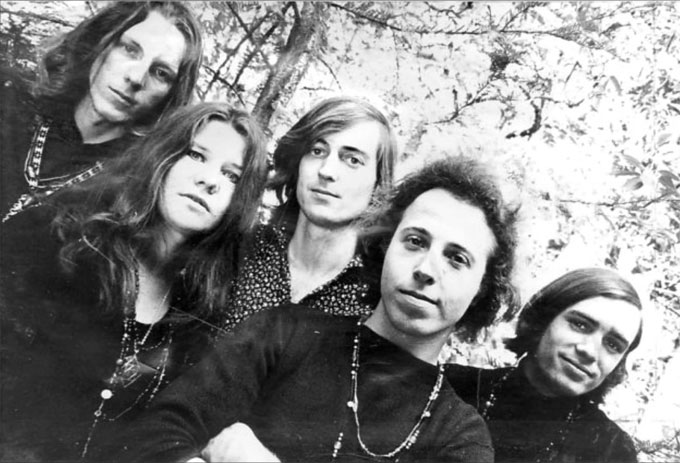
Image of Cape Mendocino, 2014, by Tom KillionBut personal memories, not literary history, comprise the heart of Killion’s narrative—of a grandmother who left lonely Eureka, California for San Francisco in 1906 and survived the earthquake; of hiking Mount Tamalpais as a boy and biking from his parents’ home in Mill Valley as far north as Eureka and as far south as Santa Cruz; of helping clean up the 1971 Golden Gate oil spill that sparked Marin’s successful anti-development movement; of attending college in Santa Cruz, the embodiment of California coast culture, north and south; of returning to Marin County to live and work near unspoiled Point Reyes, “which projects father into the sea from the main axis of the California coast than any other point.” The “redwood coast” from Big Sur north to Humboldt Bay dominates Killion’s story because, he says, it’s less populated than Southern California and more dramatic. It’s the same California coast that engaged John Steinbeck in his much of his writing. The original setting of his second novel, To a God Unknown, was Mendocino County, and the 1955 movie adaptation of East of Eden was filmed in Mendocino—a stand-in, as Killion notes, for Monterey. Steinbeck liked to say he could take or leave the mountains, but had to live near the sea—the setting for his first novel, Cup of Gold, and for The Winter of Our Discontent, his last. Though neither novel is about California, each one has the unforgettable feel of the California coast between Santa Cruz and Big Sur where Steinbeck spent his happiest years—a rich source of history, poetry, and art from pre-Spanish times to the present. California’s Wild Edge captures the subject splendidly.
Images from California’s Wild Edge ©Tom Killion 2015.

.