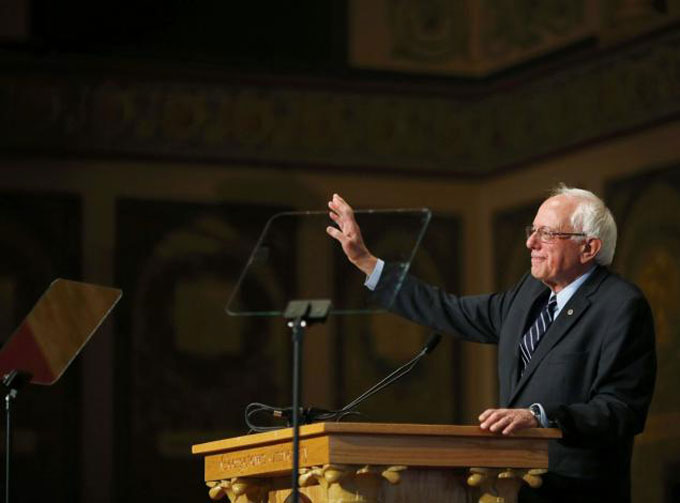
“Our Story Is a Life and Death Thing”: Peter Nathaniel Malae on Reading John Steinbeck and Writing American Literature

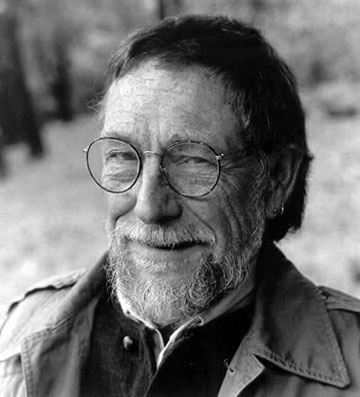
Image of Peter Nathaniel Malae

Like John Steinbeck, the American writer Peter Nathaniel Malae is a rugged realist who insists on honesty. A former Steinbeck Fellow at San Jose State University who grew up in San Jose and nearby Santa Clara, California, Malae spoke candidly about John Steinbeck, American literature, and the life-and-death issues of writing for a living the day after he eulogized Martha Heasley Cox. The memorial event was held in her honor by the Steinbeck studies center she founded at San Jose State University in 1971.

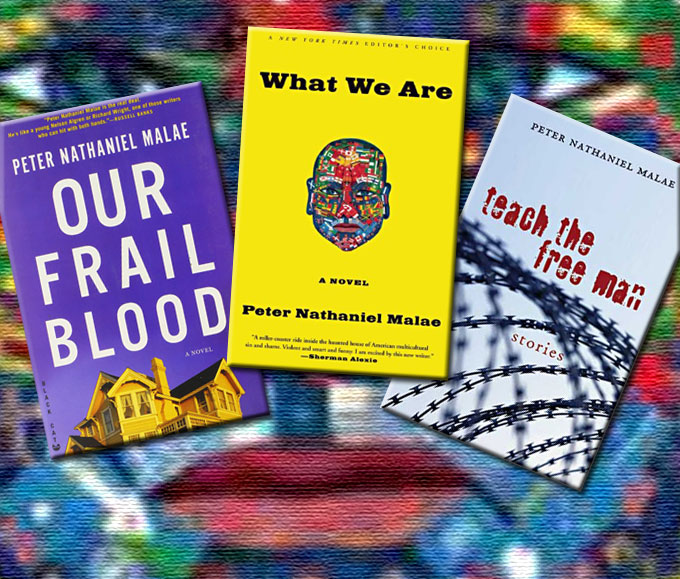
Composite cover image of books by Peter Nathaniel Malae

“That Book Saved Me”: On Reading John Steinbeck

Malae was an inspired choice to represent the 36 creative writers who received Steinbeck Fellow stipends. Teach the Free Man, a collection of Malae’s stories, was published in 2007, the year he was named a Steinbeck Fellow. Two novels published since then—What We Are (2010) and Our Frail Blood (2013)—confirmed Malae’s reputation as a versatile writer who refuses to repeat himself. Like Steinbeck at a similar point in his career, Malae’s output is ambitious: he has already written two more novels, a second collection of stories, two collections of poetry, and a play with a philosophical theme reminiscent of Steinbeck.

Like Steinbeck at a similar point in his career, Malae’s output is ambitious: he has already written two more novels, a second collection of stories, two collections of poetry, and a play with a philosophical theme reminiscent of Steinbeck.

The son of an Italian-American mother and a Samoan father, Malae spent his childhood in a culturally diverse, working-class neighborhood of Santa Clara, squeezed between the city’s “drug-dealing hub”—Royal Court Apartments, Warburton Park, and Monroe Apartments—and the stretch of El Camino Real known as Little Korea for its string of three dozen Korean restaurants and grocery stores running interminably from Santa Clara to Sunnyvale. As a boy, he utilized public transportation on the bus line 22, a tradition kept later as a writer, where he’d composed the bulk of his novel, What We Are, during three-hour rides on the 522, between East Palo Alto and Eastridge Mall in East San Jose.

As a boy, he utilized public transportation on the bus line 22, a tradition kept later as a writer, where he’d composed the bulk of his novel, What We Are, during three-hour rides.

Malae’s father served three decorated combat tours as a tracker with the Special Forces in Vietnam. His uncle Faulalogofie, a Force Recon Marine who’d also fought in Vietnam, was killed by police in Pacifica, California in 1976. His grandfather—the first Samoan minister in America—was a veteran of the Korean Conflict. “I was raised by men who’d had a gang of life-and-death pain in their lives,” Malae says. “But even before they’d ever gone off to war, they’d suffered tremendously. Death, poverty, choicelessness. A weird multigenerational effect of it all is that they basically taught me what to go for in story: they were literary in contradiction. A lot of anger, a lot of third-world violence, yeah, but a lot of third-world beauty, too, a gang of forgiveness.”

‘I was raised by men who’d had a gang of life-and-death pain in their lives,’ Malae says.

Malae attended an exclusive Catholic prep school in San Jose where, like John Steinbeck as a young man, he absorbed the language and rhythm of religious ritual. He read through the Bible for the first time and had his first encounter with Steinbeck in a freshman English composition class. “I loved Tom Joad,” Malae said, “the way he stood up for his family, the way he took it because there was no choice but to take it. I could relate to him. I never told anyone in high school, but I sort of secretly rooted for farmers back then on the sole strength of that image where the tractor comes in and topples the Joad farm.”

‘I loved Tom Joad,’ Malae said, ‘the way he stood up for his family, the way he took it because there was no choice but to take it. I could relate to him.’

Malae went on to play football and rugby at Santa Clara University and Cal Poly, but began getting into serious trouble with the law, having been arrested more than eight times for assault and battery in a two-year span, twice resulting in serious injury. “I was very angry back then. I fought everyone, anyone. Didn’t care how many people I had to fight, didn’t care what the outcome would be. When it comes to growing up tough and angry, I don’t defer to anyone, really. You own it, of course, how you are, but you also became it, shaped by the forces around you.” Within a few years, Malae found himself at San Quentin, where he (again) read through the Bible and started writing 500 words a day—copying Hemingway—on scraps of paper and whatever else was available. “I wrote on the walls, man. I wrote on my arms. The soles of my slippers, as Frost prescribed.”

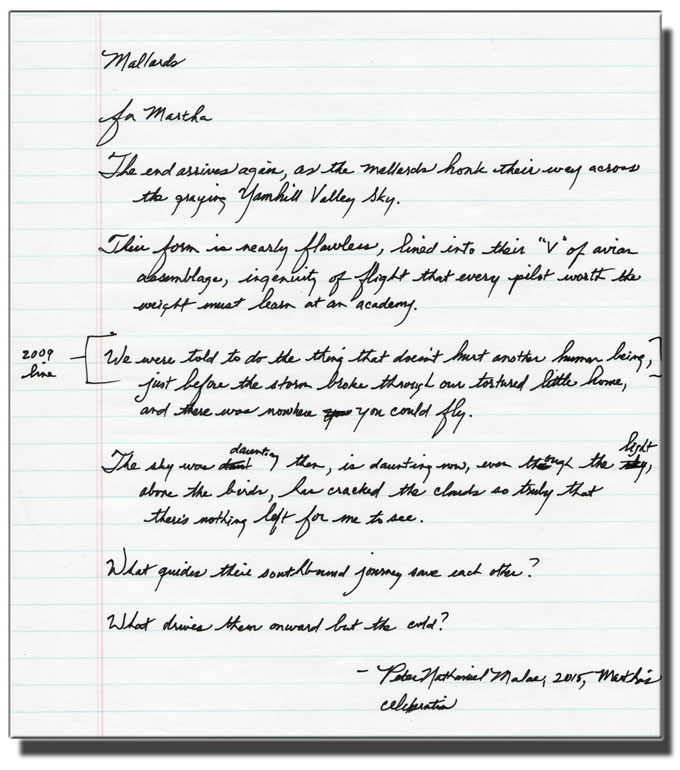
Today Malae writes with a computer, but still revises in longhand, as seen in the manuscript of “Mallards,” the poem he composed in honor of Martha Cox. He thinks that Steinbeck, a pencil-lover who eventually adapted to the typewriter, would like the cut-and-paste convenience of computers. But he dislikes social media, email, and texting, inventions that he says increase social isolation and divorce users from life-and-death reality. On the train to San Jose he worked on a new novel, observing “human beings in their essence and element,” akin to Steinbeck’s claim of being a shameless magpie, taking to the fields with paisanos.

On the train to San Jose he worked on a new novel, observing ‘human beings in their essence and element,’ akin to Steinbeck’s claim of being a shameless magpie, taking to the fields with paisanos.

In prison Malae discovered The Pastures of Heaven, which he’d read in Spanish (Las Pasturas del Cielo). He described the experience with Steinbeckian irony in “The Book is Heavenly,” an award-winning essay published in South Dakota Review (Vol. 41, No. 1 and 2):

The book became my paperback talisman of hope. Something I could rely on in the unreliable undercurrent of prison life. . . . On the Catholic calendar distributed to us during Christmas, my reading list for the months of March, April and May 1999 were: The Catch-Me Killer, Bob Erler, and then fourteen straight readings of The Pastures of Heaven, John Steinbeck. . . . It kept me sharp and focused, reminded me of what once was and what, of course, could be again. That book saved me.

Image of manuscript of "Mallards," poem by Peter Nathaniel Malae

“Realism in the Craft”: On Writing American Literature

Malae’s first novel, What We Are (the title comes from a quatrain by Byron), explores life and death in the dark corners of contemporary society that few writers of American literature have exposed with comparable sharpness or skill. The narrative is a journey of adjustment, to anomie and estrangement, by a sensitive, angry character who learns, as Malae himself believes, that “our story is a life and death thing.” Our Frail Blood, his second novel (the title comes from Shakespeare’s Twelfth Night), is as different from What We Are as East of Eden is from Cannery Row. In alternating plot lines, the book encompasses three generations of California life in which children and grandchildren pay for the secret sins of fathers, brothers, and sons. The family epic unfolds through the eyes and actions of fully developed female characters who bring unity, resolution, and redemption to the story, like Steinbeck’s women in The Grapes of Wrath. Malae cites East of Eden, Tolstoy’s Anna Karenina, James Agee’s A Death in the Family, and Francis Ford Copolla’s Godfather II as narrative forebears in scope and theme.

The narrative of Malae’s first novel is a journey of adjustment, to anomie and estrangement, by a sensitive, angry character who learns, as Malae himself believes, that ‘our story is a life and death thing.’

The Question, Malae’s most recent work, is his foray into the world of theater. The story dramatizes the struggle of a Hispanic ex-boxer and convict to answer the existential question asked by his eight-year-old son: “Why do people kill other people?” Malae says the idea for the play—and the question it poses—occurred to him at San Quentin in 1999, when Manuel “Manny” Babbitt, a veteran of the Vietnam War with a Purple Heart for heroism, was executed. Babbitt, a Marine, was wounded at the Battle of Khe Sanh in 1968; he received the death sentence in 1980, before post-traumatic stress disorder was understood as a consequence of contemporary warfare. Manny Babbitt’s last words were “I forgive you all”; at the end of The Question, Malae’s character tells his son that he can’t say why people kill other people—but “I know why people save other people.”

Malae says the idea for his play—and the question it poses—occurred to him at San Quentin in 1999, when Manuel ‘Manny’ Babbitt, a veteran of the Vietnam War with a Purple Heart for heroism, was executed.

Intense, thoughtful, and articulate, Malae worries about the overpopulation of modern American literature by writers trained in college MFA programs, 360 in number at last count. “They teach writers that the creation of story is a democratic roundtable or assembly line. Which can eradicate the soul of the work. Since art is about desperation, the last thing you want infecting your work is conformity. And then as you pay a fee for a service, the natural tendency is to expect that you get what you paid for. The daily struggle with the craft doesn’t abide that ethic. Sometimes it barely abides you. Sometimes you get nothing.” Steinbeck, too, championed what Malae calls “realism in the craft” forged by fierce aesthetic individualism.

Steinbeck, too, championed what Malae calls ‘realism in the craft’ forged by fierce aesthetic individualism.

Malae described the connection he feels with American literature of John Steinbeck’s century in an interview with Oregon Literary Arts after winning the drama fellowship for The Question:

I’m with O’Connor and Faulkner and a whole horde of other dead masters who describe the deal in terms of a blue-collar work ethic. I see the creative process as merely this, a dress-down of self that more or less occurs daily: do you have the balls to call yourself a “writer”? Well, then, “put the posterior in the chair,” as my freshman comp teacher used to say; “don’t talk,” as Hemingway advised, and handle your business.

Paul Douglass, the San Jose State University English professor who managed the Steinbeck Fellows program from 2000 to 2013, notes that Malae’s 2007-2008 class was “outstanding.” He recalls reading the untitled manuscript of What We Are when Malae’s name was first submitted, and being impressed. After finishing his fellowship, Malae continued to correspond with Martha Cox, a shrewd reader and enthusiastic patron. In his remarks at her memorial he recalled visiting her modest San Francisco apartment, crowded with “classics of American literature” by some of his favorite authors. He was humbled, he said, to see a copy of Teach the Free Man, read and annotated, on her shelf.

John Steinbeck Biographer Writes Life of Gore Vidal, Master of Historical Fiction

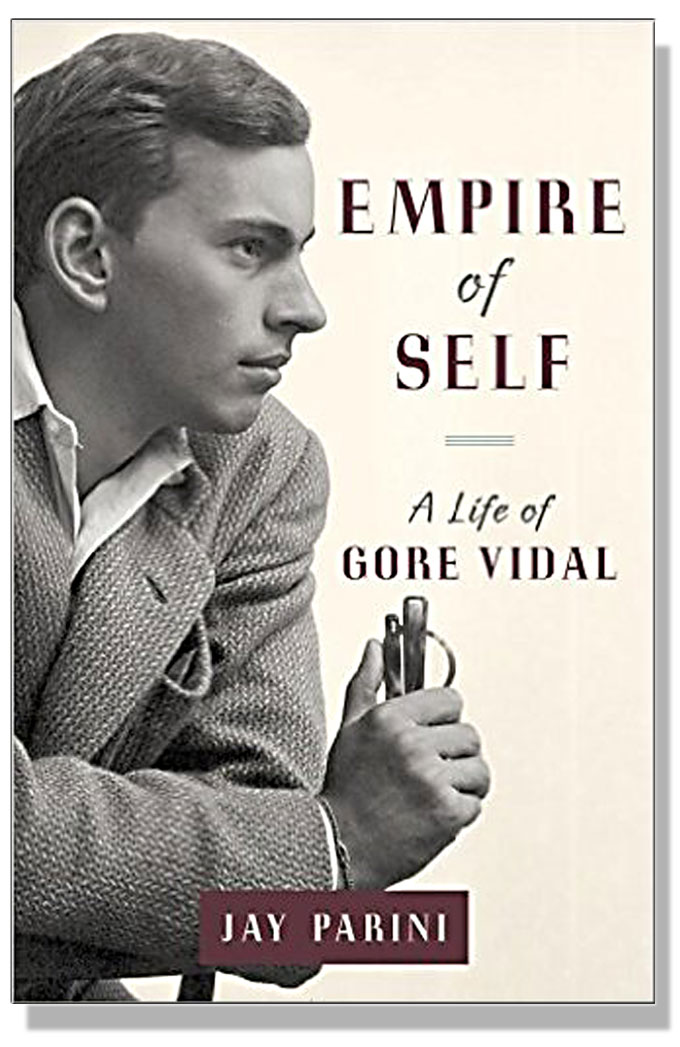
Cover image of Empire of Self: A Life of Gore Vidal, by Jay Parini

Though they were born a generation apart on opposite coasts, John Steinbeck and Gore Vidal—bestselling writers with close ties to Broadway, Hollywood, and progressive politics—had much in common. Empire of Self: A Life of Gore Vidal, by John Steinbeck’s versatile biographer Jay Parini, considers the controversial author of Lincoln, Burr, and Myra Breckinridge to be a master of historical fiction, a literary form that didn’t fit Steinbeck but suited Vidal, who renewed its energy and spawned a generation of imitators. Axinn Professor of English at Middlebury College and a poet-novelist-critic who understands what creative writers endure for their craft, Parini suits Vidal particularly well as a biographer. Like John Steinbeck: A Life (1995), his life of Gore Vidal provides a contemporary writer’s perspective on a controversial literary career, with an advantage not shared by biographers of Steinbeck. Parini and Vidal were friends until Vidal’s death in 2012, and Parini had frequent conversations with his fascinating subject, who gave him free access to Vidal’s extraordinary circle of friends, associates, and yes, enemies.

Jay Parini, John Steinbeck, and the Case for Gore Vidal

The result of that fortunate relationship is a compelling chronicle—detailed in research, comprehensive in scope, and convincing in its case for Gore Vidal as a 20th century writer who, like John Steinbeck, is worth reading in the 21st. Describing himself as Vidal’s Boswell, Parini views his volatile subject with the empathy of a colleague and the wonder of a disciple, forgiving without judging, or ignoring, the master’s faults. This is an advisable stance for any biographer, but it serves Gore Vidal’s peculiar personality and expansive sense of self particularly well. John Steinbeck was a shy man with a domestic situation that made research and publication difficult for biographers following his death in 1968. Vidal, who admired Steinbeck and served as a source for Parini’s Steinbeck biography, avoided this danger by admonishing Parini to note the potholes but keep in his eye on the road when writing the biography that Vidal made Parini promise he would finish when Vidal was gone.

Parini views his subject with the empathy of a colleague and the wonder of a disciple, forgiving without judging, or ignoring, the master’s faults.

A gentle sort without Vidal’s sharp edges, Parini kept the bargain, filling in the self-narrative begun by Vidal in the novels Vidal wrote in his 20s, in essays and interviews and plays over a period of six decades, and in a pair of provocative memoirs that leave no prisoners. As suggested by the title Parini chose for his biography of this great-but-not-good man, Vidal’s story fascinates because it records the self-invention of a born storyteller who wrote prodigiously, characterized non-historical fiction like Myra Breckinridge as “inventions,” and considered bitchiness and versatility to be evidence of talent. He was as competitive with writers as we was in sex, and he fought publicly with colleagues who crossed or criticized him. He attacked Truman Capote, a soft enemy, and made scenes with Norman Mailer, a tougher target. He suggested that John Steinbeck, who avoided snits with other writers, was a bit of a one-note: “He “didn’t ‘invent’ things,” Vidal said of Steinbeck. “He ‘found’ them.”

Gore Vidal and John Steinbeck: Two Lives in Letters

Like Samuel Johnson, John Steinbeck and Gore Vidal were thin-skinned, temperamental men with mother issues. Both felt sorry for their fathers and identified with their fathers’ fathers, stronger figures, in their writing. Steinbeck compensated for self-doubt by avoiding public appearances and entangling private alliances beyond a loyal circle of friends, collaborators, and relatives. “Your only weapon,” he advised a young writer whose father was a boyhood friend, “is your work.” Vidal, a domineering narcissist, adopted the opposite strategy, creating a public persona built around conflict, desire, and adulation. Work was one weapon. So was a personality that, as Jay Parini observes, others could love or leave but never outrun. Steinbeck was a turtle. Vidal was a hare.

John Steinbeck and Gore Vidal were thin-skinned, temperamental men with mother issues. Steinbeck was a turtle. Vidal was a hare.

Reared in a rural California town where the Republican Party ruled and the Episcopal church was a center of social life, John Steinbeck got off to a slow start as a writer. Cup of Gold, his first novel, fails as historical fiction about a far-off time and place; an early attempt at mythic allegory, To a God Unknown, succeeds only because it is rooted in familiar soil. He finally found his voice in three novels, written during the Great Depression, about America’s rural underclass: ranch hands and farm workers in California, migrant sharecroppers from Oklahoma. He lived in small houses and wrote in small rooms and never forgot what it was like to go without; he feared success, and and he was right. A New Deal Democrat, he wrote political speeches but refused to make them. As with Gore Vidal, alcohol was a social lubricant, but to opposite effect. Vidal performed in company. Steinbeck looked and listened. Steinbeck liked working people, preferably farmers, and, like Faulkner, he lived part-time in the past. So did Vidal, of course, but his past was imagined rather than remembered.

Vidal performed in company. Steinbeck looked and listened. He liked working people, preferably farmers, and lived part-time in the past.

Vidal was born in Washington during the administration of Calvin Coolidge and spent his happiest times at the Rock Creek Park home of his blind grandfather T.P. Gore of Mississippi, elected U.S. Senator from Oklahoma when Oklahoma became a state. Vidal’s roots were Deep South (Al Gore is a distant relative), but his social centers as a boy were Capitol Hill, New York, and the mansions of his grandfather and his mother’s second husband, Hugh Auchincloss, a millionaire who later married the mother of Jackie Kennedy. Like Steinbeck, Vidal was christened as an Episcopalian, but he attended St. Albans, an exclusive academy run by the Episcopal Church, rather than public school. He fell in love with a classmate, and both enlisted at age 18. The boy he loved was killed in combat and, as Parini suggests, left a hole in Vidal’s heart that lasted for a lifetime.

Like Steinbeck, Vidal was christened as an Episcopalian, but he attended St. Albans, an exclusive academy run by the Episcopal Church, rather than public school.

He disliked his mother, liked his father’s girlfriends, and imbibed the Dixiecrat politics of his Grandfather Gore, which were to the right of the Steinbeck family’s progressive California Republicanism. Parini describes the anti-New Deal bias Senator Gore shared with Dixiecrat allies like Huey Long as “Tory populism”: anti-corporate, anti-war, and anti-statist, anti-values that defined Vidal’s vision of America as a Republic gone bad, like Rome, in his political essays, his historical fiction, and his campaigns for public office, first as candidate for Congress from New York, later for Governor of California. If Vidal read The Grapes of Wrath to Senator Gore as a teenager, a distinct possibility, the old man probably reacted like his fellow Oklahoman, Lyle Boren, who denounced Steinbeck’s depiction of Oklahoma from the floor of the U.S. House: with denial and disdain. Vidal’s view of America as a child was that of his grandfather’s political class: nativist, isolationist, and distrustful of Wilsonian-Rooseveltian democracy. His ambitions as an adult, like his homes on the Hudson and in Italy, were imperial.

Vidal’s view of America as a child was nativist, isolationist, and distrustful of democracy. His ambitions as an adult, like his homes on the Hudson and in Italy, were imperial.

Parini records the first time Steinbeck and Vidal met, on May 8, 1955, at a Manhattan party given by the producer Martin Manulis following the TV broadcast of Visit to a Small Planet, Vidal’s satirical comedy about Cold War paranoia and gone-mad McCarthyism. Vidal’s sci-fi caricature of mid-America invaded by aliens eventually ran on Broadway and has since been revived. When Vidal met Steinbeck at the Manulis party, Steinbeck would have been involved in staging Pipe Dream, the musical adaptation of Steinbeck’s novel Sweet Thursday by Rodgers and Hammerstein that closed within months after opening later in 1955. Steinbeck’s wife Elaine, also present at the party, was a stage manager for the 1940s hit musical Oklahoma! and had a good eye. She remembered the 30-year-old Vidal as “a tense, smart, glittering young man” who shared Steinbeck’s “passion for politics” and got along with her husband. The two men shared a special affection for Eleanor Roosevelt and an admiration for Adlai Stevenson, neither of which would have appealed to their families back home.

Steinbeck and Vidal shared a special affection for Eleanor Roosevelt and an admiration for Adlai Stevenson, neither of which would have appealed to their families back home.

Vidal also felt an affinity for Steinbeck as an artist, noting to Parini that both authors had the ability to write narrative and dramatic works that people liked. Vidal said he envied Steinbeck’s “happy relation to Hollywood,” where Steinbeck’s work “adapted well” and “was treated with respect,” unlike his own. He observed, accurately, that the film East of Eden “brought Steinbeck to more people’s attention than a novel could have ever done.” And though both writers feared that television “spelled the end of the novel,” their most popular works in novel form have also proved to be their most enduring: The Grapes of Wrath, Of Mice and Men, Cannery Row, and East of Eden for Steinbeck; Burr, Lincoln, and other historical fiction of American Empire for Vidal. Of the book critics who were irritated by Steinbeck’s persistent popularity, Vidal observed, “they could never forgive Steinbeck for saying things that people wanted, or needed, to hear.” As Empire of Self shows, the same can be said of Gore Vidal.

She Gave John Steinbeck Studies a Home: Martha Heasley Cox, 1919-2015

Composite image of San Jose State University's John Steinbeck center and founder

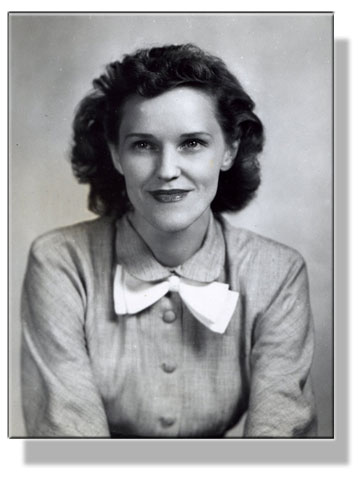
Martha Heasley Cox died in San Francisco, age 96, on September 5, 2015. Her colleague Paul Douglass celebrates her contribution to John Steinbeck studies, San Jose State University, San Francisco culture, and American literature in a heartfelt tribute to the remarkable Bay Area woman, born in Arkansas, who broke glass ceilings and gave Steinbeck studies an international home.–Ed.

I met Martha Cox in 1991, shortly after I arrived at San Jose State University from Atlanta, where the college for which I taught English and American literature had closed. As a California native, I felt lucky to have landed a faculty position in the San Francisco Bay Area, John Steinbeck territory and the source and inspiration for much American literature, from Mark Twain to the present. During my first year on the job, I attended a reading by Maxine Hong Kingston, the award-winning Bay Area novelist known for her contribution to Chinese-American literature. John Steinbeck’s dog ate one of his manuscripts, but Kingston had recently experienced a worse loss than that. She taught at Berkeley, and the 1991 firestorm that devastated nearby Oakland consumed her house, her belongings, and the manuscript of the novel she was writing at the time. Her description of pedaling her bike down the Oakland hills to escape the fast-moving blaze, a catastrophe that left permanent scars on the Bay Area psyche, riveted her audience. An American literature professor who had retired from San Jose State University and moved to San Francisco was funding the lecture series that brought Kingston, as well as American literature legends like Norman Mailer, Wallace Stegner, and Toni Morrison, to campus.

Devoted to San Jose State University and a Dream

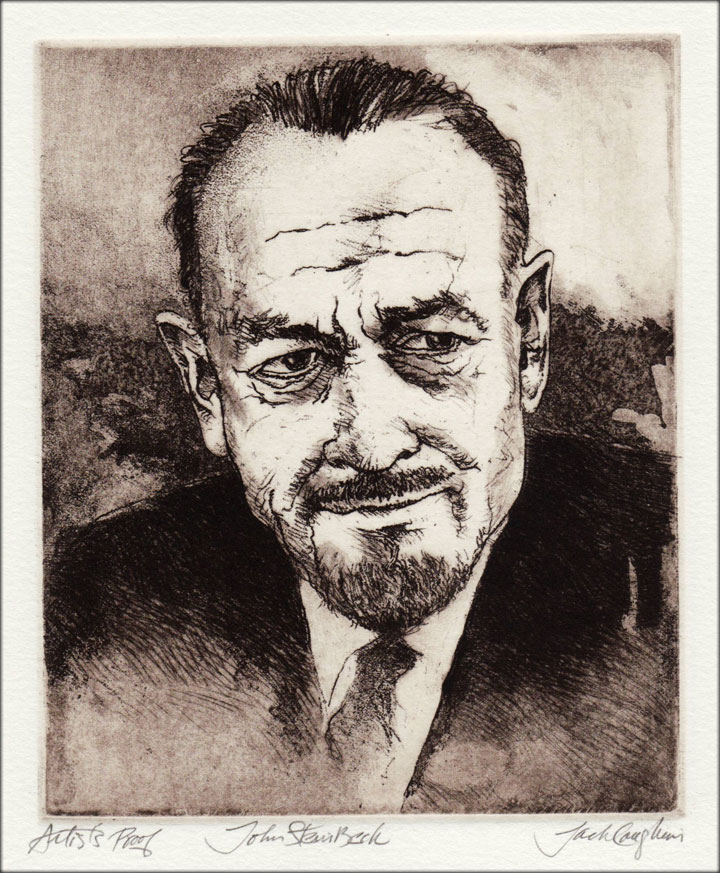
Image of John Steinbeck portrait by Jack CoughlinMartha Cox was a legend in her own way, and she would have tried hard to persuade John Steinbeck to lecture at San Jose State University if he were still alive. She taught in the Department of English for 34 years, endowed the lectureship that presented Kingston, and founded the San Jose State University research center devoted to John Steinbeck studies that bears her name today. In the classroom, she focused with memorable energy on the books and authors she loved most, a list that started with Steinbeck and never really ended. Greta Manville, her student, experienced Martha’s passion for John Steinbeck and American literature.

“She expected interest and enthusiasm from her students,” Greta recalls. “But Martha was no more demanding of them than she was of herself. No matter how many times she taught a novel, she reread the book before the class discussion.” Martha, who liked to get out of the classroom, took her students on day trips to Fremont Peak, Salinas, Monterey, and Cannery Row to see the places made famous in Steinbeck’s writing about California. She loved the land and the people, and creating a center for Steinbeck studies at San Jose State University became a mission.

Image of Martha Cox as an undergraduate at Lyon CollegeAlthough their birthdays were only one day (and 17 years) apart, Martha’s background was different from Steinbeck’s. Born on February 26, 1919 in Calico Rock, Arkansas, she majored in English at Lyon College, a small school in Batesville that she loved and later honored with gifts. After graduation she enrolled at the University of Wisconsin, returning to her home state to complete her master’s degree at the University of Arkansas in 1943. Following World War II, she continued graduate study at the University of Texas, but, like John Steinbeck, couldn’t get home out of her bones and returned to the University of Arkansas, where she received her Ph.D. in 1955.

Then, much like Steinbeck during the same period, she pulled up stakes and left her people’s country for good, moving to the San Francisco Bay Area to teach English composition and American literature at San Jose State University. She and her husband Cecil Cox eventually divorced, but remained friends: Cecil drove Martha back to Arkansas when Lyon College recognized her for endowing the professorship in American literature named in her honor, and the Leila Lenore Heasley Prize for distinguished writers, named in honor of her sister. Terrell Tebbetts, the first Lyon College professor to hold the Cox Chair in American Literature, says that “her gifts have helped to keep her alma mater well-connected to both the literary and the scholarly worlds.” From 1955 until her death two weeks ago, she performed the same service for San Jose State University, extending the school’s reach and impact in the role of  scholar-philanthropist.

Image of Martha Cox as a young faculty member at San Jose State UniversityMartha made her fortune the old-fashioned way, through hard work as an ambitious academic author and careful investment in stocks and real estate. A child of the Great Depression, she wanted every dollar, like every moment in life, to count. She was a practical woman who wrote practical books: texts on writing, critical studies and guides for readers, and bibliographies useful to scholars of American literature. She collected books the way Steinbeck did: for reading, not for show. Recently, I packed up her personal library in San Francisco to bring her books to San Jose State University. Even her autographed first-editions are thoroughly thumbed. She was a friend and bibliographer of the author Nelson Algren, a major figure in mid-20th century American literature, and he sent her signed copies of his novels with personal notes. These rare books were worn with hard use. Most of the works by John Steinbeck she owned are heavily-annotated paperback editions with yellowing pages that fall out when disturbed. Martha was a Southerner, and William Faulkner was well represented on the shelves of her San Francisco apartment. But John Steinbeck became her chief scholarly pursuit after 1968, the year Steinbeck died and her dream for a Steinbeck center at San Jose State University began.

Martha made her fortune the old-fashioned way, through hard work as an ambitious academic author and careful investment in stocks and real estate.

I don’t know how much she knew about Steinbeck’s life before she moved to California, but Greta Manville observed that Martha “lived and taught near ‘Steinbeck Country,’ and believed it only fair that the Nobel laureate be recognized in his own territory.” Within three years of Steinbeck’s death (he is buried in Salinas), Martha managed to drum up support for her vision of a Steinbeck center from everyone who would listen, including major Steinbeck scholars such as Warren French, Peter Lisca, Robert DeMott, Jackson Benson, and the members of the John Steinbeck Society founded by Tetsumaro Hayashi. She became friends with Elaine Steinbeck, John’s widow, and Thomas Steinbeck, his son. She was passionate and she was persuasive.

Within three years of Steinbeck’s death, Martha managed to drum up support for her vision of a Steinbeck center from everyone who would listen.

Martha enlisted San Jose State University students like Ray Morrison in fundraising, and she traveled whenever and wherever necessary to acquire copies of book reviews, academic papers, and feature articles for the Steinbeck center she founded on campus in 1971. Greta Manville, a former Steinbeck Fellow, recalls frequent trips to Stanford, Berkeley, Austin, and New York, where Martha searched the New York Public Library, the Lincoln Center Library, and the archives of Viking Press, Steinbeck’s publisher. Manville, who created the Steinbeck center’s online bibliography, accompanied Martha on her search-and-find mission to New York in 1977: “We worked very hard all day long for a week—and went to the theater each night. Our somewhat fleabag hotel was right in the heart of the theater district. Martha was a walker. . . so we walked everywhere, even from Lincoln Center on 62nd Street through Central Park to a restaurant near the hotel—in time for the evening performances around 42nd Street.”

Martha enlisted San Jose State University students in fundraising and traveled whenever and wherever necessary to acquire copies of book reviews, academic papers, and feature articles for the Steinbeck center she founded on campus in 1971.

Martha’s case for John Steinbeck was difficult to resist. Her colleagues in the Department of English weren’t exempt from service to the cause. Arlene Okerlund, later San Jose State University’s dean and academic vice president, was a young visiting professor when Martha’s quest began and quickly enlisted. “I met Martha Cox in 1969, when the chair of the English department assigned me to share an office with her,” she recalls. “I was a temporary lecturer (not tenure track) and quite intimidated by one of the more awesome senior full professors in the department.” Martha had a reputation, and resisters, at San Jose State University. Arlene was not among them.

Martha’s case for John Steinbeck was difficult to resist. Her colleagues in the Department of English weren’t exempt from service to the cause.

The two grew close, working together on the pioneering Steinbeck conferences Martha organized at San Jose State University in 1971 and 1973 and remaining warm friends in retirement. As her health declined in recent years, Martha depended on the help and counsel of her younger colleague from those early days. Now a resident of Los Gatos, the town where Steinbeck completed Of Mice and Men and The Grapes of Wrath, Arlene continues to write books and articles about Renaissance literature, her specialty, and serves as the executor of Martha’s estate.

As her health declined in recent years, Martha depended on the help and counsel of Arlene Okerlund, her younger colleague from those early days.

I live even farther from San Francisco than Arlene does, but I also became Martha’s friend. In later years, I would make my way to San Francisco to pick up Martha for events at San Jose State University, such as readings by authors like Joyce Carol Oates. During the drive Martha talked my ears off. She had plans for Steinbeck events; she asked how her endowment funds were being spent; she fretted that some real estate she had given San Jose State University was sitting on the market too long; she was curious about who was being considered as the next Cox Lecturer on campus; she praised the way Lyon College treated donors and suggested that improvements could be made in fundraising at San Jose State University; she hoped that, someday soon, a Steinbeck Fellow would win the California Book Award for fiction.

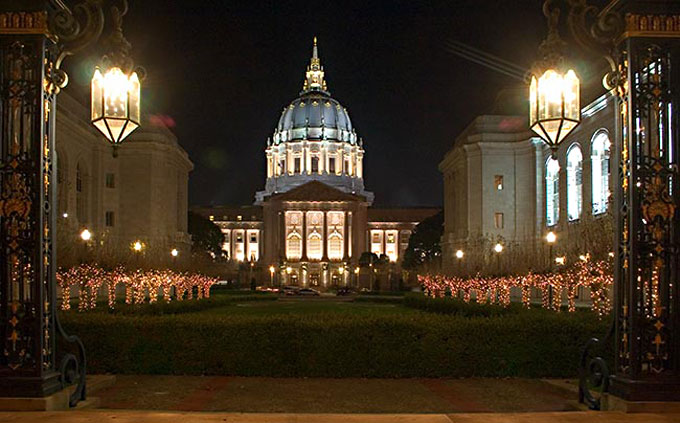
Image of San Francisco's city hall

From San Jose State University to San Francisco City Hall

When she retired from San Jose State University in 1989, Martha moved to a Van Ness Avenue apartment with a dramatic view of San Francisco City Hall. Unfit for idleness, she joined the Commonwealth Club, an energetic engine of Bay Area culture with moving parts, literary and political and artistic, that appealed to Martha’s eclecticism. Jim Coplan, a staff member, became Martha’s friend and confidante, and the California Book Awards given annually by the organization occupied her attention, another cause in the service of American literature.

The California Book Awards given annually by the Commonwealth Club occupied her attention, another cause in the service of American literature.

Created to counter East Coast neglect of Western writers, a bias in American literature lamented by John Steinbeck, the California Book Award for fiction went to Steinbeck three times: for Tortilla Flat (1935), In Dubious Battle (1936), and The Grapes of Wrath (1939). Jim Coplan says that Steinbeck’s triple run “led to the establishment of the Steinbeck Rule for the awards, which limited a single author to three Gold Medals.” Until Martha asked Jim how she could help improve the program, authors selected for awards received medals, but no money. According to Jim, Martha’s gift of $50,000 was matched by Bill Lane, the publisher of Sunset Magazine, adding a touch of green to the Commonwealth Club’s coveted Gold and Silver Awards.

Martha’s gift of $50,000 was matched by Bill Lane, the publisher of Sunset Magazine, adding a touch of green to the coveted Gold and Silver Awards.

“Martha put her resources to work where her heart lay,” observes Jim, and her time and mind came with her money. She served on the California Book Awards jury until she was 92, reading 100-200 books submitted every year. San Francisco is a walking town, and Martha would catch the bus to Commonwealth Club’s offices, pick up a bag of books, lug them home and churn through them all, then repeat the process the next week. She expressed her horror that anyone would consider skimming through the entries, despite their number. For her, each author deserved equal attention, each book cover-to-cover assessment. At the 2013 California Book Award ceremony, she received her own Gold Medal, given in recognition of her remarkable performance. Similar celebrations honored her achievements at San Jose State University.

Image of Bruce Springsteen and Martha Cox

Martha’s Springsteen Moment on Behalf of Steinbeck

My regular contact with Martha began in 1993-94, when I filled in as interim director of the Steinbeck research center while Susan Shillinglaw, the longest-serving director in its history, was on leave. Now located on the fifth floor of the Dr. Martin Luther King, Jr. Library, a joint venture of San Jose State University and the City of San Jose, the center was housed at the time in the Wahlquist Library, the San Jose State University building the new library replaced.

My regular contact with Martha began in 1993-94, when I filled in as interim director of the Steinbeck research center while Susan Shillinglaw was on leave.

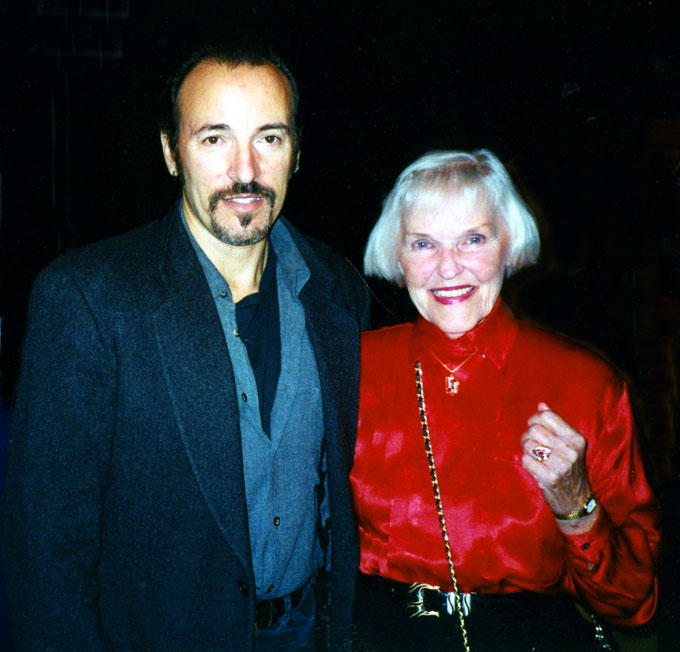
During my year as interim director, Steinbeck studies moved to larger quarters in the old library building, space that needed shelves and furnishing and, thus, funding. Martha was in San Francisco, but her entrepreneurial example endured at San Jose State University. When Bruce Springsteen wanted to tie the release of his 1996 Ghost of Tom Joad album to John Steinbeck, Susan’s warm relations with Steinbeck’s widow and literary agency led to an inspired idea. Springsteen accepted the Steinbeck “in the souls of the people” Award, now a regular fundraising activity of the Steinbeck Studies Center, at a sold-out benefit performance attended by Martha, who was thrilled: “When she met Bruce Springsteen,” Susan recalls, “she stood next to Elaine Steinbeck, happily bookended by two people who shared her passion for Steinbeck.”

When Bruce Springsteen wanted to tie the release of his 1996 Ghost of Tom Joad album to John Steinbeck, Susan’s warm relations with Steinbeck’s widow and literary agency led to an inspired idea.

In 1997, Susan organized a dedication ceremony for the refurbished Wahlquist Library space at which the center was named the Martha Heasley Cox Center for Steinbeck Studies. “I think she was happy,” says Susan. “I know she left an indelible imprint on San Jose State University, on all who knew her, certainly on me.” Later, I sat down with Martha and Jack Crane, dean of the College of Humanities and the Arts, to discuss Martha’s new dream: a fellowship program to bring scholars and creative writers together to collaborate in Steinbeck’s name. Steinbeck’s interests were diverse, so the idea made sense to Martha, if not to skeptics. How could a public institution like San Jose State University afford it, critics asked? Doubters failed to deter Martha when she started the campus center for Steinbeck studies in 1971, and the years failed to dim her determination. I volunteered to administer the program on top of my teaching load if funds could be found. Martha agreed to create an endowment to pay for Fellows’ stipends, and promised to do more in her estate planning.

Martha’s new dream: a fellowship program to bring scholars and creative writers together to collaborate in Steinbeck’s name. Steinbeck’s interests were diverse, so the idea made sense to Martha, if not to skeptics. How could San Jose State University afford it, they asked?

Today the Steinbeck Fellows program, like the Steinbeck award, is one of the most public and successful activities of the Martha Heasley Cox Center for Steinbeck Studies. I administered the program for 12 years; when I succeeded Susan as director in 2005, I had gotten to know Martha’s interests and inclinations pretty well. Unsurprisingly for a person who was passionate about John Steinbeck, Martha’s interests also included theater, a colorful part of San Francisco’s cultural fabric. She contributed generously to Eureka Theatre, the plucky group that commissioned Tony Kushner’s Angels in America. She was a loyal patron of the Magic Theatre in Fort Mason, where Sam Shepard had been writer in residence. She gave money for free public readings of new plays at the Magic, the Exploratorium, the Palace of Fine Arts, and the Commonwealth Club. My wife Charlene and I enjoyed accompanying her to the performances she funded. Like John Steinbeck, Martha was in her element in San Francisco.

Composite image of John Steinbeck and the world served by San Jose State University's Steinbeck Center

An Inspirational Founder for an International Resource

But Martha’s heart stayed with John Steinbeck and, through thick and thin, with San Jose State University. She hosted gatherings of the Steinbeck Fellows at her apartment, and the center named for her continued to benefit from her support. Significantly, each of the directors who succeeded her reflected her entrepreneurial spirit, devotion to diversity, and global perspective. The Martha Heasley Cox Center has become an international resource, an outcome John Steinbeck would approve.

The Martha Heasley Cox Center has become an international resource, an outcome John Steinbeck would approve.

Robert DeMott, Edwin and Ruth Kennedy Distinguished Professor at Ohio University, took leaves of absence from Ohio in the mid-1980s to serve as interim director and teach San Jose State University classes in the subjects that Martha taught: American literature, John Steinbeck, and creative writing. A poet as well as an internationally recognized Steinbeck scholar, Bob said this: “Martha Cox had vision and gumption and foresight where John Steinbeck was concerned. Establishing the Steinbeck Research Center (as it was then called) was an act of bravado, endurance, and love. All of us—scholars, students, enthusiasts, and even casual readers of Steinbeck’s work and his legacy–will always be in her debt.”

‘All of us—scholars, students, enthusiasts, and even casual readers of Steinbeck’s work and his legacy—will always be in her debt.’—Robert DeMott

Susan Shillinglaw, one the most respected Steinbeck scholars in the world, was director for 17 years and continues to teach San Jose State University’s course on John Steinbeck while serving as interim director of the National Steinbeck Center in Salinas.  She summed up Martha’s influence on others: “Her love of books, theater, writers, San Jose State University, and Lyon College was palpable—and unforgettable.”

‘Her love of books, theater, writers, San Jose State University, and Lyon College was palpable—and unforgettable.’—Susan Shillinglaw

Nick Taylor, my successor as director, is a young novelist who, like Martha and me, left the South to take a teaching job at San Jose State University. He spoke for the future of Steinbeck studies: “Martha Heasley Cox was the perfect English professor for Silicon Valley, an impatient entrepreneur who took the future into her own hands, founding a major research center and a fellowship program out in her intellectual garage. The more I learn about her career, the more impressed I am. She lived a 20th century life, but she was a model for 21st century academics like me.”

‘Martha Heasley Cox was the perfect English professor for Silicon Valley, an impatient entrepreneur who took the future into her own hands.’—Nick Taylor

San Jose State University gave Martha Heasley Cox its prestigious Tower Award in 2000. The woman who gave Steinbeck studies a home will be honored at a memorial event attended by friends, colleagues, and schools officials, including Lisa Vollendorf, the enterprising dean of the College of Humanities and the Arts who put Martha’s contribution in perspective for this piece: “Martha Heasley Cox’s visionary generosity helped San Jose State University secure a position on the international stage as an institution dedicated to furthering the values embraced by Steinbeck’s life and writing.” The October 6, 2015 celebration of Martha’s life will take place at 2:00 p.m. on the fifth floor of the Dr. Martin Luther King, Jr. Library, in the hospitable home for Steinbeck studies she started at San Jose State University 45 years ago. Her spirit lives on in the house.
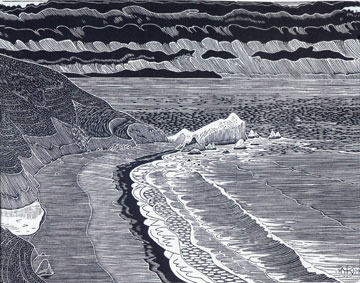
Memorial gifts in honor of Martha Heasley Cox may be made to the Tower Foundation of San Jose State University or to Lyon College in Batesville, Arkansas.

Timely Topic: John Steinbeck As an International Writer— Planners Invite Proposals for Papers at 2016 Conference in San Jose, California

Composite image of John Steinbeck and earth map

In a 1946 letter, John Steinbeck described arriving in Denmark to find “thirty cameramen with flashlights . . . . I didn’t know anyone treated writers like this.” He later observed that Denmark was the only country in the world to keep all his books in print. Meanwhile, on the other side of the globe, the John Steinbeck Society of Japan boasts one of the strongest memberships of any foreign author society dedicated to an American author, with annual conferences and a peer-edited scholarly journal. If any 20th-century American author can be considered an “international” writer, it is Steinbeck.

International Society of Steinbeck Scholars Goes Global

The International Society of Steinbeck Scholars is planning to examine Steinbeck as an international writer in a May 4-6, 2016 conference to be held at the Martha Heasley Cox Center for Steinbeck Studies at San Jose State University in San Jose, California. Proposals are being accepted now through February 2016 for papers on a wide variety of theoretical applications, such as Steinbeck’s connections to world literature and world thought—for example, Classical Greek and Roman, Eastern, and twentieth-century Russian. Other topics are welcome as well, such as deep ecology, power and subjugation, the concept of democracy and America, ethics and philosophy, and gender studies.

San Jose State University Event and Salinas/Monterey Steinbeck Festival Scheduled Back to Back: Do Both!

The San Jose, California conference has been scheduled to precede the 2016 Steinbeck Festival in Salinas and Monterey sponsored by the National Steinbeck Center, located less than two hours south by car from San Jose State University’s downtown campus. Many attendees of the 2013 John Steinbeck conference at San Jose State University traveled to Salinas after the conclusion of the academic proceedings to participate in the tours and other activities organized by the National Steinbeck Center, host of the annual weekend-long celebration of one of the most internationally popular American authors of the 20th century.

Big Sur, Point Lobos, and Cannery Row: Digital Photography by Charles Cramer

Composite image of Big Sur, Point Lobos, and Cannery Row in digital photography
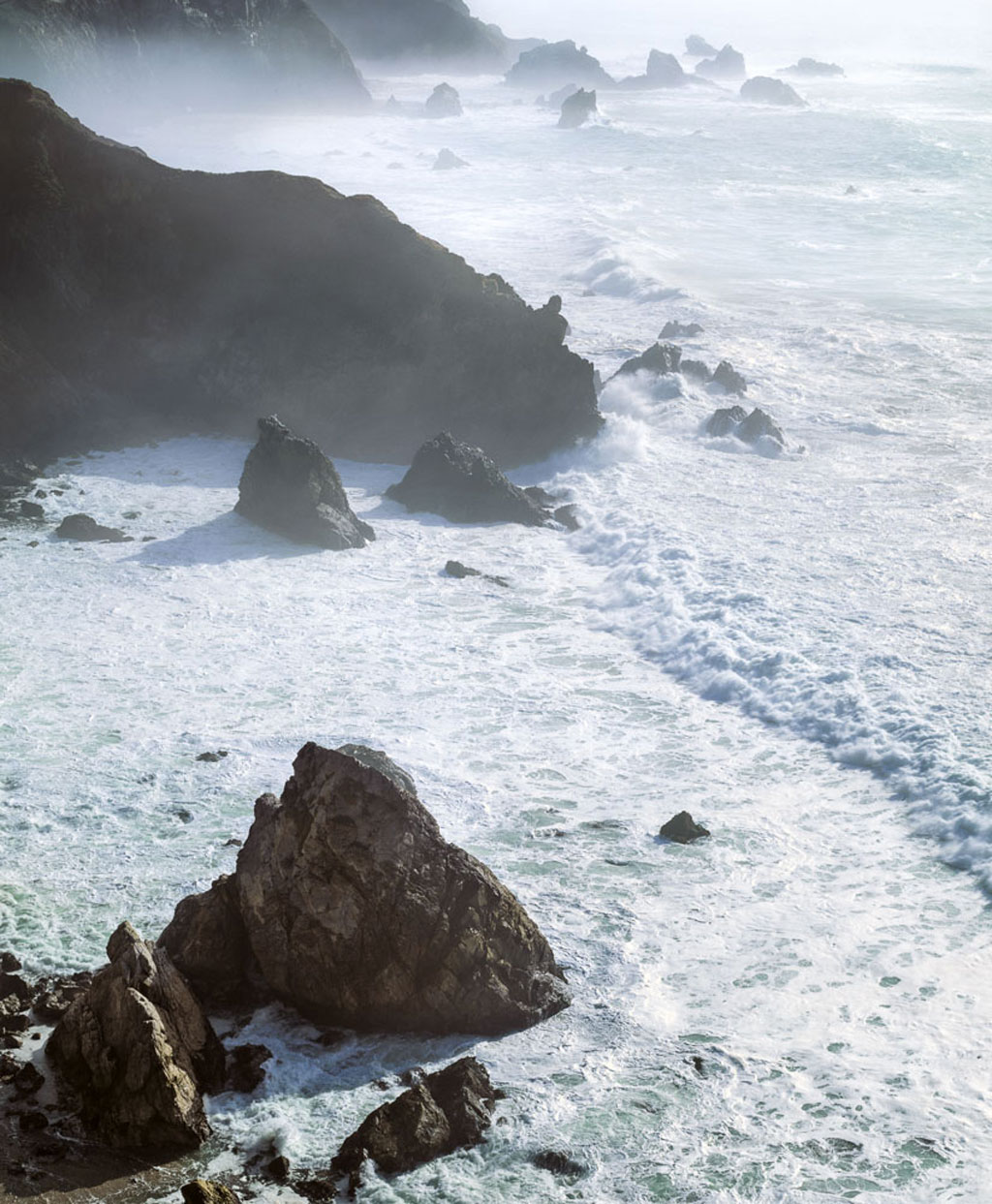
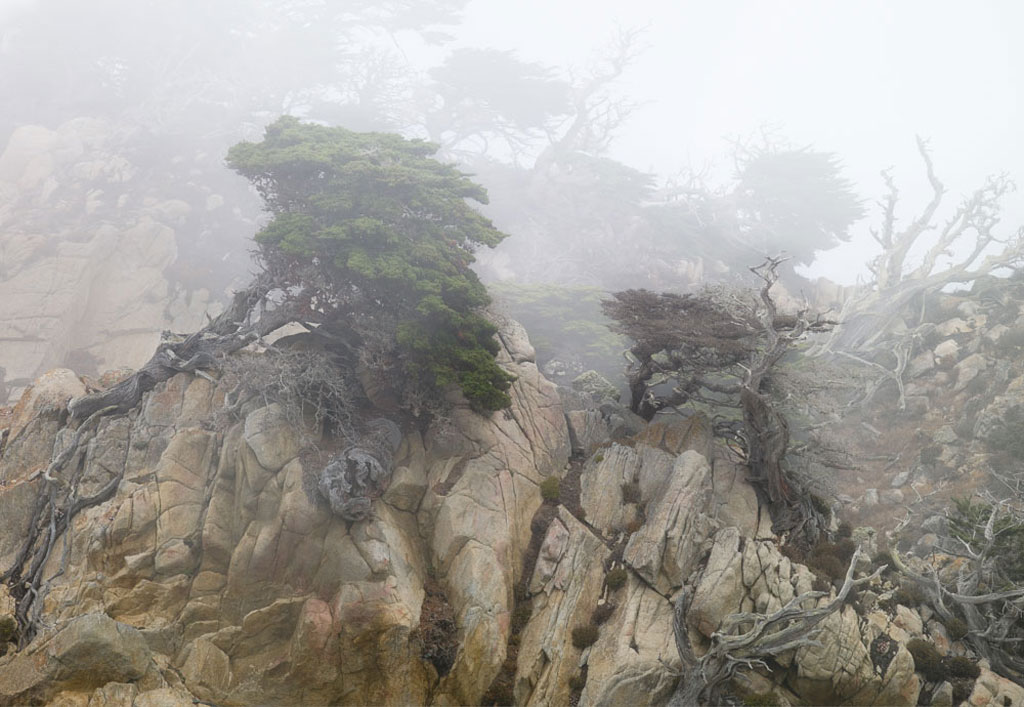
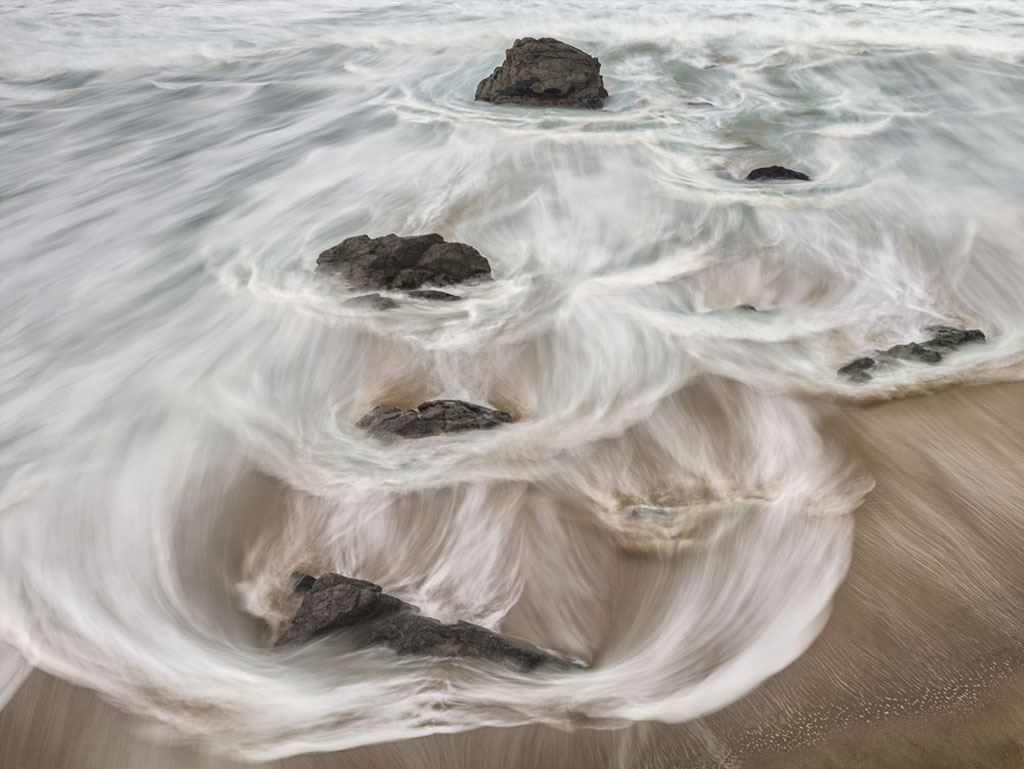
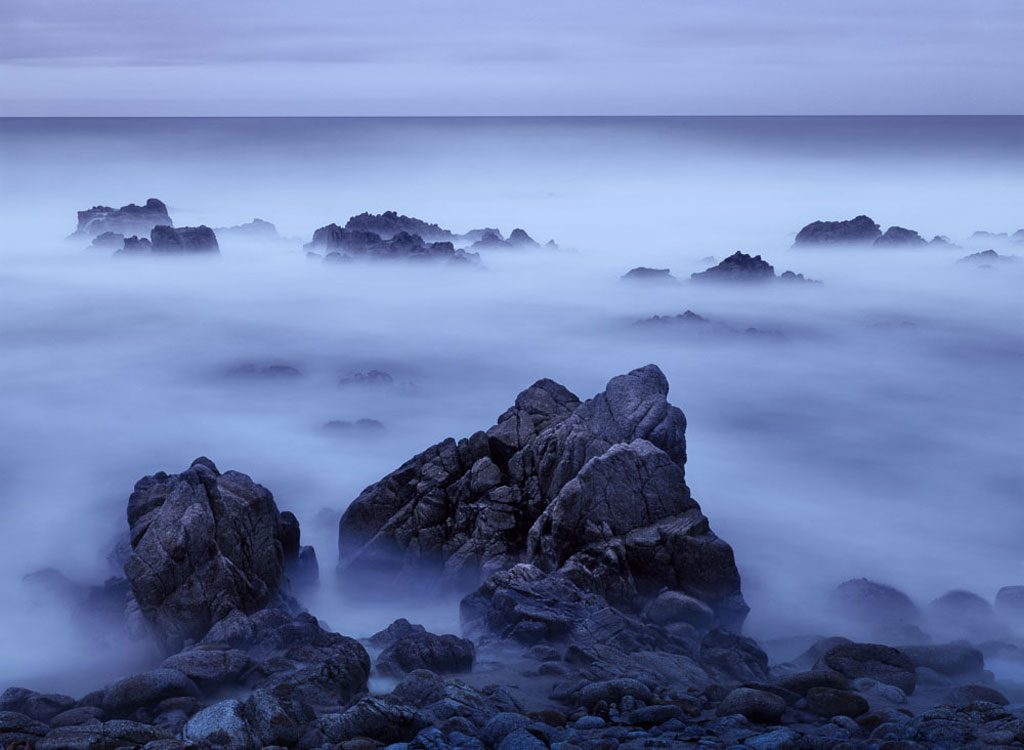
Like his teacher Ansel Adams, Charles Cramer is a master of the piano and photography whose timeless images capture the music of nature in visual form. View Big Sur, Point Lobos, and Cannery Row as the music-lover John Steinbeck saw them in this sample of digital photography of the Central California coast by Charles Cramer.—Ed.

Image of Big Sur photo by Charles Cramer

Morning Mist Looking Down at the Big Sur Coast

Image of Point Lobos cypress forest photo by Charles Cramer

Detail of the Cypress Forest at Point Lobos

Image of Point Lobos fog photo by Charles Cramer

More Cypress Trees, This Time in Fog, at Point Lobos

Image of Point Lobos rocks photo by Charles Cramer

A Detail at Point Lobos, Made One Windy Morning

Image of Garrapta Beach photo by Charles Cramer

Those Famous Rocks Again, This Time With Waves Receding on an Overcast Day

Image of Asilomar area photo by Charles Cramer

A Long Exposure of About Five Minutes Made in the Asilomar Area

Image of Cannery Row photo by Charles Cramer

A Study in Sun and Shadows, Taken Near Cannery Row, From Around 1980

Image of Point Joe sunset photo by Charles Cramer

Sunset Near Point Joe, One of the First Coastal Images I Made 40 Years Ago This Year

Image of Garrapta Beach sunset photo by Charles Cramer

Last Light at Garrapata Beach, One of the Most Photographed Beaches in the Whole Area

Image of Garrapta Beach sunset photo by Charles Cramer

Sunset at a Different Section of Garrapata Beach

Creative Art by Belle Yang Inspired by the Landscape of Steinbeck’s Monterey Bay

Image of Belle Yang's Ching-Chong, Chinaman

Ching-Chong, Chinaman

When Steve Hauk of Hauk Fine Arts Gallery in Pacific Grove, California, curated a show of Steinbeck art and artifacts, I contributed Ching-Chong, Chinaman, a gouache painting inspired by a scene in Steinbeck’s novel Cannery Row. Andy is visiting the Row from Salinas and taunts a mysterious old fisherman. When the Chinese turns around, Andy sees the wilderness of desolation in his eyes. I once read the Steinbeck scholar Susan Shillinglaw’s comment that Steinbeck had ventured into the surreal in this scene. Having listened to my parents’ story of war, poverty, and devastation, I find the depiction far from surreal. I have seen loss through their eyes.

Image of Belle Yang's Cat in the Studio Window

Cat in the Studio Window

This painting is from my China years (1986-89). It was made large on a flat table using traditional paper that breathes like skin. The ink seeps into the paper and blends with its fibers to produce blue-grays, silver grays, warm grays, and the blackest black. I used brushes at least a foot-and-a-half long, loving the movement of my entire body in letting the ink and pigments fly.

Image of Belle Yang's Cat in the Bistro Chair

Cat in the Bistro Chair

A stray came to our house one hundred days after the Tiananmen Massacre. It seemed to my family that the cat was the embodiment of those who were crushed in Beijing by the government, only for asking for corruption to be swept out.

Image of Belle Yang's Lotus in Rain

Lotus in Rain

I spent an entire year watching the growth and decay of the lotus plant. In spring, spears of leaves and the pristine flowers rise out of the muddy water. The plant signifies dignity of a man or woman who emerges out of straitened circumstances, unsullied. In summer the leaf pads catch rainwater. In autumn the stalks bend and break, re-entering the water at crazy angles. In winter the flower pods remain above the ice-bound lakes. They look like black notes on sheet music.

Image of Belle Yang's Chinese at Point Lobos

Chinese at Point Lobos

When my family moved to Carmel in 1971, we were immediately at home in the landscape that seemed to mirror a Chinese painting. It was not until after I had returned from China in 1989 that I read Chinese Gold, a book about the Chinese in the Monterey Bay and Salinas Valley. The Whaler’s Cove at Point Lobos was built by the Chinese. Mahjong tiles, chopsticks, domino pieces, and shards of porcelain have been found under the floorboards of the cottage.

Image of Belle Yang's Sleeping Monk and Tiger

Sleeping Monk and Tiger

You see this image of monk and tiger in Zen Buddhist iconography. A man who is practiced in Zen is able to calm a tiger.

Image of Belle Yang's Chinamen

Chinamen

Following the publication of Chinese Gold, George Ow produced Chinatown Dreams: Life and Photographs of George Lee. Most Chinese men who lived in America during the Chinese Exclusion era (1882-1965) were forced to remain bachelors, for women were not allowed entry.

Image of Belle Yang's Odello Artichoke Field #1

Odello Artichoke Field #1

My father Joseph, who walked over a thousand miles out of China to flee Communism, is frequently my model. He is the storyteller whose tales I’ve turned into books for young and old.

Image of Belle Yang's Odello Artichoke Field #2

Odello Artichoke Field #2

I’ve known this landscape for years, and I’ve lived in this house overlooking the Carmel River and the Palo Corona Ranch, now a regional park. I’ve scrambled in and out of the hills. I’ve come to love the landscape’s flora and fauna; I’ve crossed its creeks and bathed in its swimming holes.

Image of Belle Yang's After Breughal

After Brueghel

I’ve been entranced by Brueghel’s work since I was small, loving to see all the activities of dancing peasants, field workers at supper, hunters in the snow, children on skates, men and women cutting hay or erecting a scaffold for a hanging. In China I saw country folk similarly engaged in the myriad activities of a full life. In the developed West we may drive for hours on a highway, only to see a man pumping gas, a few cyclists, but mostly other drivers.

Image of Belle Yang's Cyclist in the Rain

Cyclist in the Rain

I’m drawn to paintings of rain. I wonder why rain isn’t a more prevalent subject for other artists? I suppose it’s because of the lack of rain in California, a desert and semi-desert environment that gives me the great yearning for the mutter of raindrops on the earth, the fragrance of water on hot, dusty soil. In the words of the novelist Iris Murdoch, “The bicycle is the most civilized conveyance known to man. Other forms of transport grow daily more nightmarish. Only the bicycle remains pure in heart.”

Image of Belle Yang's Plein Air

Plein Air

I started to take art “seriously” at age 11 when I tagged along with watercolorist Nancy Johnson, who lived across the street. She was sympathetic to this only child who was new to the neighborhood.  She drove us in her green VW bug to Point Lobos, Carmel Meadows, the beach, and Cannery Row, where her elderly students were waiting for her morning painting demonstrations.

Image of Belle Yang's Narcissus Farm

Narcissus Farm

Sitting in a field of fragrant narcissi in Carmel Valley on my birthday, my pant legs are soaked by the leaves and flowers dappled with previous night’s rain. I draw on site, then return to my studio to paint. Sometimes years may have passed when I finally return to the drawing to recreate the texture and feeling of that day.

Image of Belle Yang's Point Lobos

Point Lobos

Iconic subjects like Point Lobos, looming across Monterey Bay, are hard to paint. I had a breakthrough when I began to look closely at the patterns everywhere: foliage, vine, pine needles, shrubbery in the distance. From the low-angle perspective of the plant—as opposed to the bird’s-eye-view of a Chinese landscape painter—I was able to see Point Lobos with washed eyes.

Learn more about Belle Yang’s life and work in her own words.

The Chinese of Steinbeck’s Monterey Bay and Salinas Valley: An Artist’s Story

Cover image from Baba, Belle Yang's memoir
My family moved to the Monterey Bay region 45 years ago. We were drawn to the mist-swaddled crags at Point Lobos, which whispered of our ancestral homeland. Yet we felt ourselves alien people, among the first Chinese to have found a permanent nesting place in the celebrated Steinbeck landscape comprised of the Salinas Valley, Monterey Bay, Pacific Grove, and coastal spots—like Point Lobos—familiar to Steinbeck’s readers.
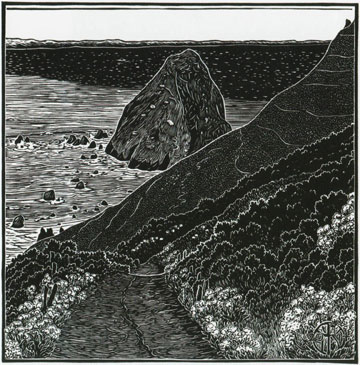
Arriving in Pacific Grove, Returning to China

When we attended the annual Feast of Lanterns Festival in Steinbeck’s Pacific Grove for the first time, I did not imagine that 65 years earlier squid boats lit at night were used to attract mollusks, a harvest from the sea no one wanted until the Chinese created a commercial market for the food, once plentiful in the Monterey Bay. After 1906, the year someone set fire to the Point Alones Chinatown—the location where the Monterey Bay Aquarium now stands—residents of Pacific Grove grew nostalgic for the lights, like fairy lanterns on the water, and so a magic tale was born to glimmer.

Residents of Pacific Grove grew nostalgic for the lights, like fairy lanterns on the water, and so a magic tale was born to glimmer.

I moved away from Chinese culture and history while growing up in the Monterey Bay area: being Chinese in no way helped me fit into the immediate world outside my new home. When I returned to California after witnessing the Tiananmen Square massacre in Beijing, however, I began to understand the importance of stories—which, when burned, glow more brightly. It was 1989, I was 29, and I was given a copy of Chinese Gold, written by a man of passion—Professor Sandy Lydon—and published by a man of philanthropy, George Ow, Jr. From this book I learned about the early Chinese of the Salinas Valley.

Remembering the Earliest Chinese in the Salinas Valley

When they arrived in the 19th century, Chinese immigrants to the Salinas Valley signed five-year leases to work the land. In the first two years they cut trees, yanked out roots with knife-like spades, and wrestled out peat soil. They exterminated gophers and ground squirrels; they drained and dried the swampland. In the third year they planted the vegetable crops dictated by the landowner: large-root crops like potatoes to further break up the soil. Only in the fourth year of their lease were they allowed to recover their three-year investment before returning the land to the owner. The Chinese risked everything. The landowner was ahead of the game the minute the lopsided lease was signed. Salinas Valley land, worth $28 per acre in 1875, came to be valued at $100 an acre within two years. When C.D. Abbott and other big landowners were accused by anti-immigration agitators of being Chinaman-lovers, Abbott replied, “White men refused to work up to their knees in the water, slime and filth of the sloughs.”

When C.D. Abbott and other big landowners were accused by anti-immigration agitators of being Chinaman-lovers, Abbott replied, ‘White men refused to work up to their knees in the water, slime and filth of the sloughs.’

In a recent hike through the high Santa Lucia mountains above the Salinas Valley—an area where wheat was once dominant, followed by hops and then tobacco, before sugar beets succeeded the earlier crops as emperor–I could see the vast valley as it looks today, with its viridian and chartreuse patchworks of lettuce. It was easy to imagine what the Chinese saw when they un-kinked their aching backs and scanned the land as it appeared more than a century ago, flowing like a river of grass from the gentle Gabilan hills that Steinbeck loved much more than the ominous mountains to the west.

Imagine what the Chinese saw when they un-kinked their aching backs and scanned the land as it appeared more than a century ago.
The Chinese who farmed the valley knew that where willow grew, there would be fresh water, not salinas, the Spanish word for salt water that gave the Salinas Valley, river, and town their distinctive names. I could smell the immigrants’ desire for land and all the rights that landownership meant. They knew about the poverty of less promising terrain from the populous provinces of Guangdong, the part of China from which they came. This Salinas Valley and Monterey Bay peninsula—all this rich land celebrated by Steinbeck in his autobiographical novel East of Eden—could feed so many mouths! Most of the arable land at the time was concentrated in the hands of a few rancheros. In the eyes of the Chinese, more—much more—could be done to make the Salinas Valley what it eventually became, a source of vegetable and fruit crops for export on a huge scale. They saw this before anyone else.

In the eyes of the Chinese, more—much more—could be done to make the Salinas Valley what it eventually became, a source of vegetable and fruit crops for export on a huge scale.

Each time I drive to the valley from the coast today, crossing the highway bridge over the shallow Salinas River, the sky yawns amply and I recall the dramatic topography described by Steinbeck in East of Eden. It was rich land for which men hungered—land that they fought pitched battles to seize, settle, and hold. It was the same kind of land that the Communists in my great-grandfather’s Manchuria wrested away from the haves to be redistributed, not always fairly, to the have-nots. I inhale the love of land like this from the stories passed down to me by my father about the House of Yang, eight generations in the telling, in the China of his youth, and his father’s, and his father’s father.

It was the same kind of land that the Communists in my great-grandfather’s Manchuria wrested away from the haves to be redistributed, not always fairly, to the have-nots.

California’s 1913 Alien Land Law targeted the Japanese but snared all Asian immigrants, barring them from becoming naturalized citizens who could own property. As a result, the Chinese who saw value where others saw trash and weed never gained control of the land they farmed in the Salinas Valley. According to legend, the Franciscan friars who first colonized the Monterey Bay had scattered mustard seeds to create a trail of gold connecting each mission they founded to the next in the chain that extended south from Monterey to San Diego and north to Sonoma. After the Spanish left, Chinese settlers cut the mustard weed for landowners in exchange for the seeds. One year the mustard crop failed in Europe, and the Chinese profited from their foresight.

Appreciating the Chinese Experience in Steinbeck’s Books

California’s Chinese Exclusion Act of 1882—which forms part of Steinbeck’s character Lee’s story in East of Eden— specifically singled out the Chinese because, it was claimed, they disrupted the social order. The onerous law barred Chinese women from entering the United States, which meant Chinese men were unable to marry. Imagine the strain of two opposing forces: between the desire to go back to China to marry and return to raise a family, and the fact that the certificate required for re-entry excluded wives. As the tragic experience of Lee’s parents shows, the early Chinese in California would remain outsiders, looking in hungrily, often dying alone and forgotten on alien soil that they helped reclaim, cultivate, and make profitable by building railroads at slave wages.

As the tragic experience of Lee’s parents shows, the early Chinese in California would remain outsiders, often dying alone and forgotten on alien soil.

I first read Steinbeck’s novel Cannery Row when I was 11, and reread it often as an adult. Steinbeck’s depiction of the mysterious, eternal outsider moves my heart each time I meet him in the pages of the book: the old Chinaman in Pacific Grove who with one flapping shoe walks down to Monterey Bay at dusk and fishes, always alone, in the night. Andy, a boy visiting from Salinas who is itching to be contrary, encounters the old man and mocks him in sing-song doggerel: “Ching-Chong-Chinaman sitting on a rail—’Long came a white man an’ chopped off his tail.” As the old man turns, the boy sees in those brown, alien eyes a landscape of spiritual desolation. It is the dying landscape from which the Chinese fled to California in the 19th and 20th centuries. In those two brown pools Andy encounters the ultimate despair of the excluded. My black and white gouache painting Ching-Chong Chinaman records this epiphany, captured by Steinbeck in the sparest of terms.

Plotting the Path of the Hakka Boat People to Point Lobos

Currently I am at work on In the Guava Garden, a graphic memoir about my Hakka mother, who lived under the Japanese colonial system in China from 1895 to 1945. What does the Hakka story have to do with Monterey Bay? In Chinese Gold I learned that a group of Tanka Chinese—part of the clannish Hakka people, who lived and died on boats— came to California, not through San Francisco or the mining camps of the Sierra Nevada, but as refugees directly to the Monterey Bay region, riding the black tide the Japanese knew as the kuroshio. After being shipwrecked at the mouth of the Carmel River, they settled at Point Lobos, where they constructed a simple home known today as the Whaler’s Cottage. The story of their landing has been passed down to their descendants, and the cottage still stands.
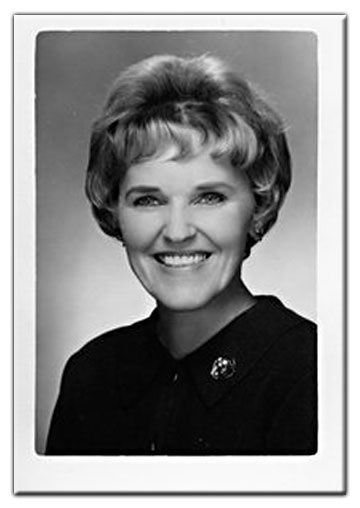
After being shipwrecked at the mouth of the Carmel River, they settled at Point Lobos, where they constructed a simple home known today as the Whaler’s Cottage.

The Chinese-language characters for Hakka mean “guest people.” In the third century, the Hakka lost their original homeland north of the Yellow River to invading nomads. Some managed to eke out a living anyway, farming the poorest of soil. Others were driven in desperation out to sea to found colonies in other lands. So the saga of one branch of landless Hakka people—to whom my mother belongs by an extenuated history of 1,400 years—came to California in 1851. It’s possible that Chinese refugees before the Hakka, before the Gold Rush, arrived by this same direct route.

Learning the Legacy of Monterey Bay’s Forgotten Ghosts

Monterey Bay’s written history includes little about these Chinese settlers, apart from vague names in the mountains or along the seashore, such as China Camp, Chinese Dam, Chinese Camp, and China Cove. They have become faceless ghosts through a complicity of mutual convenience: between newer Chinese residents anxious to avoid persecution and white settlers determined to cover up the murder, arson, and land theft that drove the Chinese from their settlements. So-called Chinatowns on beaches and in towns have been burned down, torn down, or simply forgotten. Steinbeck alludes to this tragedy in East of Eden, but much remains, repressed and half-hidden, for future historians who are interested in painting the whole picture.

So-called Chinatowns on beaches and in towns have been burned down, torn down, or simply forgotten. Steinbeck alludes to this tragedy in East of Eden.

Forty-five years ago my parents drove a rusted, borrowed Ford station wagon, loaded with clanging pots and pans and one canary in a cage, south from the city of San Francisco to the Monterey Bay region. We felt like raw strangers when we arrived because we were. Only when I returned to live in China for a period as an adult did I to consider that other Chinese preceded us because of their need to extend their muscle and exercise their talents. They couldn’t own land, but their labor and vision helped make the Salinas Valley and the coast of Monterey Bay prosper and grow. Their toil and tribulation also gave my family a sense of permanence, belonging, and inclusion that those who came before us never had. This is our home, our chosen homeland. It was theirs as well.

Adapted by the author from her recent “California Author Series” feature, commissioned by the Sacramento Bee. View her images of Monterey Bay, Point Lobos, and the Salinas Valley.

Why John Steinbeck Would Support Bernie Sanders Now

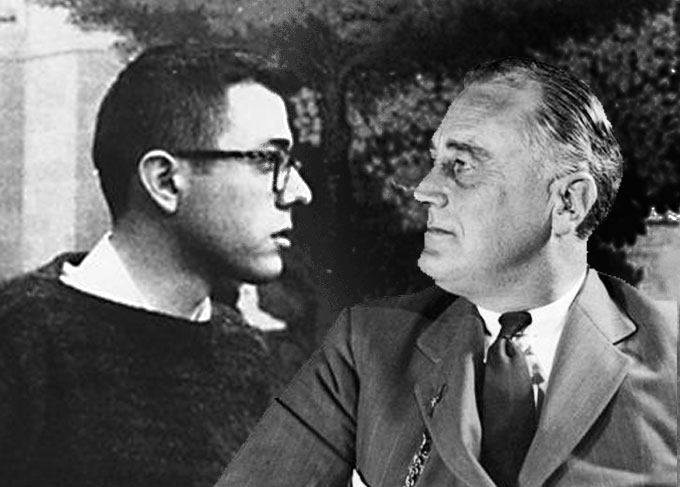
Composite image of Bernie Sanders, John Steinbeck, Franklin Roosevelt, and Adlai Stevenson

If John Steinbeck were alive today he would support Bernie Sanders for president.

Why? Because Bernie Sanders is the kind of outspoken progressive the author of The Grapes of Wrath enthusiastically embraced during his controversial career as a prize-winning writer of popular fiction. A passionate believer in fair play, Steinbeck endorsed presidential candidates committed to populist causes, actively campaigning for Franklin Roosevelt, who was elected four times, and Adlai Stevenson, who ran twice but lost both races. More than either man, Bernie Sanders talks straight in plain language about equality and integrity, Steinbeck’s core values—a New England character trait that Steinbeck both admired and inherited. The Sanders movement is about issues, not personality; Steinbeck wanted to be remembered for his books, not his life. But his life was public and political, and a little biography is needed to show why he’d be for Bernie Sanders today.

Why John Steinbeck and Bernie Sanders Would Get Along

Steinbeck was born in Salinas, California, in 1902, and grew up in the small town during the era of Theodore Roosevelt, the Republican President who busted the big business trusts and moved to curtail private exploitation of public lands by creating parks such as Yosemite. John’s mother was an ex-schoolteacher and tireless civic volunteer. His father was a failed small-businessman who became the elected Treasurer of Monterey County. His mother’s parents emigrated from Ireland, while his father’s people were New Englanders—half-English and half-German. Both parents were Party-of-Lincoln Republicans who believed in social improvement, access to education, and reforming government to make it work better. Steinbeck was proud of these roots, later writing that everybody in Salinas was a Republican back then, and that if he had stayed in Salinas he would have become one, too.

Steinbeck was proud of his roots, later writing that everybody in Salinas was a Republican back then, and that if he had stayed in Salinas he would have become one, too.

Like Bernie Sanders, John Steinbeck grew to distrust the corrupting influence of corporations and how working people were manipulated to vote against their economic self-interest—urban vs. rural, native- vs. foreign-born, small farmers and white laborers vs. Mexicans, Chinese, Filipinos, and refugees from the Dust Bowl. He hated the social snobbery he encountered as a student at Stanford University in the 1920s, working as a field hand and night watchman in summers and off-semesters to help pay his way but quitting before getting a degree. In 1925 he left for New York to find his own way. There, like Bernie Sanders, he failed at more than one job before returning to California to make ends meet as a caretaker-handyman on a rich man’s estate. The Great Depression that resulted from Wall Street’s collapse in 1929 gave Steinbeck the subject he needed to become a politically engaged writer: the brutal suppression of non-union workers by California’s big business interests. The state’s powerful industrial-agriculture complex became the target of his 1939 masterpiece, The Grapes of Wrath.

The Great Depression that resulted from Wall Street’s collapse in 1929 gave Steinbeck the subject he needed to become a politically engaged writer: the brutal suppression of non-union workers by California’s big business interests.

Also like Bernie Sanders today—and most Americans at the time—Steinbeck believed in gun-rights, but was too tenderhearted to hunt. Instead, he kept a gun for self-protection. Hired thugs threatened to break his legs or worse for what he was writing about workers’ rights, even before The Grapes of Wrath, and the sheriff warned him of a plot to set him up for a rape charge. Threats failed to change his mind, and the celebrity he achieved through his writing changed his behavior but not his character. Like Bernie Sanders, he remained pro-labor all his life and more at ease with working people than with billionaires. He refused to own a Ford because Henry Ford was an anti-union anti-Semite whose cars Steinbeck thought inferior. Steinbeck described another billionaire as so driven by avarice that late-life regret forced him to try buying his way into heaven through philanthropy.

Like Bernie Sanders, he remained pro-labor all his life and more at ease with working people than with billionaires. He refused to own a Ford because Henry Ford was an anti-union anti-Semite whose cars Steinbeck thought inferior.

The greatest influence on Steinbeck’s thinking about politics was probably his first wife, Carol Henning, a progressive activist who suggested the title of The Grapes of Wrath. Together they supported the New Deal programs of President Franklin Roosevelt, whose First Lady became Steinbeck’s friend and ally. Like Bernie Sanders, however, Steinbeck had a wise way of not rejecting those who disagreed with him about party affiliation. He remained loyal to his Republican sisters, though he deeply disliked their fellow Californian Richard Nixon, and he despised William Randolph Hearst, the father of yellow journalism—the Fox News of American politics at the time. Steinbeck died in New York the month after Nixon was elected president in 1968. If Steinbeck and Bernie Sanders had met in the ’60s, unlikely but conceivable, they would have agreed about the movement for desegregation and voting rights and disagreed about the war in Vietnam, an issue that eventually got Steinbeck in trouble with his friends.

John Steinbeck, Franklin Roosevelt, and Adlai Stevenson

When Steinbeck’s enemies accused him of being Jewish because of his surname and his sympathies, he replied that he would be pleased if it were so. In reality his religious roots were Protestant, and he grew up in the Episcopal Church—the church of Franklin Roosevelt, a New York aristocrat of Dutch descent whom detractors also accused of being a Jew. Just as Steinbeck’s parents had supported the progressive policies of Teddy Roosevelt, FDR’s Republican cousin, Steinbeck advocated Franklin Roosevelt’s New Deal as a way out of the pain and suffering caused by Wall Street in the Great Depression. When world war broke out the year The Grapes of Wrath was published, Steinbeck found himself blackballed by military bureaucrats in Washington and abused by his local draft board. Despite his support for FDR and the fight against Fascism, he questioned the government’s internment of Japanese-Americans and criticized pro-war propaganda created by New York ad men and Hollywood studio warriors. After showing courage under fire as an embedded newspaper correspondent on the Italian front, he was refused the award for valor that many thought he deserved. When he returned to the United States he said the worst thing about war was its dishonesty.

Despite his support for FDR and the fight against Fascism, he questioned the government’s internment of Japanese-Americans and criticized pro-war propaganda created by New York ad men and Hollywood studio warriors.

Doubts about the Cold War, plus Eleanor Roosevelt’s endorsement, motivated John Steinbeck to support Adlai Stevenson over Dwight Eisenhower in 1952 and 1956. Stevenson’s cool intelligence and firm grip on fact-based reality appealed to Steinbeck’s intellect, which he developed by dialogue and research. The same traits made Stevenson a target of Cold Warriors from both parties connected to what Eisenhower later called out as the military-industrial complex in his last State of the Union address. Stevenson was an independent-minded politician with a consistent message, an activist following, and an aversion to the kind of character assassination used against him when he ran for president. Like Franklin Roosevelt and Bernie Sanders, he was John Steinbeck’s idea of an authentic progressive.

Adlai Stevenson was an independent-minded politician with a consistent message, an activist following, and an aversion to the kind of character assassination used against him when he ran for president. Like Franklin Roosevelt and Bernie Sanders, he was John Steinbeck’s idea of an authentic progressive.

Along with Eleanor Roosevelt, Steinbeck encouraged Stevenson to run again in 1960 before shifting his support to John Kennedy. After the election Stevenson and Steinbeck grew close, closer than Steinbeck ever was to Franklin Roosevelt. Like Bernie Sanders, Stevenson had a scientific, secular worldview that attracted Steinbeck but invited opponents to characterize Stevenson as an egghead who was unqualified to be president because he read books and liked culture. Steinbeck, who wrote long books, shared Stevenson’s enthusiasm for music and reading. Cool Bach was playing in the background as Steinbeck wrote The Grapes of Wrath. So was the edgy music of Igor Stravinsky, a Russian refugee with a wild, insistent sound more like Bernie Sanders than Bach or Adlai Stevenson.

But Couldn’t John Steinbeck Be for Hillary Clinton?

Answer: If Bernie Sanders weren’t running, yes, but with reservations. Here’s why.

John Steinbeck’s third wife was a Texas friend of Lady Bird Johnson, and the Steinbecks were White House guests when LBJ needed help with the intellectuals he thought Steinbeck, like Stevenson, represented. It’s easy enough to imagine Elaine Steinbeck, the first non-male stage manager in Broadway history, favoring a female candidate for president today. But the influence she exerted turned out badly for her husband in the 1960s. Steinbeck’s sense of loyalty to the Johnsons led him to get the Vietnam War very wrong, despite the lesson he learned in World War II. He kept his mouth shut in public after touring Southeast Asia at Johnson’s urging. In private he confessed that the government had no business interfering in the civil war of a country that hadn’t attacked America.

Today John Steinbeck would be for Bernie Sanders, the no-nonsense New Englander with a consistent record on everything that mattered most to Steinbeck: social justice, individual integrity, and saving the people and the planet Steinbeck celebrated in The Grapes of Wrath.

If he’d lived, Steinbeck would have opposed the Bush-Cheney wars for the same reason—plus the deceit and dishonesty used to justify the invasion of Iraq. At the time, Bernie Sanders joined Barack Obama in opposing the Iraq war from the floor of the U.S. Senate. Like a Cold War Democrat in the days of Lyndon Johnson, however, Senator Clinton went along with the crowd and voted yes. Steinbeck paid dearly, in reputation and in conscience, for following the White House line on Vietnam, despite his distrust of Wall Street and warmongering and his understanding of their connection. Given that experience, he’d distrust Clinton—for her Wall Street friends as much as for her flip-flopping on Iraq. In 2008 Steinbeck would have supported Obama—an egghead from Illinois, like Adlai Stevenson—and rejoiced in the result. Today he’d be for Bernie Sanders, the no-nonsense New Englander with a consistent record on everything that mattered most to Steinbeck: social justice, individual integrity, and saving the people and the planet Steinbeck celebrated in The Grapes of Wrath.

The Scottish Lord and Pearl Harbor—Winston Churchill’s Protected Spy: A True Story

Image of Winston Churchill mug

A Story of Betrayal in John Steinbeck’s Time

Winston Churchill’s mug? Odd connections to John Steinbeck’s life continue to appear at SteinbeckNow.com, thanks to authors like John Bell Smithback, a Far East expert and former resident of the neighborhood in Pacific Grove, California, where Sea of Cortez was written in 1941. His true story of the spy who contributed to the attack on Pearl Harbor—the 200th post since SteinbeckNow.com started—combines compelling narrative, imaginative investigation, and a streak of ornery independence, features that appeal to our readers and attract web surfers to John Steinbeck. Who knew that Winston Churchill colluded, through his silence, with a high-ranking Scottish spy to provide Franklin Roosevelt a reason to join Britain’s war with Germany? The true story begins in the spring of 1941, as Steinbeck sat writing Sea of Cortez while his marriage collapsed, Europe fell, and Japanese aggression threatened the Far East. On December 7, within days of the book’s publication, Japan attacked America at Pearl Harbor and Franklin Roosevelt declared war, as Winston Churchill had every reason to hope. Pearl Harbor swamped Sea of Cortez, which as John Steinbeck predicted it would, sold poorly. Blackballed from receiving a military commission by brass in Franklin Roosevelt’s war office, Steinbeck—remarried and living in New York in 1943—enlisted as a foreign war correspondent for American newspapers, reporting first from England, then from North Africa and Italy. In London he got leads and told stories other reporters overlooked. Did he hear rumors of a high-ranking spy in Winston Churchill’s government? “Certain people could not be criticized or even questioned,” he wrote years later in Once There Was a War, a collection of his World War II correspondence: “It is in the things not mentioned that the untruth lies.”—Ed.

Cover image of the first edition of Sea of Cortez

Watching Churchill’s Funeral: An Incident in Pacific Grove

“Ambition, not so much for vulgar ends, but for fame, glints in every mind.”

                                                                     Winston Churchill, The Second World War

John Steinbeck lived just around the corner. He was on Eardley Avenue and I was on Laurel. Of course, we lived there at different times—so different, in fact, that it might be said we inhabited Pacific Grove in different eras. When John was there in the spring of 1941, he and Ed Ricketts were working on Sea of Cortez and World War II was underway. Most of Europe was occupied by German forces, and Hitler had begun his invasion of the Soviet Union. General Rommel’s Desert Afrika Korps had taken Benghazi, President Franklin Roosevelt announced that he’d run for a third term, and the Japanese looked more and more menacing in the Far East. Glenn Miller’s Chattanooga Choo Choo would be playing on John Steinbeck’s radio, and Cheerios had just been invented.

During my time in Pacific Grove, Lyndon B. Johnson was President, Martin Luther King was leading the march from Selma to Montgomery, Dr. Benjamin Spock, Norman Mailer, and Norman Thomas were holding a teach-in in Berkeley to protest Johnson’s war in Vietnam, and a publication put out by the John Birch Society claimed that Negroes in America were better off than ever because of the good will of whites. The Byrds were singing Mr. Tambourine Man and television had replaced radio.

It’s January 30, 1965, and outside my door I notice a small woman moving back and forth with uncertainty. She studies my house, bends forward to read my address, then moves on. I turn on my television and find there is wall-to-wall coverage of Winston Churchill’s funeral. A barge with his coffin is moving slowly up the Thames past Tower Bridge, and the event is being described as one of the most moving tributes in modern history.

John Steinbeck lived just around the corner. He was on Eardley Avenue and I was on Laurel.

It’s at that moment that my doorbell rings and I open the door to find a frail and  bewildered woman standing there. She’s the same one I’d seen earlier, and she says she’s visiting from England. She’s lost, she exclaims, and says she can’t seem to find her family’s house. I ask the address and assure her the house she’s looking for is nearby, just around the corner and down the block. She’s obviously exhausted so I open the door and invite her in, offering her a cup of tea and a chance to rest. “Winston Churchill’s funeral is on television, live and direct from London,” I say. “Come in and watch, and then I’ll drive you home.”

She stiffens and makes a disagreeable face. “Young man,” she scowls, “those of us who lived through the horrible days of the war owe everything to that great man. We stood alone, and his speech about fighting the Germans on the beaches strengthened us and led us through those terrible times. Even now, I can remember listening to his words on the wireless, and no thank you, I will not come in. I wouldn’t think of watching Sir Winston Churchill’s funeral on American television!”

Such determination. And such a mistake. The truth is that few of Churchill’s speeches were broadcast during World War II: they were spoken in the House of Commons at Westminster to members of Parliament. Only after the warin some cases, nine years after itsensing the historical, political, and financial gains to be had, did Churchill record them in a studio for posterity. It wasn’t the first time the public had been duped into believing what Winston Churchill wanted history to believe.  A true-story timeline of his long career would be made up of an unbroken series of serious errors, horrendous blunders, and Machiavellian maneuvers made to cover his many mistakes and further his vast ambitions.

Image of Winston Churchill V-ing for victory

Churchill the Manipulator, Wrong About Almost Everything

Several years ago the late Christopher Hitchens wrote a revisionist version of Churchillian history for The Atlantic magazine, describing Winston Churchill as “ruthless, boorish, manipulative, alcoholic, myopic, and wrong about almost everything” and noting that Churchill himself admitted he “never stood so high upon a principle that he could not lower it to suit the circumstances.” And lower it he did. So far, in fact, that had anyone else been Prime Minister when World War II ended, Winston Churchill—a Tory turned out of office by a Labor Party sweep—would in all likelihood have been arrested and tried for high treason.

Churchill was a master manipulator—ignoring the truth, bungling the facts, and rearranging historical events to enhance his deeply flawed role in a political career spanning nearly half a century. In his Atlantic article, Hitchens short-listed the worst mistakes, misdeeds, and deceptions and explained Churchill’s method: “A sort of alternate bookkeeping was undertaken, whereby the huge deficits of his grand story (Gallipoli, the calamitous return to the gold standard, his ruling-class thuggery against the labor movement, his diehard imperialism over India, and his pre-war sympathy for fascism) were kept in a separate column that was sharply ruled off from ‘The Valiant Years.'”

While the calculatedly slow release of official papers of the British government has helped Hitchens write Winston Churchill down, neither Hitchens nor anyone else to my knowledge exposed two acts of calculated treachery that facilitated Japanese imperial aggressions in the Far East, a deceit designed to drag the United States into World War II and give Franklin Roosevelt the justification needed to overcome domestic resistance. The first involved a Scottish lord, the second a slow-moving steamship.

Image of the Scottish lord, William Francis Forbes-Sempill

Churchill’s Spy, At Work For Japan

The Scotsman was a hereditary member of the British House of Lords named William Forbes-Sempill, the 19th Baronet of Craigievar. A decorated Royal Flying Corps pilot in World War I, Sempill transferred to the Royal Navy Air Service when World War I ended in 1918. In 1921, the Imperial Japanese Navy requested England’s help in setting up its nascent naval air service. In the hope of negotiating a number of lucrative arms deals, the British Admiralty appointed Sempill to lead the government’s advisory delegation to Tokyo.

When he left for Japan, Sempill took with him the plans for two new British aircraft carriers, the HMS Argus and the HMS Hermes. Once he arrived, he proceeded to persuade the Japanese of the advantage of basing naval warplanes on ocean-going carriers instead of on airfields. Sempill was so pleased with his success in convincing the Japanese that he remained in Japan for 18 months, training pilots in techniques of flight control and shallow-water torpedo bombing—skills that 20 years later the Japanese Empire was to employ to disastrous advantage in attacking the United States fleet at Pearl Harbor.

Acknowledging Sempill’s “epoch-making service” to the Empire, Prime Minister Tomosaburo Kato awarded the Scottish lord Japan’s highest honor, the Order of the Rising Sun, “for his especially meritorious military service.”  Sempill faithfully returned the favor: for the next two decades he was paid to provide the Japanese with secret information on the latest British aviation technology, helping Japan become a world-class naval power. It was only when Franklin Roosevelt’s administration raised concern over Japan’s growing naval strength that the British government questioned Sempill about leaking secrets to Tokyo. A resulting investigation revealed that Sempill was an active member of several far-right, anti-Semitic organizations in England, including the fascistic Anglo-German Fellowship, a secretive group dedicated to ridding the Tory Party of Jews.

Image of the Duke and Duchess of Windsor

The House of Windsor’s High Hopes for Germany

But Sempill wasn’t the only member of England’s establishment elite who embraced fascist ideology. The most famous—Sir Oswald Mosley, the 6th Baronet of Ascoats—founded the British Union of Fascists, and its activities received positive press from London’s Daily Mirror newspaper owned by the billionaire Lord Rothsmere, a Viscount. As Hitler rose to power in Germany, Mosley’s organization attracted dozens of viscounts and dukes, earls and barons, and a wide assortment of Lords and Ladies of the realm who were sympathetic to fascism and opposed to the rising Labor Party.

Even the Royal House of Windsor—formerly the German House of Saxe-Coburg and Gotha—contained ardent supporters of Hitler’s cause. Until being forced to renounce his throne “for the woman I love,” Edward VIII, later Duke of Windsor, maintained such friendly relations with the Nazis that Albert Speer, Hitler’s arms minister, lamented his abdication: “I am certain that through him, permanent friendly relations could have been achieved. If he had stayed, everything would have been different. His abdication was a severe loss.” Two years after the outbreak of World War II, the disgraced Duke of Windsor and his American wife were living in neutral Portugal, where they met with Hitler’s representatives to negotiate a Nazi-sponsored return to the British throne. The twice-divorced Duchess stated that she would become Queen of England “at any price.”

Sempill wasn’t the only member of England’s establishment elite who embraced fascist ideology.

In Britain, the appeasement policy of Prime Minister Neville Chamberlain had been quietly encouraged by members of the House of Windsor who feared Britain’s involvement in the war would spell the loss of the British colonial empire. When the Duke of Windsor’s brother became King George VI, his Queen was heard to say she’d be happy enough if the Nazis invaded—”as long as they kept the royal family.”

For a time, neighboring Norway (the unnamed nation in John Steinbeck’s The Moon Is Down) entertained hopes that an arrangement with Hitler to remain neutral would keep the Nazis at bay and the monarchy intact. But when Norwegian royalty and the entire Norwegian cabinet suddenly showed up on England’s shores as refugees, barely escaping the Nazi occupation, Neville Chamberlain finally submitted his resignation to Buckingham Palace. The date was May 10, 1940, and at the pleasure of the King on England, the First Lord of the Admiralty Winston Spencer Churchill was instated as Prime Minister.

Image of President Franklin Roosevelt

Churchill and Franklin Roosevelt’s Fateful Atlantic Meeting

As Winston Churchill prepared to move into No. 10 Downing Street, he was handed a document from the war government’s new Bletchley Park Code and Deciphering Unit. The report showed that Sempill was still receiving payments, funneled through the Mitsubishi Corporation, to spy for the government of Japan from his position in the Admiralty office. For reasons of his own, Churchill chose to ignore the evidence and Sempill kept his post at Admiralty, where he continued to have unlimited access to sensitive information about military hardware and official secrets.

Though nearly all of the intelligence files on Sempill’s subsequent activities mysteriously  disappeared, surviving records show that he traveled with Churchill to meet with Franklin Roosevelt at the Atlantic Conference, held in Newfoundland in August of 1941. Four months earlier, a Gallop Poll indicated that three-quarters of Americans would support joining England’s war, but only if they believed there was no other way to defeat Germany. Bolstered by the poll, Roosevelt sent his close friend and special adviser, Harry Hopkins, to deliver a private message to Winston Churchill in London: “The President is determined that we shall win this war together. Make no mistake about it: he has sent me here to tell you that at all costs and by all means he will carry you through.”

At the Atlantic Conference, however, Roosevelt reminded Churchill that the 1937 Neutrality Act enacted by Congress prevented direct intervention, and that the strong isolationist element in Washington still tied his hands.  America First, a conservative anti-war movement formed after 1919, persuaded many citizens that enough American blood had already been shed in Europe, and the sentiment was shared by progressives within the President’s own party, many of them isolationists who expressed disappointment that Europe was “acting so tribal” and seemed unable to attend to its own affairs. A Republican Senator, Robert Taft, the son of a former President, spelled it out bluntly: “Even the collapse of England is to be preferred to the participation for the rest of our lives in European wars. If we enter the war today to save England, we will be involved in her wars the rest of our lives.”

Though details of what transpired at the Atlantic Conference remain cloudy at best, we know that two weeks before the meeting Franklin Roosevelt had closed the Panama Canal to Japanese traffic; and in retaliation for the Japanese occupation of French Indo-China, he ordered the seizure of Japanese assets in the United States. The governments of Britain and the Dutch East Indies quickly followed suit, with the result that, virtually overnight, Japan was deprived of 88 percent of its imported oil supply.

We also know Roosevelt again reminded Churchill  that because of the Neutrality Act, the U.S. could only offer a token contribution to the British war effort.

“At least for now,” Roosevelt said.

“Unless,” Churchill asserted, “you are attacked.”

Roosevelt agreed: “Unless we are attacked first.”

And if that attack on America came from Japan? At Guam or Wake Island? Or in the Philippines, or even Pearl Harbor? Would the United States concentrate its forces in the Pacific rather than in Europe? In other words, when could England count on America’s attention?

Franklin Roosevelt, a New York patrician of Dutch-English descent, reassured Winston Churchill—the son of an American mother—that the United States was “with him all the way.” In the event of such an attack, America would throw her full weight behind Britain to defeat Germany and liberate Europe. Until then, fighting a war in the Pacific would be put on hold.

Churchill had cause to press his point: he knew that in a matter of months—even weeks—the United States would, somewhere in the Pacific, be attacked by Japan. Even Roosevelt knew something ominous was transpiring, for at that very moment all Japanese merchant vessels were being called home, presumably in preparation to transport troops and war material to points in the Far East targeted in Japan’s invasion plans.

But Churchill had other, more personal reasons for bringing Sempill to the meeting with Roosevelt. In the first instance, Sempill’s paymasters in Tokyo would learn that Roosevelt was giving them a considerable period of grace—as long as two or even three years—in which to solidify their gains. And secondly, Sempill’s boss, Winston Churchill, knew he would need a scapegoat for what was about to happen to Britain’s colonies in the Far East. It was, after all, a matter of political preservation, for at that point only he knew about the capture of the English steamship, the SS Automedon . . . .

Image of the SS Automedon

The SS Automedon: The Ship That Launched a Thousand Lies and Would Lead to the Death of Millions in the War

Within five days of the Atlantic Conference, Bletchley Park experts decoded a series of messages to Tokyo from the Japanese embassy in London containing nearly word for word the conversations that had occurred between Franklin Roosevelt and Winston Churchill aboard the USS Augusta and the HMS Prince of Wales off the coast of Newfoundland. When Churchill read the transcript, he acknowledged it was “pretty accurate stuff,” then signaled for Sempill’s removal: “Clear him out while there is still time.”

Called before the Chief of Naval Air Services, Sempill received an ultimatum: quit or get sacked. Before Sempill could clear his desk, however, Churchill reversed his order to fire the spy. “I had not contemplated Lord Sempill being required to resign his commission,” he explained, “only that he be assigned elsewhere in the Admiralty.”

The story of the SS Automedon had yet to be disclosed. Best to keep a first-class spy like Sempill close at hand for a future bailout.

Best to keep a first-class spy like Sempill close at hand for a future bailout.

Outside John Steinbeck’s cottage beneath the oaks on Eardley Avenue, scrub jays call to one another in the trees, the California sun is warming the fragrant pines, and the monarch butterflies are making their annual pilgrimage to Pacific Grove. The writer has learned that The Grapes of Wrath has been awarded the 1940 Pulitzer Prize for Fiction, the controversial novel selling more than 430,000 copies, and Viking Press had ordered another printing. Steinbeck is spending his mornings working on a new book, one he and Ed Ricketts will call Sea of Cortez: A Leisurely Journey of Travel and Research.

But John Steinbeck doesn’t appear happy. There is a melancholy air about him as he makes manuscript corrections, sips a beer, and listens to Tommy Dorsey’s I’ll Never Smile Again on the radio. War clouds hover figuratively over his narrative of adventure and discovery, co-authored with Ricketts. Though Steinbeck’s wife Carol accompanied them on the expedition, he has just written her out of the book. Very soon he will write her out of his life.

John Steinbeck doesn’t appear happy. There is a melancholy air about him as he makes manuscript corrections.

Under a lead-colored sky in a more somber part of the world, a merchant ship flying the British ensign leaves the port of Liverpool bound for the tropical waters of Singapore. Hugging the coastline to avoid detection by German submarines, the slow-moving vessel eventually steams around the Horn of Africa into the relative safety of the Indian Ocean. Three days later, making its way east through calm seas, the SS Automedon is detected by a German military ship, the Atlantis—part of a fleet of surface raiders known as “ghost ships” that seek out and destroy merchant vessels carrying cargo to the Far East.

During a short encounter, the wireless operator aboard the Automedon has time to send a distress call that is picked up by two nearby merchant ships flying the British flag. They immediately send coded messages detailing the incident to naval listening stations in Singapore and Durban, South Africa. In turn, both stations relay word of the ship’s imminent capture to London. Overwhelming evidence indicates that British military authorities at the highest level are made fully aware of the Automedon’s fate.

At the scene of the encounter, a  boarding party from the German ship finds the Automedon’s captain dead at the helm. A report filed by the leader, First Lieutenant Ulrich Mohr, states that “the ship proved to be unarmed and the crew gave up without a struggle. Unobstructed, we got to work on the strong room where we found fifteen bags of secret mail, including one hundredweight of decoding tables, fleet orders, gunnery instructions, and various British Naval Intelligence reports, including all the top-secret post en route for the Far Eastern Command, Singapore.”

Included in the haul is a complete set of Royal Navy fleet ciphers, New Merchant Navy ciphers scheduled to become valid in two months, a wealth of British Admiralty shipping and intelligence summaries, and several green bags containing 6,000,000 freshly minted New Straits Singapore dollars.

Lieutenant Mohr’s report continues: “Our search of the Chart Room brought us far greater rewards. Our real prize was a long narrow envelope enclosed in a green bag marked HIGHLY CONFIDENTIAL – SAFE HANDS – TO BE DESTROYED. It was addressed to the Commander in Chief, Far East, with the words TO BE OPENED PERSONALLY. It was equipped with brass eyelets to let water in to facilitate its sinking should it prove necessary to dispose of it at sea.”

Under a lead-colored sky in a more somber part of the world, a merchant ship flying the British ensign leaves the port of Liverpool.

The money, the reports, the codes, the intelligence reports, the green bags, the crew—the entire haul—was taken aboard the Atlantis. Then, stripped of its information and valuables, the Automedon is dispatched to the bottom of the Indian Ocean by German explosives. As the captain of the Atlantis sorts through the haul, he realizes that he’s looking at a mountain of intelligence information—a cache so vast, so significant, that he aborted his raiding mission and turned his ship to Truk Island, the nearest safe port in the Japanese-mandated island group.

There he transferred the secret documents and surviving crew of the Automedon onto a captured Norwegian tanker that was leaving for Kobe, Japan with 10,000 tons of aviation gasoline. As evening fell over Japan on December 5, 1940, the haul from the Automedon arrived at the German Embassy in Tokyo.

Over the next three days, Admiral Paul Wenneker, a German naval attaché, carefully photographs the codes and Chief of Staff reports taken from the Automedon before turning the haul over to a fellow officer, Captain Paul Karmenz, for delivery to Berlin. Karmenz went first to Vladivostok in Russia—for the moment a neutral nation—then crossed Russia  by train, traveling day and night on his urgent mission.

If there was  trouble, Admiral Wanneker planned to send a four-part coded telegram to Naval Command Headquarters in Berlin summarizing each of the captured reports. But the plan wouldn’t be needed. Safely delivered and deciphered, the messages were circulated among the Nazi top brass, and on December 12, under orders from Hitler, the Japanese naval attaché in Berlin was summoned to German Naval Command Headquarters. When he arrived, Captain Yokai was  shown a copy of Wanneker’s summary which he immediately relayed to his superiors in Tokyo.

Yokai’s message to Tokyo was intercepted by an American listening station in the Pacific, probably on Guam or in Hawaii, where it was to sit in someone’s in-basket. It wasn’t to be deciphered until August 19, 1945, four days after Japan surrendered.

Image of Adolph Hitler

The German-Japanese Connection in the Wartime Far East

But in Tokyo, things were moving considerably faster. On December 12, Admiral Wanneker presented copies of the report to the Japanese Naval Chief  of General Staff, Vice Admiral Kondo. The Admiral read the contents and shrugged. “These codes and position documents,” he remarked, “they have been allowed to fall into our hands to mislead both the Germans and the Japanese governments. This, of course, is a deception.”

“I doubt that emphatically,” replied Wanneker. “The Automedon was an unarmed merchant vessel whose captain was killed outright in our initial shelling. To a man, the crew surrendered without a fight, and upon boarding her First Lieutenant Mohr went directly to the captain’s quarters, where he found the sealed bags containing these documents. No, this is hardly a deception. The plain truth is that the ship’s encounter with the Atlantis was too short and swift to afford anyone an opportunity to destroy them.”

To make his point, Wanneker showed Kondo photographs of the green bag and a copy of the SAFE HANDS report that was to be handed over personally to the Far East Commander-in-Chief.

“This information is marked to the personal attention of Air Marshal Robert Brooke-Popham,” Wanneker adds, “And what we have here is an intimate view inside the British War Cabinet. These, Admiral, are the full minutes of the Cabinet’s meeting of 8 August 1940, a meeting in which a complete assessment of the Far East situation was presented. Included in it is a highly confidential Chief-of-Staff report on the defense of Hong Kong, Singapore, and the Far East with respect to their defenses against any Japanese attack.”

Kondo was silent, perhaps overwhelmed. “So,” he said slowly, clicking his heels sharply and bowing generously to Wanneker. “So, these are the minutes of the British War Cabinet, with their diplomatic and naval codes.” He whispered as if only half-believing his eyes and ears: “And, of course, full information on the defense of Hong Kong and Singapore.”

“Perhaps I can remind you, Admiral,” Wanneker said, giving weight to his words, “that it was Herr Hitler himself who directed that this information be shared with you.”

“Certainly, Admiral. I assure you that this material shall be given careful scrutiny. And you must extend Japan’s gratitude to your Führer,” replied Kendo, clicking his heels and making his exit.

Image of the bombing of Britain

The London Blitz and Japan’s Good Fortune

Three years earlier, Konto had been part of the military coalition that swept out the civilian cabinet in Tokyo and took control of the government, making Japan a military dictatorship much like Nazi Germany. Within five months, the coalition had put together a war plan and, on July 7, 1937—in the dead of night and without warning—Japanese troops launched an undeclared war against China.

As the coalition had surmised, the Chinese would be no match, and by 1940 Japan controlled every important city in China. There was only one exception, and that was the British Crown Colony of Hong Kong. Putting one boot across the border would, the invaders realized, incur the wrath and power of the British Empire. Instead, Japan turned its attention to nearby Siam (today’s Thailand), where by diplomacy and threat it established a large naval base and built a number of military airstrips.

Then, quite unexpectedly, on June 22, 1940 France surrendered to Germany and Nazi troops occupied Paris. Seizing the opportunity, Japan presented an audacious request to the collaborationist Vichy government: “As Germany’s ally, we demand that France relinquish immediate control of all its colonial possessions in French Indo-China.” When a positive reply was forthcoming, Japan’s military leaders made preparations to take over Vietnam, Laos, and Cambodia.

Putting one boot across the border would, the invaders realized, incur the wrath and power of the British Empire.

Back in England, Winston Churchill had just become Prime Minister, and as war raged across Europe, Japan’s expansionist policies began to encroach on Great Britain’s Far East possessions. Directing his War Cabinet to evaluate the situation with respect to Hong Kong, Malaya (Malaysia), and Singapore, Churchill wanted to know the size of the fleet that would be required to safeguard England’s Far East outposts in the event of war with Japan. Referring to a study made a year earlier, it was determined that the minimum needed to meet Japanese aggression would be a flotilla of 10 battleships and two battle cruisers, plus several cruisers and escort destroyers. It might even be necessary as well to send an aircraft carrier or two—an action requiring 70 days or more.

As if by chance, the German Luftwaffe chose that same moment to send 348 bombers and 617 fighter planes across the channel to bomb England. The first raid would last two hours, followed by a second, then by a third wave of bombers. They came by daylight, they came at night, and the bombing of England continued for 57 days. Homes vanished, factories were destroyed, cathedrals burned. Entire cities were devastated.

Back in England, Winston Churchill had just become Prime Minister.

In Berlin, Hitler issued Directive #16 setting in motion preparations for Operation Sea Lion, the Nazi plan for an event unprecedented since the Spanish Armada—a military invasion of the British Isles by sea. “As England still shows no signs of willingness to come to terms,” Hitler explained, “I have decided to prepare and, if necessary, to carry out a landing operation against her. The aim of this operation is to eliminate the English Motherland as a base from which the war against Germany can be continued.”

Meanwhile, urgent pleas were arriving in London from the Governors of Singapore and Hong Kong: “Where are the promised troops? Where are the promised ships? Where are the promised aeroplanes of the RAF?’’ The governments of Australia and New Zealand were asking the same questions.

In response, Winston Churchill convened his top advisers, ordering the British Chiefs of Staff to update their earlier estimates about the size of the fleet needed to protect Hong Kong and Singapore. The new report, 87 pages long, was gloomier than anyone could have imagined: Britain was in no position to resort to war if Japan attacked Hong Kong, Malaya, Singapore, or the Dutch East Indies. The Far East was indefensible, and without the active involvement of the United States, Britain’s remaining colonies were doomed. In the event of a Japanese attack, the Prime Minister was advised, Britain must make concessions and adapt a delaying strategy.

Churchill’s reaction was to dispatch a copy of the report to his newly-appointed Commander-in-Chief of the British Far Eastern Command. It was a new command, making Air Marshal Robert Brooke-Popham responsible for all defense matters in Singapore, Malaya, Burma, and Hong Kong. In the interest of secrecy, Churchill’s decision was to hand the bag containing the full diplomatic report over to the captain of the S.S. Automedon for delivery.

Britain was in no position to resort to war if Japan attacked Hong Kong, Malaya, Singapore, or the Dutch East Indies.

Six thousand miles away in Tokyo, a military committee called the Council for the Conduct of the War poured over the intelligence report drawn up after careful review of the documents captured by the Germans from the Automedon. Captain Yamaguchi Bujiro (Head of 5th Intelligence Section, dealing with the U.SA.) and Captain Horiuchi Shigetada (Head of 8th Intelligence Section, dealing with Britain and India) offered this prediction to the Japanese General Staff: “Even if Japan sends forces into Indo-China or beyond, Britain will not go to war.”

The Council then sent the following message to Naval Marshal Admiral Yamamoto: “In the event it is decided to go to war in Southeast Asia, to neutralize the United States Pacific Fleet it is imperative that you begin drawing up plans to attack Pearl Harbor.”

On November 26, 1941, a Japanese attack force consisting of six aircraft carriers, nine destroyers, two battleships, two heavy cruisers, one light cruiser, and three submarines left Iturop Island in the Kurils northeast of Japan and began the 3,000-mile journey across the Pacific Ocean to its American target.

Image of the attack on Pearl Harbor

Before Pearl Harbor: The Great British Double-Cross

Within a week of the Atlantic Conference, a joint Army-Navy board in Washington had presented the results of an ongoing study to the White House: in the event of War Plan Orange (war with Japan), the Philippines could not be defended and would have to be yielded by default. The following day, Roosevelt signed a bill permitting the Army to keep men currently in service for an additional 18 months. Then, perhaps on a hunch, he ordered four of the seven aircraft carriers out of Pearl Harbor, along with a number of cruisers and destroyer escort vessels, three battleships, and 21 tenders, fuel ships, and minesweepers. The carriers left at Pearl Harbor were to be assigned missions away from Hawaii.

After Churchill’s meeting with Roosevelt, British ships loaded with Hurricane fighters en route to Singapore were abruptly ordered to change course. The planes promised to Singapore were dispatched to Libya instead. Experienced troops in Malaya and Singapore—the men best prepared to defend the Peninsula and save it from Japanese conquest—were put aboard ships and diverted to India, the Crown Jewel of the dissolving British Empire.

Churchill’s earlier authorization to send a fleet of fast torpedo boats to defend Singapore was similarly rescinded. In Hong Kong, Royal Air Force combat planes were ordered out and dispersed to Burma and India. Munitions and supplies from Canada meant for Hong Kong’s defense were inexplicably sidetracked to the Philippines, and the Bank of Hong Kong, which printed and controlled the colony’s currency, was spirited out of the colony. Additionally, every ranking government official in Hong Kong—from the Governor down to the Director of Public Works—was abruptly recalled to England or transferred to a safer location. Next, nearly all merchant and naval ships received orders to leave the harbors of Singapore and Hong Kong—immediately.

After Churchill’s meeting with Roosevelt, British ships loaded with Hurricane fighters en route to Singapore were abruptly ordered to change course.

Sometime between the hours of 2:30 and 3:00 the morning of December 7, at the very moment the fleet of merchant ships was hurrying out of Hong Kong harbor,  Madame Sun Yet-Sen, widow of the Republic of China’s first president, plus the head of the London Times Newspaper Bureau and a number of other notables who had been visiting Hong Kong, were hurriedly piling their luggage outside their doors at the Hong Kong Hotel and desperately summoning help to get them and their luggage to a ship that was waiting in the harbor. When someone asked them why they were leaving in such a mad rush, they replied that he “had to be a dumb mutt not to know that the Japanese were going to attack Hong Kong at any moment.” Madame Sun Yet-Sen and the rest of the visitors got clean away; the “dumb mutt” didn’t.  Like thousands upon thousands of others, he was to spend the next 3 years and 8 months being starved and beaten by Japanese guards behind barbed wire in a prisoner of war camp.

Clearly, the man behind the desk at No. 10 Downing Street knew not only what was about to happen in Hong Kong but when, and he was making last-minute adjustments.

Clearly, the man behind the desk at No. 10 Downing Street knew not only what was about to happen in Hong Kong but when, and he was making last-minute adjustments.

When the attack came, the defense of Hong Kong was left to a volunteer militia comprised of civilian businessmen, lawyers, merchants, bankers, and other professionals armed with pistols and World War I rifles. Canada, which had been asked to provide support troops, had responded by sending two battalions of fresh recruits–the Royal Rifles from Quebec and the Winnipeg Grenadiers—that had been training in the cool autumn climate of Newfoundland. Through a bureaucratic blunder, the young soldiers arrived in Hong Kong while their baggage and gear was sidetracked to Manila in the Philippines. They had disembarked in the tropical heat wearing their woolen winter uniforms, and nearly all of them were seasick. Three days later, the bombs fell. They were at war.

From London, Winston Churchill took to the airwaves to warn the military planners in Japan that, though under constant attack from the Germans, England had no intention of abandoning “one single centimeter of soil” in the Far East. As a consequence of its aggression, he said, Japan would have to reckon with the fearsome might of Great Britain. As proof, he said he’d already dispatched two of Britain’s newest, fastest, and virtually unsinkable battleships, the HMS Prince of Wales and the HMS Repulse, to the region.

On the third day of the war, the two major battleships were quickly and almost effortlessly sent to the bottom of the South China Sea by a squadron of Japanese torpedo bombers.

Image of John Steinbeck

The Cost Of the War John Steinbeck Called Dishonest

In Pacific Grove, it would have been 10:55 a.m. on Sunday. Monarch butterflies clustered on the trunks of the pines, and from the shore came the sound of the surf rolling over rocks on the beach at the foot of Eardley Avenue. Gulls screeched, sea lions barked, and the noise of fishing boats returning from their morning sardine run came from Monterey Bay. In the distance, hawks soared in wide circles seeking thermals above Jack’s Peak, and as it was a day of rest, Cannery Row was silent. It was December 7, 1941, and Japan had gone on the attack. Across the Pacific, Asia was on fire and Pearl Harbor was burning. Though he couldn’t have known it, John Steinbeck would soon be leaving the scents and the sounds of Pacific Grove for a very long time.

To a shocked world, Pearl Harbor would be universally described as a surprise attack, and for the next 44 months America and the world would be at war. Thanks to a Scottish lord, Winston Churchill, and the easy capture of a slow-moving steamship, these are the territories that would be swiftly occupied  by the Empire of the Rising Sun:

  • Hong Kong
  • British New Guinea
  • The Philippines
  • Guam
  • Dutch East Indies
  • Portuguese Timor
  • Malaya
  • Andaman and Nicobar Islands
  • Straits Settlements (Singapore)
  • Kingdom of Sarawak
  • Brunei
  • North Borneo
  • Nauru
  • Imphal
  • Wake Island
  • Gilbert and Ellice Islands
  • Christmas Islands
  • Attu and Kiska Islands

One year after the capture of the Automedon, the crew of the Atlantis would be invited to the Emperor’s Palace in Tokyo where Captain Rogge would be presented with a samurai sword by Emperor Hirohito. Only two other Germans had received such an honor: Field Marshal Hermann Goering, and Field Marshal Erwin Rommel, the Desert Fox.

Franklin Roosevelt, the 32nd President of the United States, died while still in office, at Warm Springs, Georgia on April 12, 1945, age 63. The President from Hyde Park, New York was mourned by millions around the world.

Sir Winston Churchill, KG, OM, CH, TD, DL, FRS, RA, lived 20 years longer, passing away peacefully in his own bed in London, age 90, on January 24, 1965. His state funeral would be described as the largest in the world. In Britain, the Secrets Act protects official papers from public scrutiny for a period of thirty years. Before leaving office, Churchill locked his official and personal papers out of public reach for a period of 50 years after his death.

Churchill carried the secrets about Sempill and the Automedon to his grave, but during the terrible days that Singapore and Hong Kong were under attack, he issued these words to their doomed defenders: “There must be no thought of sparing the troops or population; commanders and senior officers should die with their troops. The honor of the British Empire and the British Army is at stake.”

The man in Singapore to whom the order was addressed, Air Marshal Robert Brooke-Popham, was in such a hurry to flee the burning island in the final days of its siege that he broke a leg scurrying down a ramp to board the speedboat that would take him to the safety of Australia. It was he, the Far East Commander-in-Chief, to whom Winston Churchill had sent the TOP SECRET, HIGHLY CONFIDENTIAL documents. Via the SS Automedon.

Churchill carried the secrets about Sempill and the Automedon to his grave.

William Forbes-Sempill—19th Lord Sempill and Baronet of Craigevar, AFC, Third Class Commander in the Order of the Raising Sun (Japan)—died 11 months after the death of the Prime Minister who protected him, at his Craigevar Castle in Aberdeenshire, Scotland, at the age of 72.  Ten days following the outbreak of war in the Pacific, at the moment Hong Kong was on the verge of surrendering, Sempill was discovered making calls to the Japanese Embassy in London. The Admiralty asked him to retire immediately, and that time he did. Unfortunately, his ruling-class connections saved him from the hangman’s noose.

Most of the documents relating to Sempill’s spying activities, like a great many of Winston Churchill’s papers, have disappeared from government archives, as have those relating to the SS Automedon. The depth of one man’s treachery, and the collaboration of another, only came to partial light in 2002. But the following statistics suggest the scale of destruction caused by this forgotten man of history, and by the Prime Minister who protected him.

Casualties in the Pacific War numbered approximately 36,000,000, half of the total casualties of the Second World War.

The estimated number of civilian victims of Japanese democide is 20,365,000:

  • China12,392,000
  • Indochina1,500,000
  • Indonesia375,000
  • Dutch East Indies3,000,000
  • Malaya and Singapore283,000
  • Thailand60,000
  • Philippines500,000
  • Burma170,000
  • Pacific Islands57,000
  • Timor60,000

The number of POW deaths in Japanese captivity is estimated at 539,000:

  • Netherlands8,500
  • Britain12,433
  • Canada273
  • Philippines23,000
  • Australia7,412
  • New Zealand31
  • United States12,935

Out of 60,000 Indian Army POWs taken at the Fall of Singapore, 12,000 died in captivity.

Not long after the war ended, John Steinbeck issued his own statement about the war that he had reported on from London, North Africa, and Italy: “The crap I wrote overseas had a profoundly nauseating effect on me.  Among other unpleasant things, war is the most dishonest thing imaginable.”  One wonders if, in the course of his foreign travels, he had discovered the true story of treachery and deceit recorded here.

Happy Birthday to Oliver Sacks, On the Move at 82

Image of Oliver Sacks, author of On the Move: A Life

The literary neuroscientist Oliver Sacks will be 82 next month. Robin Williams, who portrayed Sacks in the 1990 film Awakenings, would be 64 in July if he were still alive. Like John Steinbeck, both men broke boundaries in inspired work that defied convention, created controversy, and kept wowing the public year after year. Luckily, Sacks has written a memoir—On the Move: A Life—that will please fans of Sacks, Robin Williams, and John Steinbeck, whose novel Cannery Row moved Sacks to consider becoming a marine biologist as a boy in post-World War II England.

Cover image of Oliver Sacks's memoir, On the Move

Sacks became a doctor instead, but he emulated Steinbeck by also becoming a bestselling writer—so brilliantly that he’s been described as the poet laureate of medicine. Migraine, his first book, was published in 1970. The next, Awakenings, appeared in 1973. It was adapted as an Oscar-nominated movie starring Robin Williams and Robert De Niro in 1989 and helped make Oliver Sacks a synonym for science you can understand.

Oliver Sacks became a doctor, but he emulated John Steinbeck by also becoming a bestselling writer—so brilliantly that he’s been described as the poet laureate of medicine.

Since Awakenings, Sacks has written more books and hundreds of articles about the miracles, mysteries, and malfunctions of the human brain, his specialty. Like Steinbeck, he records real life in his writing, narrating clinical case histories with the compelling power of the best fiction. Also like Steinbeck, he’s autobiographical by nature, and his case histories frequently include himself. Migraine grew out of his personal experience with the debilitating condition, which I learned from my former boss Dr. William Langston—author of The Case of the Frozen Addicts (1995)—is common among neurologists.

Like Steinbeck, he records real life in his writing, narrating clinical case histories with the compelling power of the best fiction.

An avid motorcyclist addicted to speed, Oliver Sacks wrote A Leg to Stand On (1984) after losing the awareness of one of his legs following an accident. A music lover who plays the piano, he wrote Musicophilia (2007) about patients with unusual musical obsessions. When cancer cost him sight in one eye he wrote The Mind’s Eye (2010), an amazing account of the ways in which visually impaired people perceive and communicate. Six months ago he learned that the cancer has spread to his liver. On the Move may be his last book.

Image of portrait of John Steinbeck by artist Jack Couglin

In the first chapter Sacks recalls reading John Steinbeck’s Cannery Row as a teenager attending school outside London, where his parents and uncles practiced medicine. (Two of his brothers became doctors; a third, also brilliant, is bipolar.) After graduating from Oxford and finishing his medical training, he left England for America, where he has treated patients, taught, and written since 1960. He interned in San Francisco and completed his residency at UCLA during the period when John Steinbeck was writing The Winter of Our Discontent, Travels With Charley, and America and Americans. Though On the Move doesn’t mention meeting Steinbeck, it details Sacks’s friendship with other writers, including the poets W.H. Auden and Thom Gunn— gay men who, like Sacks, left England for the sexual freedom of San Francisco and New York.

In the first chapter Sacks recalls reading John Steinbeck’s Cannery Row as a teenager attending school outside London.

Like John Steinbeck, Oliver Sacks bloomed in California, falling in love with San Francisco, living in Los Angeles, and exploring Baja California in his travels and writing. Like Steinbeck, Sacks was influenced by the California writer Jack London, whose People of the Abyss provided a working title for the book that became Awakenings. Like Steinbeck and London, he was attracted to drugs and alcohol, suffered from depression, and found healing in the act of writing. In 1968, the year Steinbeck died, Sacks encountered the book that inspired Awakenings—A.R. Luria’s Mind of a Mnemonist: “I read the first thirty pages thinking it was a novel. But then I realized that it was in fact a case history—the deepest and most detailed case history I had ever read, a case history with the dramatic power, the feeling, and the structure of a novel.”

Like Steinbeck and Jack London, Sacks was attracted to drugs and alcohol, suffered from depression, and found healing in the act of writing.

Like Steinbeck, Sacks eventually left California for New York, where he saw patients at Beth Abraham Hospital, began writing for the New Yorker, and ended up teaching at a succession of star schools, including Columbia, New York University, and Albert Einstein College of Medicine. The true story told by Sacks in Awakenings unfolded at Beth Abraham, where comatose patients suffering from an extreme form of parkinsonianism caused by encephalitis lethargicus responded dramatically when treated with the drug L-dopa. Among them was “Lenny L,” the patient played by Robert De Niro in the movie adaptation of Awakenings. Robin Williams played Oliver Sacks, the story’s empathetic neurologist-narrator—what John Steinbeck called the authorial character found in any good novel.

Image of Robin Williams and Robert De Niro in the movie Awakenings

The movie brought the author and the actor together in much the way John Steinbeck met Burgess Meredith and Henry Fonda 50 years earlier. Sacks reacted to Williams as Steinbeck did to Fonda—with awe. Before the filming of Awakenings began, Williams and Sacks visited a geriatric ward “where half a dozen patients were shouting and talking bizarrely all at once. Later, as we drove away, Robin suddenly exploded with an incredible playback of the ward, imitating everyone’s voice and style to perfection. He had absorbed all the different voices and conversations and held them in his mind with total recall, and now he was reproducing them, or, almost, being possessed by them.”

Image of Robin Williams in the film role of Oliver Sacks

Then Williams began imitating Sacks, too—“my mannerisms, my postures, my gait, my speech—all sorts of things of which I had been hitherto unconscious.” The experience, says Sacks, was uncanny and a bit uncomfortable, “like suddenly acquiring a younger twin.” As On the Move reveals, however, the real Ed Ricketts figure in Sacks’s life wasn’t Robin Williams but Stephen Jay Gould, the evolutionary biologist and science popularizer who died from cancer, age 60, in 2002. Gould’s version of non-teleology, the idea dramatized by Steinbeck in Cannery Row, is called contingency, a concept drawn from modern sociobiology that would have appealed to Ed Ricketts and John Steinbeck.

The real Ed Ricketts figure in Sacks’s life wasn’t Robin Williams but Stephen Jay Gould, the evolutionary biologist and science popularizer who died from cancer, age 60, in 2002.

Like Steinbeck, Oliver Sacks as a writer engages me for personal reasons. I read Awakenings when my mother was diagnosed with Parkinson’s disease in her 70s. I read Musicophilia with the curiosity of an amateur pianist, a trait I share with Steinbeck and Sacks. I read Sacks’s earlier memoir, Uncle Tungsten: Memories of a Chemical Boyhood (2001), while working for The Scripps Research Institute. There I met another hero of On the Move, the neuroscientist Gerald Edelman, who graciously autographed my copy of his wonderful book Wider Than the Sky: The Phenomenal Gift of Consciousness (2004). Edelman, a violinist and Nobel Laureate, was suffering from Parkinson’s, another link. The final pages of On the Move are devoted to Edelman’s elegant insights (“Every perception is an act of creation”), dissecting Edelman’s metaphor of a musical ensemble to explain how our minds work through reentrant signaling, the complex process that “allows the brain to categorize its own categorizations.”

The final pages of On the Move are devoted to Gerald Edelman’s elegant insights, dissecting Edelman’s metaphor of a musical ensemble to explain how our minds work.

Like Robin Williams, Gerald Edelman died in 2014, while Oliver Sacks was writing On the Move, and Edelman’s string quartet metaphor seems a good way to end this review. As an artist Sacks, like Williams, is more virtuoso than ensemble member. As a writer, like Steinbeck he’s a restless experimenter, constantly on the move between the worlds of art and science. Williams’s genius was visual mimicry, verbal speed, and comic improvisation. Oliver Sacks’s great gift—like John Steinbeck’s—is telling stories that explore the depths of suffering and the heights of hope in words anyone can understand. It’s sad that On the Move may be his last book, but a joy to celebrate his birthday. Five stars for On the Move and a toast to Oliver Sacks!

Oliver Sacks died at his home in Manhattan on August 30, 2015. On the Move topped the list of the year’s best books compiled by Brain Pickings.—Ed.