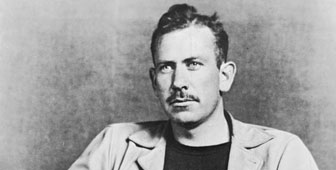
Peter Van Coutren, archivist at the Martha Heasley Cox Center for Steinbeck Studies gave a captivating presentation at the New Museum Los Gatos titled Talk of the Town. The talk explored John and Carol Steinbeck’s time in Los Gatos California from 1936 to 1942, a period during which Steinbeck completed two of his most popular works, Of Mice and Men and The Grapes of Wrath. As Van Coutren explained, these years marked the beginning of Steinbeck’s “Dust Bowl trilogy” and his deep engagement with the lives of migrant workers.
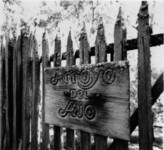
The Steinbeck’s first Los Gatos residence was on Greenwood Lane, a property chosen by Carol Steinbeck. She designed the home and grounds with the goal of creating a space that complimented rather than disrupted the natural landscape. Their close friend Ed Ricketts, marine biologist, even provided advice on the property’s ecological-friendly design.
Surrounded by vineyards and orchards, the home offered beauty as well as frequent encounters with local wildlife. Carol appeared to be handling the work quite well judging by the photo. They had an impressive music system installed and both shared a love of jazz, classical music, and blues. Carol once remarked that jazz music “let her forget,” while John said that classical music helped him “slow down when he was writing.”
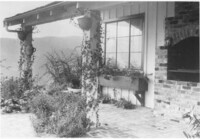
They had visitors such as actor Charlie Chaplin, who knew of John Steinbeck but John didn’t recognize Chaplin right away. It turned out to be just fine, but John and Carol felt this home was a little too out in the open for their liking, and wanted somewhere a little more private.
The Steinbeck’s moved into the Brush Road home, which overlooked the Santa Cruz mountains. In this home, John finishes The Grapes of Wrath with support from Carol as typist and editor.
While living in Los Gatos, Steinbeck immersed himself in researching California’s migrant labor camps and agricultural communities. Troubled by the hardships he witnessed, he spent time speaking directly with workers and their families. This research became a series of seven pieces called The Harvest Gypsies, published daily in The San Francisco News from October 5 to 12, 1936, and The Harvest Gypsies became the foundation of The Grapes of Wrath. Through Steinbeck’s observations and storytelling, he wrote about people who were overlooked and ignored, in a way that portrayed them as individuals deserving of a voice, compassion, and understanding.
Peter Van Coutren said it best in his closing reflection, “We need to do what Steinbeck did, treat people with human dignity, apply all people with human rights. We’re all human and equal here, if we take that away from someone else- we lose it for ourselves.”
Presentation is found here: https://www.youtube.com/watch?v=OXU15Hr6d1o&authuser=0
For more information on NUMU go to: New Museum Los Gatos: https://www.numulosgatos.org/
 About Administrative Team