Good news from Down Under. A Thousand Shards of Glass, a collection of essays, letters, and journal entries by the travel writer-photographer Michael Katakis, has been published in paperback and eBook by The Author People, an Australian outfit with a pioneering approach to book publishing. Founded in 2015 by Lou Johnson and Tom Galletta, the firm is dedicated to connecting authors with their audiences, wherever they may be around the world.
The most recent collection of essays, letters, and journal entries by the travel writer-photographer Michael Katakis has been published in paperback and eBook by The Author People, an Australian outfit with a pioneering approach to book publishing.
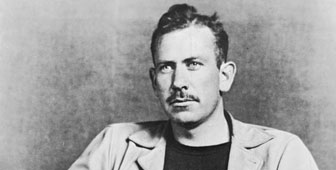
I first read A Thousand Shards of Glass in 2014, the year Simon & Schuster released a hardback edition of the book in Australia and the United Kingdom while ignoring its intended market—the United States. Since then, I’ve met Michael Katakis in Carmel, California, his part-time home, and I admire his perceptiveness as a thinker, writer, and photographer. Like John Steinbeck and Ernest Hemingway, he’s an American author with a distinctive point of view, writing for a country described by Gore Vidal as “the United States of Amnesia.”

Steinbeck, Hemingway, and Vidal come up frequently in conversation with Katakis, an imposing figure with a similar intensity. In his talk, as in his career, his range of knowledge and engagement is impressive. He’s the manager of Hemingway’s literary estate, and an expert on the author. He knows much (but, diplomatically, says little) about Carmel, California, a place Steinbeck once characterized as a haven for hacks. During a chance meeting with Vidal in Los Angeles when Katakis was a warm-up singer for the Herb Alpert band, the young musician felt his life change, and he became a photographer and writer with a Vidalian urge to explore, and to question.
Katakis’s famous photo of Maya Lin, the artist of the Vietnam Veterans Memorial, became contentious when he challenged an act of censorship by the National Portrait Gallery and asked for the picture’s return.
His famous photo of Maya Lin, the artist of the Vietnam Veterans Memorial, became contentious when he challenged an act of censorship by the National Portrait Gallery and asked for the picture’s return. His books include Photographs and Words with Dr. Kris Harden, co-authored with his late wife, a beloved anthropologist and ideal life-mate. Traveller: Observations from an American in Exile, published in 2009, has a foreword by Michael Palin, a fellow traveler and friend.

Like Vidal, Katakis thinks that the myth of American exceptionalism is not only foolish, but dangerous. Like Vidal, he favors living abroad and seeing Americans as others see us: self-involved but unreflective; self-righteous, but also hypocritical; militantly religious and religiously militant; obsessed by money and addicted to oil; shrewd in deal-making, yes, but easily duped by flag-pin politicians.
Like The Grapes of Wrath, Katakis’s book telegraphs its message through the metaphor contained in its title.
Like a Hemingway novel that anchors the ideas expressed in experience, A Thousand Shards of Glass consists of a series of episodes—9/11, Kris’s death, meeting Gore Vidal—described in short sentences and simple words to convey their meaning. Like The Grapes of Wrath, Katakis’s book telegraphs its message through the metaphor contained in its title. As the author explained it to an Australian interviewer in 2014, “In order to understand America one must realize that it is not a country, it’s a store where everything is for sale, every principle, ethic and friend.” The job of a serious writer, then—like that of the photojournalist—is to reveal the face under the makeup, the reality behind the myth.
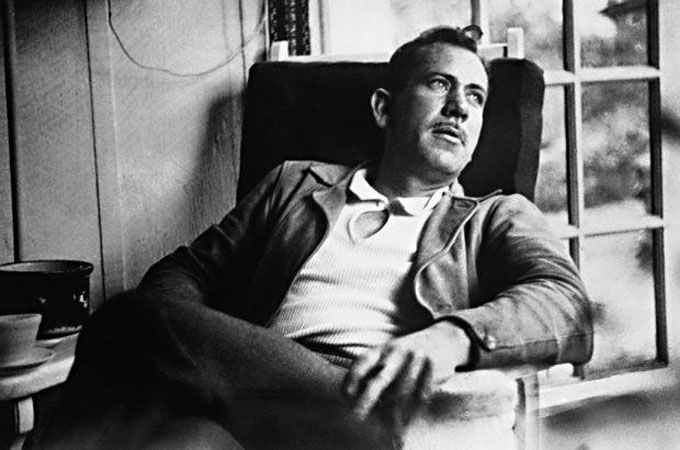
Katakis’s picture of America, like Steinbeck’s, isn’t always pretty. Kris, diagnosed with a brain tumor in the prime of life, becomes a tragic victim of the pre-Obama American health care horror show. Vidal is first encountered on a TV set decades earlier, talking with Eugene McCarthy about America’s disastrous involvement in Vietnam. Since then the US has doubled down, a nation of true believers where (to paraphrase Christopher Hitchens) religion ruins everything and (Vidal again) history teaches nothing. Clint Eastwood, the former mayor of Carmel, California, insults an empty chair at the 2012 Republican convention, an embarrassment Katakis recalls when he passes Eastwood in a hospital hallway.
Like a Hemingway novel that anchors the ideas expressed in experience, A Thousand Shards of Glass consists of a series of episodes described in short sentences and simple words to convey their meaning.
Bush’s phony Iraq war is fought in the name of Americans by 1% of the population living at the opposite end of the economic spectrum from Wall Street’s 1%. Hitchens, a guiding light to Katakis, loses his luster after 9/11, buying into Bush’s war in the Middle East for reasons Katakis ascribes to Hitchens’s upbringing as the son of a World War II vet. Katakis’s journal entry on 9/11 begins “. . . today hard terrorism hit soft terrorism.” Another, written four years later, describes Bush’s Rasputin, Karl Rove, dancing at a White House Correspondents’ dinner to the delight of reporters who are still high on the Bush & Company cool aid. Eventually, even the Beltway woke up and smelled the coffee, but Karl Rove’s victory dance is a useful reminder of how madness overtook America before Iraq imploded and sobriety set in.

Which raises the challenge posed by the book: do Americans never learn? Katakis explores the problem of American amnesia with people he meets in London, Paris, and Italy; like Hemingway and Vidal, he has perfect pitch in conversation, and he records what others say us with an infallible ear. His diagnosis of America’s mania for guns is framed by a fraught encounter with a woman from Eastern Europe, in London, following the Newton, Connecticut school shooting. “I think we Americans are afraid of each other, of everything,” he explains, despite “the fictional narrative of America that we have been selling for some time now.”
Quoting Hemingway, Katakis compares the global dominance of America’s ‘consumer corporate state’ with Britain’s East India Company two centuries ago—an undertaking of naked power wearing the fig leaf of moral righteousness.
Savoring Paris as Hemingway did decades earlier, he celebrates “the poetry of living” encountered abroad, the daily joie de vivre Americans have lost in “our obsession with our devices.” Quoting Hemingway, he compares the global dominance of America’s “consumer corporate state” with Britain’s East India Company two centuries ago—an undertaking of naked power wearing the fig leaf of righteousness. He and Kris move to Europe to protest Bush’s war, and to enjoy the poetry of living now lost in America, “the land of lists.” Their idyllic life abroad is interrupted by her father’s death; her diagnosis prevents their return. Numbed by her death, Katakis writes, “I have come to know that most Americans are sleepwalking.”

Like Vidal and Hitchens, Katakis is hard not to quote, and A Thousand Shards of Glass contains equally memorable sentences in abundance. So does a conversation with Katakis, as I learned over lunch in Carmel, California late last year, when I asked him if he thought the Bernie Sanders insurgency showed that Americans are finally waking up. He said yes, repeating the comment, quoted earlier, that he made to the Australian interviewer about America’s self-illusion in 2014. When his wife died he lost the “true north” in his life, but he’s getting his bearings again, and a note of hope for an awakening has emerged in his writing.
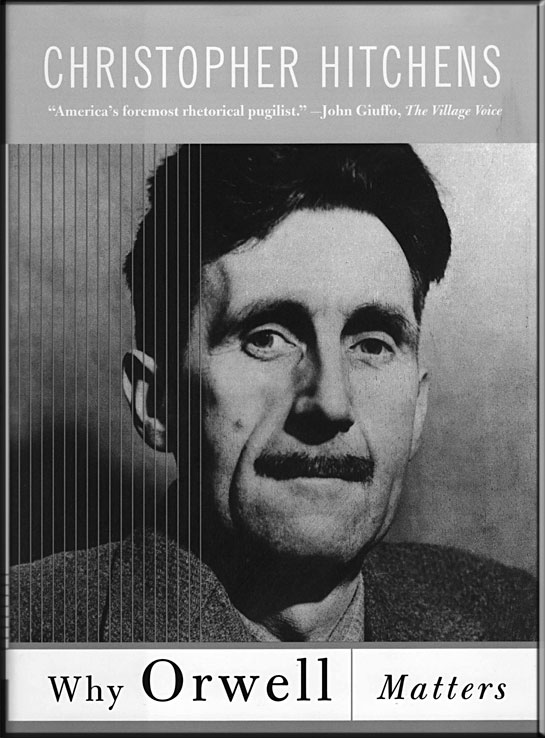
Fans of Hemingway, Steinbeck, Orwell, Vidal, and Hitchens—the bright constellation in Katakis’s dark sky—will delight in his references and allusions to their writing in A Thousand Shard of Glass. Bernie Sanders supporters will discover that, on almost every issue, Katakis was there first, before the presidential campaign brought American exceptionalism into question on problems of foreign and domestic policy. In response to my followup question about presidential politics before writing this review, Katakis said this:
I have often wondered what it means to be moral or how to live an ethical life in accelerated and morally ambiguous times which have seemingly allowed for rationalizations of thoughts and conduct by individuals and institutions, that just a short time ago, would have been considered unacceptable and injurious to the common good. Marcus Aurelius wrote that “the soul becomes dyed with the color of it’s thoughts,” suggesting one of the steps toward morality was the self control of our darker selves. Gore Vidal wrote that ‘we’ Americans, ” learn nothing because we remember nothing.” That is painfully demonstrated by any objective observer watching the 2016 Republican presidential primary. We have lost our way. If we remembered our own history, we would hear in the voice of Donald Trump, and his supporters, the voices of Father Coughlin and Senator Joseph McCarthy. They would hear the fear mongering and the insults that have been the tried and true tactic of scoundrels who have never offered anything but a scorched earth. But we Americans, in our ignorance and conceit, do not know our history and, as a collective, are not a good people. To those dark voices among us I can think of no more eloquent response than that of Mr. Joseph Welch to Senator Joseph McCarthy on June 9, 1954: “You have done enough. Have you no sense of decency sir? At long last, have you left no sense of decency?”
John Steinbeck invited his readers to participate in his fiction. Overhearing Gore Vidal changed Michael Katakis, helping him to become a writer. Participate in the result of that inspiration by reading A Thousand Shards of Glass. You’ll change, too.
 About William Ray