Santa Clara, California Drops The Ball on John Steinbeck And Dorothea Lange

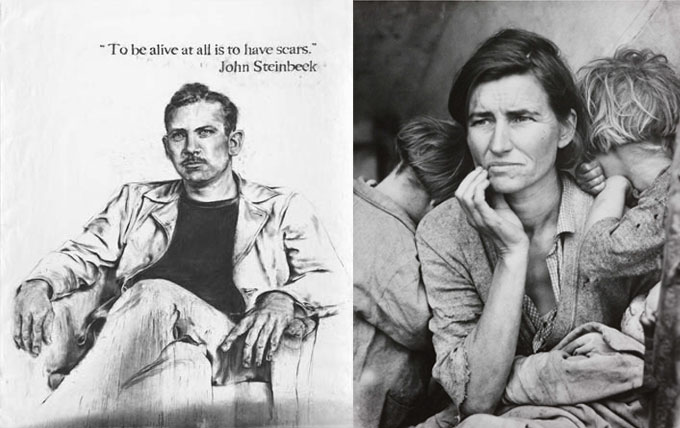
Composite image of John Steinbeck's portrait and Dorothea Lange's "Migrant Mother"

John Steinbeck knew Dorothea Lange, the iconic Depression-Era photographer who documented the plight of itinerant farm workers like Steinbeck’s Joads, and Lange’s images illustrated the cover of Their Blood Is Strong, the collection of columns Steinbeck wrote about migrants in the run-up to The Grapes of Wrath. Eighty years later, Lange and Steinbeck have come together again in an unlikely place—the art collection on display at Levi’s Stadium, the $1 billion facility built recently in Santa Clara, California for the San Francisco 49ers football team. The irony of exhibiting Steinbeck’s portrait and Lange’s “Migrant Mothers” on the walls of a publicly subsidized sports palace seems lost upon the team’s owners and Santa Clara’s mayor, who resigned on February 9, hours after the 2016 Super Bowl was played at Levi’s Stadium.

Image of Levi's Stadium in Santa Clara, California

The journalist Gabriel Thompson, a Steinbeck Fellow at San Jose State University, writes eloquently about the history of community organizing, and about today’s low-wage economy. An email he sent last week noted the jarring juxtaposition of Steinbeck and Lange with big-money sports on the walls of Levi’s Stadium, and it provided a link to the investigative piece he wrote for Slate about working as a food server during the Super Bowl. “The portrait hangs directly across from the office of the food service contractor that operates at Levi’s,” he said, adding that Lange’s “Migrant Mother” (originally titled “Pea Pickers”) is also on display. He included a link to a stadium PR story that makes this pitch for buying a box seat:

Gather 19 of your closest friends and rent a suite that gives you and your crew premium parking right next to the stadium, entry to Michael Mina’s Tailgate, upscale catering with an in-suite food and beverage credit, and access to the Trophy Club, where you’ll receive a complimentary glass of champagne and appetizers upon arrival. The suites are outfitted with comfy leather theater-style seats, Internet access and plenty of flat screen monitors to ensure you don’t miss any of the action. Prices vary by game but expect to shell out between $20,000 and $40,000 for the ultimate in VIP hospitality.
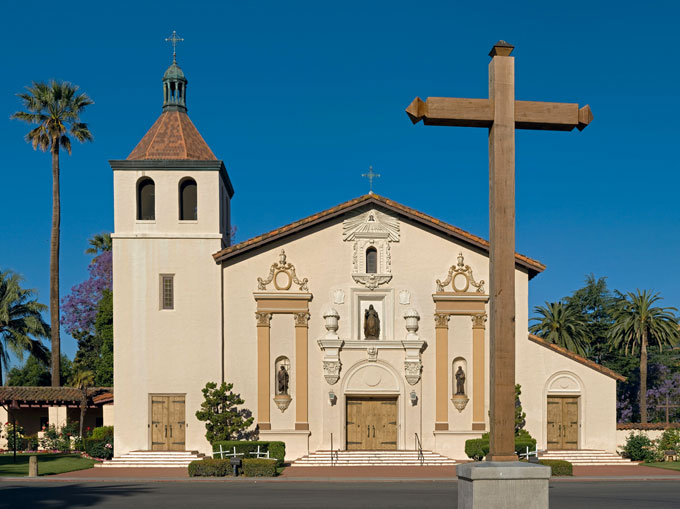
Image of Mission Santa Clara in Santa Clara, California

John Steinbeck, a critic of conspicuous consumption, celebrated common men and women in his writing. During college he worked for the Spreckels sugar company, which operated ranches in the rich agricultural area between King City and Santa Clara, California, south of San Francisco. Later, Santa Clara’s fragrant orchards gave way to development; today the city of 110,000 is home to tech giants including Intel, along with Santa Clara University, where a center for business ethics fronts a quiet entrance plaza anchored by the Mission Santa Clara church. Levi’s Stadium is across town, on land provided by the city not far from Intel and Mission College, a public institution. A local referendum to stop the San Francisco 49ers project failed, following a massive media and mail campaign and heavy lobbying by city leaders. According to news sources, controversy surrounding lost soccer fields—and suspicious side deals—continues to dog Santa Clara officials who went to bat for the project.
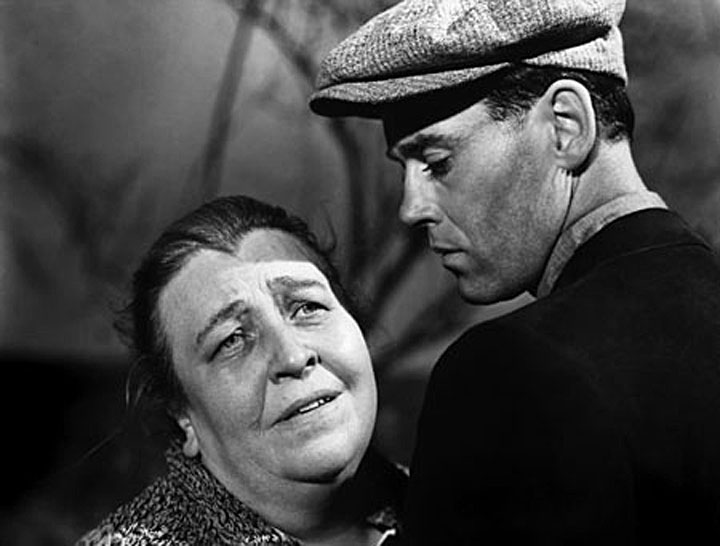
Image of Ma and Tom Joad from The Grapes of Wrath

Steinbeck would recognize the present problem with Santa Clara. He wasn’t much of a sports fan, or civic booster, and his father became treasurer of Monterey County after the incumbent embezzled public funds. Today, Santa Clara residents are scratching their heads over the sudden resignation of their mayor, a former code-enforcement officer—an act, according to San Jose Mercury News columnist Scott Herhold, that disqualifies the ex-mayor from further office, “including secretary of his homeowners’ association.” According to the paper, the three women on the seven-member Santa Clara city council are asking hard questions about Levi’s Stadium, and the Hispanic city manager is complaining about racial discrimination.
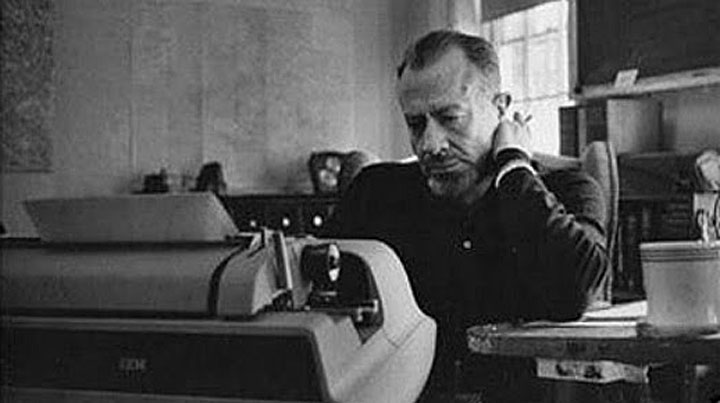
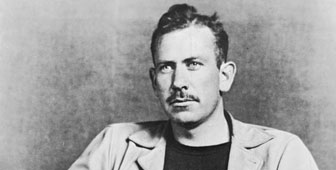
Photographic image of John Steinbeck at work

Steinbeck would also recognize the unintentional irony—and the awful syntax—in another assertion, pulled from the PR piece quoted earlier, about the costly amenities at Levi’s Stadium:

Being that this stadium is located in the most-cultured half of California, an emphasis on art is a given. Spread throughout the elite Citrix Owners Club, the Brocade Club, BNY Mellon Club East and West and SAP Tower of suites, this collection, curated by Sports and The Arts specifically for Levi’s Stadium, is comprised of over 200 pieces of original artwork and 500 photographs that celebrate the history of the San Francisco 49ers as well as California’s stunning landscape. You’ll find charcoal sketches of notable figures such as John Steinbeck and Jack Kerouac as well as timeless psychedelics of the storied Fillmore made famous by Bill Graham. However, the portraits stadium-goers still pose next to the most are those of Joe Montana throwing to Jerry Rice and current quarterback Colin Kaepernick on the run.
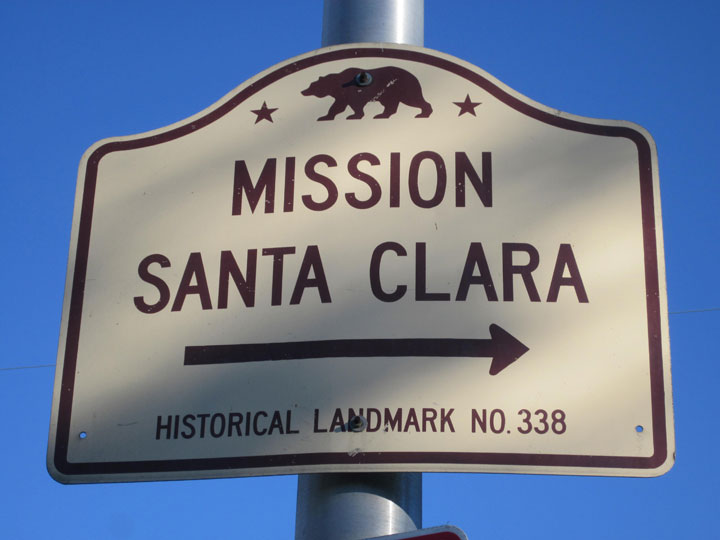
Image of Mission Santa Clara sign in Santa Clara, California

When the city of Salinas wanted to name a school or library for John Steinbeck, he suggested choosing a bowling alley (or whorehouse) instead. For followers of the Levi’s Stadium story from Salinas and Monterey, there’s an upside to Santa Clara’s cluelessness about Steinbeck: Cannery Row may be tacky, and the National Steinbeck Center needs money, but neither place violates the spirit of John Steinbeck and Dorothea Lange like the San Francisco 49ers’ opulent new home in Santa Clara, California, where Steinbeck and Lange hang within view of noshing VIPs, high above ordinary football fans who can’t afford a five-figure seat.

Photo of Levi’s Stadium in Santa Clara, California by Michael Fiola (Reuters).
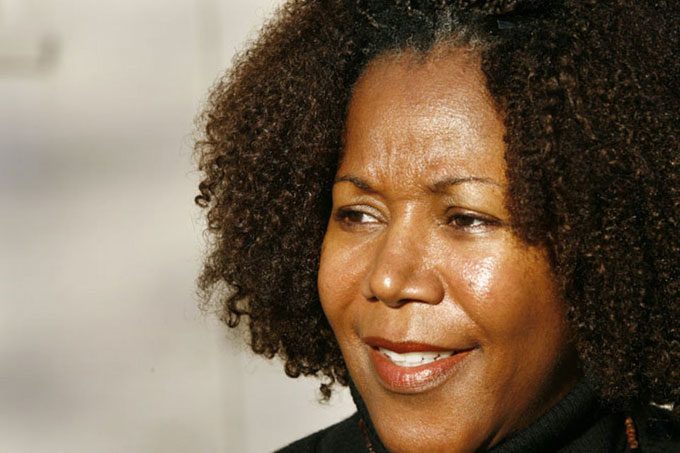
Ruby Bridges to Receive Steinbeck Award at San Jose State University, February 24

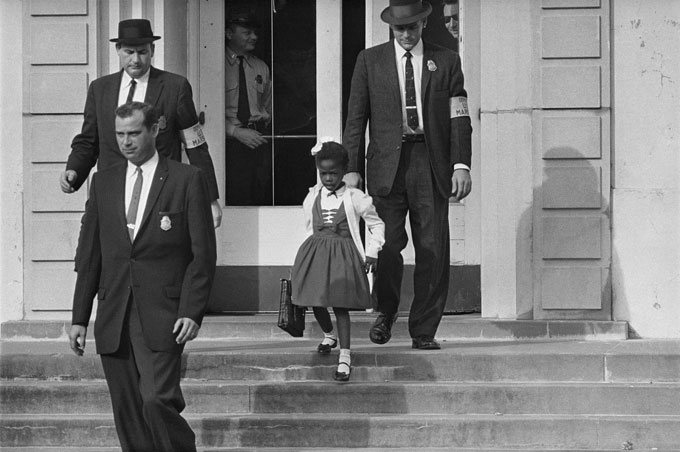
Image of Ruby Bridges

Near the end of Travels with Charley, John Steinbeck celebrates the inspiring courage of Ruby Bridges, the six-year-old schoolgirl who advanced the cause of civil rights by breaking the Southern segregation barrier at a New Orleans elementary school 56 years ago. San Jose State University will honor Bridges’s lasting contribution to civil rights on February 24 by conferring the Steinbeck “In the souls of the people” Award—a program of the school’s Martha Heasley Cox Center for Steinbeck Studies—on the 61-year-old author, activist, and advocate, who has been called the first foot soldier in the modern civil rights movement.

Image of Ruby Bridges in New Orleans, 1960

Steinbeck wrote Travels with Charley in sadness, and occasional shock, at the state of America in 1960, when he was 58, and he chose the South as the last stop on his journey of rediscovery and reconciliation because he recognized racism and civil rights as the fundamental conflict to be resolved if the country he loved was to survive. Watching grown white women curse the diminutive black girl entering William Frantz Elementary School in New Orleans turned his stomach, as it did Americans reading newspaper accounts of the widely reported event. Though Ruby Bridges isn’t identified by name, Travels with Charley captures her image, braving the kind of mob Steinbeck depicted better than anyone, like a contemporary news photograph:

The big marshals stood her on the curb and a jangle of jeering shrieks went up from behind the barricades. The little girl did not look at the howling crowd but from the side the whites of her eyes showed like those of a frightened fawn. The men turned her around like a doll, and then the strange procession moved up the broad walk toward the school, and the child was even more a mite because the men were so big. Then the girl made a curious hop, and I think I know what it was. I think in her whole life she had not gone ten steps without skipping, but now in the middle of her first skip the weight bore her down and her little round feet took measured, reluctant steps between the tall guards. Slowly they climbed the steps and entered the school.

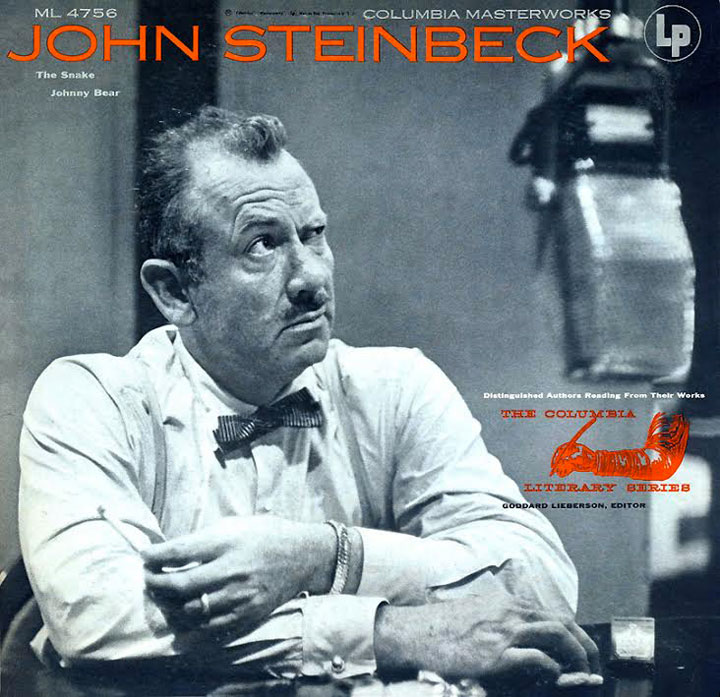
Image of John Steinbeck

Thanks in part to Travels with Charley, Ruby Bridges became an icon of civil rights for succeeding generations—a platform she has used brilliantly as a writer and speaker to advance the values of tolerance, understanding, and equality embraced by Steinbeck in his time. “John Steinbeck expressed concern over an injustice and wrote sympathetically of me when I was a young girl,” she explains. “In a way, we’ve come full circle. I now get to honor him by receiving an award bearing his name. I’m so proud to be part of this.”

Ruby Bridges will speak and accept the Steinbeck Award a public event—“An Evening with Ruby Bridges”—beginning at 7:30 p.m. on February 24 in San Jose State University’s Student Union Theater on the school’s downtown San Jose, California campus. Tickets are available at the Event Center Box Office (408-924-6333) or at Ticketmaster.com.

New Light on East of Eden From an Unlikely Source

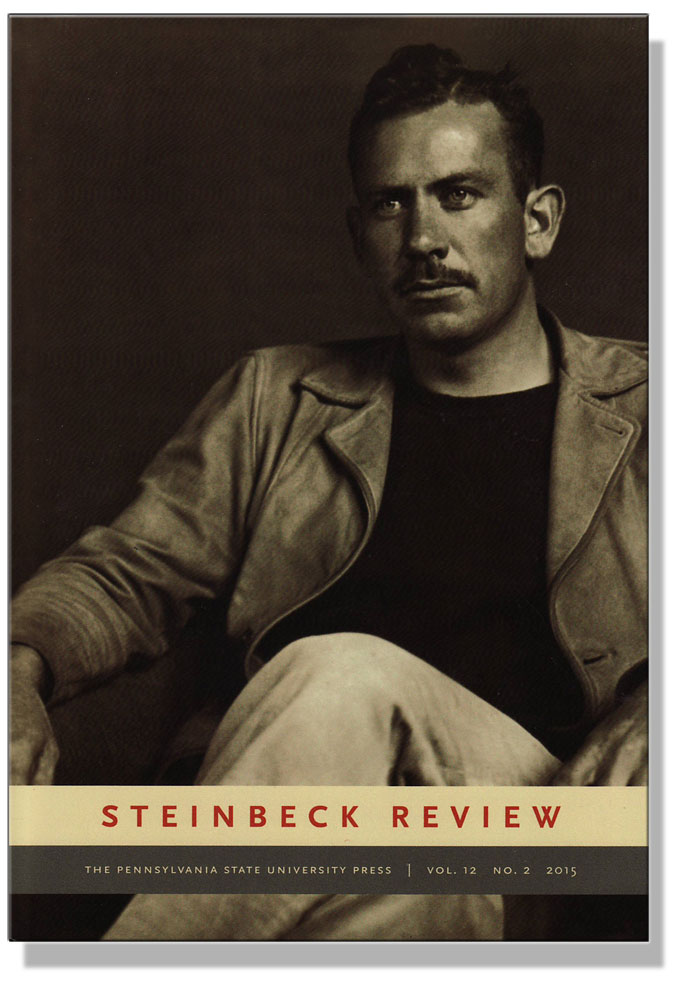
john-steinbeck-review

Who said literary criticism is just for critics? Not the editors of Steinbeck Review. The winter 2015 issue proves that San Jose State University, the journal’s publisher, embraces diversity in many forms, and that its editors are willing to let non-critics play the specialist’s game. Among the current contributors are (1) a graduate student in history from Canada, (2) a former college film teacher, (3) a retired biology professor and dean living in Oregon, (4) a Steinbeck fan from California’s Central Valley, and (5) the W.W. Kellogg Professor of Agriculture, Food and Community Ethics at Michigan State University. But the unlikeliest candidate in the intriguing mix may be Daniel Levin, a pharmaceutical research executive with a Ph.D. in chemistry from Cambridge University who now lives in California. Prompted by a visit to the National Steinbeck Center and curious about apparent discrepancies between an exhibit there and Steinbeck’s Hebrew in East of Eden, Levin took a scientific approach, consulting Talmudic sources, Steinbeck curators, and a Hebrew language adviser to investigate Steinbeck’s adaptation of the term timshol from the Genesis story about Cain’s banishment, east of Eden, after he kills his brother Abel. “John Steinbeck and the Missing Kamatz in East of Eden: How Steinbeck Found a Hebrew Word but Muddled Some Vowels,” the result of Levin’s exemplary study, demonstrates why, for lovers of John Steinbeck, literary criticism is too important to be left to professional literary critics. See for yourself. Subscribe to Steinbeck Review.

Speak English! Melvyn Bragg’s BBC Documentary Is The Best Film Made to Date About John Steinbeck

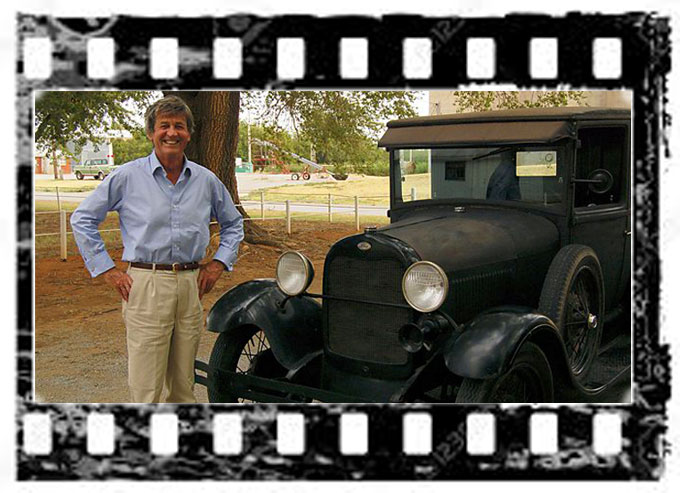
Image of Melvyn Bragg, host of BBC documentary on John Steinbeck

The vibrant “Voice of America” BBC documentary on John Steinbeck first broadcast in 2011, featuring historic photo footage and refreshing commentary delivered in ear-pleasing English, has finally made it to YouTube. Melvyn Bragg, the show’s host—a British broadcast personality with working class roots and a passion for John Steinbeck—follows Steinbeck’s footsteps from Salinas, The Grapes of Wrath, and Sea of Cortez to East of Eden, Travels with Charley, and the rebellious American writer’s fight with the New York critics. Filmed on location in the U.S. with a perceptive eye for Steinbeck people, places, and events, the BBC’s survey of the writer’s life and work entertains while educating, in that effortless way English TV does better than, well, anyone. Scholarly Steinbeck aficionados will be pleased with the trio of American Steinbeck experts Bragg interviews intelligently, and at satisfying length: Susan Shillinglaw, Rick Wartzman, and Susan’s spouse William Gilly, a scientist at Stanford’s Hopkins Marine Station. Compared with domestic films about John Steinbeck, the BBC documentary rates five stars, two thumbs up, and an enthusiastic recommendation, especially for teachers, students, and fans of literature increasingly irritated by the sloppy speech of what passes for American journalism. Steinbeck, a lifelong anglophile, loved the landscape, lore, and language of Britain and extolled all three in his writing. Bragg returns the favor, explaining Steinbeck’s relationship to American history and culture with insight, imagination, and stiff-upper-lipness that suits Steinbeck, who liked his wit served dry. Viewing time less than an hour. English impeccable.

Salinas, California Stretch of Highway 101 Named for John Steinbeck Earlier This Week

Image of John Steinbeck Highway 101 sign

John Steinbeck liked to travel and learned to drive while growing up in Salinas, California, where a stretch of nearby Highway 101 was officially named for the author of Travels with Charley at an October 26 ceremony in Steinbeck’s hometown. Legislation naming the John Steinbeck Highway portion of Highway 101—from the Espinosa Road/Russell Road undercrossing to John Street in downtown Salinas—passed the California State Assembly last year as part of a bill designating other sections of Highway 101, including Gateway to the Pinnacles Highway. Appropriately, the John Steinbeck Highway sign was unveiled at the National Steinbeck Center, located on the historic Salinas, California main street accessed from Highway 101 at the “National Steinbeck Center” exit familiar to visitors since the building opened two decades ago. Said Steinbeck scholar Susan Shillinglaw, director of the busy Salinas, California center, “John Steinbeck loved cars” and owned a Packard, a Jaguar, a Buick, even a rare European car. “In nearly all of his books, cars roll along highways—including two of his best road books: Travels with Charley and The Grapes of Wrath.”

“This Old House” Means Conservation—and Care for Art and Ecology—in John Steinbeck’s Pacific Grove

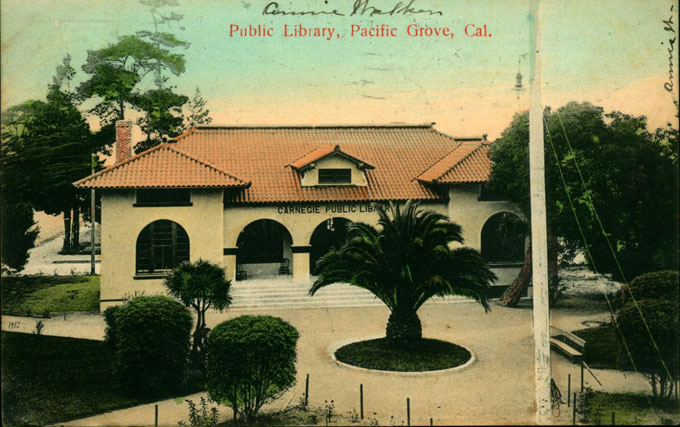
Postcard image of 1908 Carnegie library in Pacific Grove, California
Pacific Grove, California—John Steinbeck’s retreat when there was writing or healing to be done—is a preservation-minded community where “this old house” means the whole town, and residents like Nancy and Steve Hauk, celebrity-citizens with ties to Steinbeck, contribute to the present while connecting with the past. Founded in 1875 as a seaside getaway for camp-meeting Methodists, one where liquor was outlawed and modesty was mandated, Pacific Grove soon became a summer destination—Chautauqua West—for vacationing non-Methodists from inland towns such as Salinas.

Founded in 1875 as a seaside getaway for camp-meeting Methodists, one where liquor was outlawed and modesty was mandated, Pacific Grove soon became a summer destination—Chautauqua West—for vacationing non-Methodists from inland towns such as Salinas.

Steinbeck’s parents liked Pacific Grove’s culture and cool air; their modest weekend cottage off Central Avenue on 11th Street had a view of the bay when Steinbeck was a boy. In 1906 Pacific Grove got a grant to build a Carnegie library on Central, within walking distance of the Steinbeck cottage, where Steinbeck’s wife Carol Henning is thought to have worked in the early 1930s. Steinbeck’s friend Ed Ricketts lived in a handsome house up the hill from Central Avenue on Lighthouse, the other major thoroughfare—until Ed’s wife left him and he moved to lab space he rented for his struggling marine specimen business between Lighthouse and Central avenues. Now located on busy Cannery Row, where peaceful Pacific Grove meets fun-loving Monterey, “Doc’s Lab” attracted legendary people and parties in the 1930s and 40s, achieving the stature of myth in John Steinbeck’s Cannery Row fiction.

Image of Ricketts-Hauk home in Pacific Grove, California

Nancy Hauk, an artist, and Steve Hauk, a writer, own the Ricketts home today. Together they operate Hauk Fine Arts, an intimate art gallery less than a block from Holman’s Department Store, another Pacific Grove landmark made famous by Steinbeck’s fiction. A playwright, Steve recently completed “Almost True Stories from a Writer’s Life,” a series of short stories based on relationships and events from Steinbeck’s life in Pacific Grove, Monterey, and Salinas. One story, “The Daughter,” is set in the Ricketts house. Another features Bruce and Jean Ariss, artists who lived in Pacific Grove during Steinbeck’s time and moved in the colorful Ricketts-Steinbeck circle. Steve is an expert on California artists, and the gallery features paintings by friends of Steinbeck, including Bruce Ariss, inspired by the life and landscape of Pacific Grove, Carmel, and Monterey Bay. Visitors to Hauk Fine Arts who are willing to take up the time freely given by Steve, a former reporter for the Monterey Herald, get an instant education in Steinbeck, Pacific Grove, and the town’s this-old-house history.

Pacific Grove Library Honors Hauks with an Art Gallery

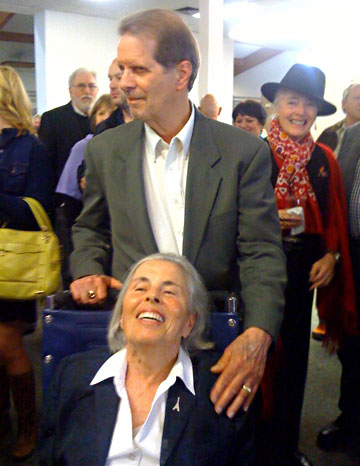
Image of Steve and Nancy Hauk at Pacific Grove Library announcementThe Hauks love Pacific Grove, and Pacific Grove loves them in return. Earlier this year officials announced that new gallery space in the Pacific Grove Public Library would be named in honor of the couple, a tribute to Nancy’s art and Steve’s devotion to his wife, who suffers from a progressive neurological disease. Friends of the Library, a volunteer group that gets things done, raised funds to build out the space, part of a long-term program to upgrade and restore the aging Carnegie library to its former glory. Located a stone’s throw from the sea in a neighborhood of immaculate Victorian homes and historic public buildings including Chautauqua Hall, the library was and is a gathering place for Pacific Grove, where culture continues to attract visitors like butterflies. An art exhibit and lecture series celebrating Rachel Carson’s 1955 book about coastal ecology, The Edge of the Sea, will feature the Carson and Steinbeck biographer William Souder on December 4.

Located a stone’s throw from the sea in a neighborhood of immaculate Victorian homes and historic public buildings including Chautauqua Hall, the library was and is a gathering place for Pacific Grove, where culture continues to attract visitors like butterflies.

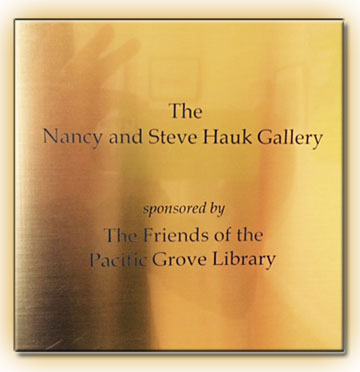
Image of the new gallery sign at the Pacific Grove LibraryThe Nancy and Steve Hauk Gallery formally opened at a Friends of the Library reception—attended by fellow artists and community members, and the Hauks’ younger daughter Anne—on October 2, 2015. The library’s Rachel Carson exhibit opened the same day, a meaningful coincidence on many levels. The Methodists who founded Pacific Grove may have been teetotalers, but they were thirsty for knowledge and curious about ideas, art, and science, subjects that defined the summer Chautauqua circuit with its West Coast center in Pacific Grove more than a century ago.

The Methodists who founded Pacific Grove may have been teetotalers, but they were thirsty for knowledge and curious about ideas, art, and science, subjects that defined the summer Chautauqua circuit with its West Coast center in Pacific Grove more than a century ago.

Like Ed Ricketts, Rachel Carson was a scientist; like Ricketts and Steinbeck, she thought deeply and wrote prophetically about ecology. The Sea Around Us (1950), The Edge of the Sea, and Silent Spring (1962), popular books that have become classics, equal Steinbeck in style and Ricketts in observation. Nancy Hauk paints with similar grace and perception about similar subjects—seabirds on the sand, water reeds reflected in a tide pool, the gentle golden hills described by Steinbeck in his best writing about California. Like Steinbeck, Nancy rarely repeats herself in her work, and Steve is still finding sketches and paintings—some completed, others left unfinished—in their house on Lighthouse Avenue.

A Piece of This-Old-House from Steinbeck’s Pacific Grove

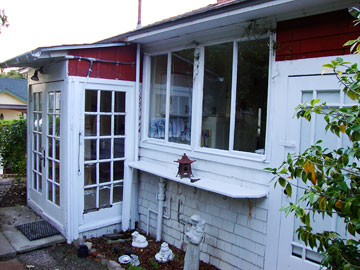
Image of Steinbeck family cottage in Pacific Grove, CaliforniaNancy and Steve are walkers in a walking town. Since Nancy’s move to memory care at Cottages of Carmel, where she often can be found with caregiver and friend Yolanda Campos, Steve’s been doing more driving than walking, daily making the drive to visit Nancy over Carmel Hill, a trip Mac and the Boys made to hunt frogs in Cannery Row. One day recently he walked by the Steinbeck family cottage off Central Avenue in Pacific Grove and noticed a dumpster loaded with wood that had been removed for replacement in the process of retrofitting the cottage. “This old house,” he said, “witnessed so much history, and writing. I salvaged three pieces of redwood siding from the dumpster, just in case. I’m glad I did. When I drove by the next day the dumpster was gone.” Thanks to Steve’s care for John Steinbeck, Pacific Grove, and posterity, a piece of the famous cottage has joined the collection of Steinbeck memorabilia at the Martha Heasley Cox Center for Steinbeck Studies, one that includes Steinbeck’s typewriter and the manuscripts of books the author wrote while living—and healing—in the place he loved.

Photo of Ricketts-Hauk home in Pacific Grove courtesy David Laws.

Is Pope Francis a Fan of John Steinbeck? CBS News Reporter Scott Pelley Gives The Popular Pope a Copy of The Grapes of Wrath

Image of CBS News reporter Scott Pelley

Has Pope Francis read John Steinbeck? CBS News reporter Scott Pelley, a big fan of both men, thinks they have much in common in matters of justice, mercy, and conscience. (Barbara A. Heavilin, editor in chief of Steinbeck Review, agrees, relating the pope and the author’s shared hope for suffering humanity to an incident that occurred on a recent trip abroad.) During a 60 Minutes segment that aired on September 20, Scott Pelley previewed the pope’s historic visit to the United States, which included an address on Capitol Hill boycotted by three Catholic members of the Supreme Court’s conservative wing. Earlier, Pelley explained in a 60 Minutes Overtime interview why he handed Pope Francis an Italian edition of The Grapes of Wrath while on assignment in Rome in preparation for the segment. He said he was a descendant of displaced Dust Bowl victims who, like the “Okies” in The Grapes of Wrath, were refugees within their own country during the Great Depression. That connection, he explained, made John Steinbeck and Pope Francis more than news for him. It made them relevant.

Another Writer in the Family: Steinbeck’s Niece Wows Fans at National Steinbeck Center in Salinas, California

Image of Molly Knight, John Steinbeck's niece

John Steinbeck rarely wrote about sports, disliked book-signing crowds, and left Salinas, California more or less for good when he enrolled at Stanford University almost 100 years ago. Bucking family tradition on all three points, a young sports-reporter-turned-book-writer named Molly Knight—the great-granddaughter of Steinbeck’s younger sister Mary Steinbeck Dekker—returned to the National Steinbeck Center in Salinas on August 23 for a book-signing and lively Q & A about her bestselling book, The Best Team Money Can Buy: The Los Angeles Dodgers’ Wild Struggle to Build a Baseball Powerhouse. By all accounts the Sunday afternoon event in John Steinbeck’s home town hit a home run.

From Stanford University to the Los Angeles Dodgers

Like her famous great-great-uncle and his favorite sister, Knight attended Stanford University, where she majored in human biology; John and Mary studied biology at Stanford’s Hopkins Marine Station, not far from Salinas, in 1924. After graduating from Stanford (something Mary did but John Steinbeck didn’t do), Knight worked for ESPN before leaving the network to write her book about the Los Angeles Dodgers, a sharp-eyed baseball-insider’s look at big-business sports. Not a topic you’d think would appeal to Steinbeck or to scholars and fans of his work, perhaps—but you’d be wrong. In fact, the Dodgers were part of Steinbeck’s own household. Steinbeck’s wife Elaine was a Dodgers fan before the team moved west, and John was drawn to Elaine’s “pure spiritual energy” for the team.

Like her famous great-great-uncle and his favorite sister, Knight attended Stanford University, where she majored in biology, a subject John and Mary studied together at Stanford’s Hopkins Marine Station, not far from Salinas.

Steinbeck’s personal interest in sports was “catholic but cool,” the phrase he used in a little essay he wrote for Sports Illustrated in 1965 entitled “Then My Arm Gassed Up.” When Steinbeck scholar and National Steinbeck Center director Susan Shillinglaw heard about Knight’s Los Angeles Dodgers book, she was intrigued: women sportswriters are a rare breed. When Knight spoke, said Shillinglaw, “It was immediately clear that she shared some of Steinbeck’s journalistic sensibilities—she’s curious, engages her subject, knows her stuff—and was on the scene when it mattered most. Molly’s style is forthright, and she tells a good story.”

Clayton Kershaw and the Rewards of Humanitarianism

Knight’s book begins with an interview she conducted with Clayton Kershaw, the Los Angeles Dodgers starting pitcher who is the subject of the prologue from which Knight read at the National Steinbeck Center event. Kershaw sounds exactly like John Steinbeck’s kind of guy. A left-handed strike-out star who was major league baseball’s youngest player when he started at age 20, Clayton Kershaw has been compared to Sandy Koufax, the legendary Jewish pitcher who played for the Dodgers when the team was still in Brooklyn and John and Elaine Steinbeck were living in New York 60 years ago. Both pitchers have won trophies for their athletic prowess, but Kershaw—with his wife—has also been honored for raising money to build an orphanage in Zambia, world-humanitarian work that John Steinbeck would surely applaud, despite the Dodgers’ defection from Brooklyn to Los Angeles in 1957.

A left-handed strike-out star who was major league baseball’s youngest player when he started at age 20, Clayton Kershaw has been compared to Sandy Koufax, the legendary Jewish pitcher who played for the Dodgers when the team was still in Brooklyn and John and Elaine Steinbeck were living in New York 60 years ago.

Another writer—Nick Taylor, director of the Martha Heasley Cox Center for Steinbeck Studies at San Jose State University—was in the National Steinbeck Center audience and loved what he heard Knight say, both about her book and about the author of East of Eden, her favorite Steinbeck novel. More than most, Taylor understood what he was listening to when Knight talked baseball: the hero of Taylor’s thriller The Setup Man (published under the pen name T.T. Monday) is an aging Dodgers pitcher with a second career solving murders in the sometimes-shady world of big-league sports. Taylor responded to a request for comment:

When asked whether creative writing talent might be genetic, Ms. Knight replied that she didn’t think she had inherited any of her famous forebear’s talent for writing. (I disagree.) However she pointed out that she shares her great-great-uncle’s interest in exposing injustices. In her case, as a baseball reporter working for ESPN, she witnessed first-hand the corrupt and vain owners of the Dodgers starving the organization of cash and driving the team, which is a kind of cultural trust shared by all of us, into the ground. This is what inspired her to start writing about the Dodgers, and she says that sense of outrage, of the very rich abusing the common people, is what motivated her to write the book.

Carol Robles is a Steinbeck historian and Salinas, California resident who has been involved with the National Steinbeck Center since it began and is familiar with members of the Steinbeck family. She shared her impressions of the event as well:

The National Steinbeck Center started the sunny afternoon off with hot dogs, popcorn, and cracker jacks. After our baseball snacks, the crowd filled the stadium seating room to hear young Molly Knight tell us about her first published book. (Her grandmother Toni Heyler, Mary Steinbeck Dekker’s daughter and John Steinbeck’s niece, was in the audience.) Molly seemed so young and innocent, yet so composed and charming as she read to us from her the opening pages. Although I know very little about current baseball teams, her fast-moving talk kept me interested: though different from that of her distant Steinbeck relative, her writing style is delightful. Following the presentation and Q & A session, she signed copies of her book, taking time to talk with each person and writing lengthy personal inscriptions. This lovely young lady completely charmed her audience. Everyone seemed pleased when she announced she was going to write a second book.

Second books, as Steinbeck learned from experience, can prove challenging for young writers. But Molly Knight is building a solid following, and her fans are confident that her National Steinbeck Center audience can be counted on to show up for her next home game.

San Jose State University Shows Steinbeck’s Life in Exhibit of Historic Photos

Image of John Steinbeck with sister Mary in Salinas, California
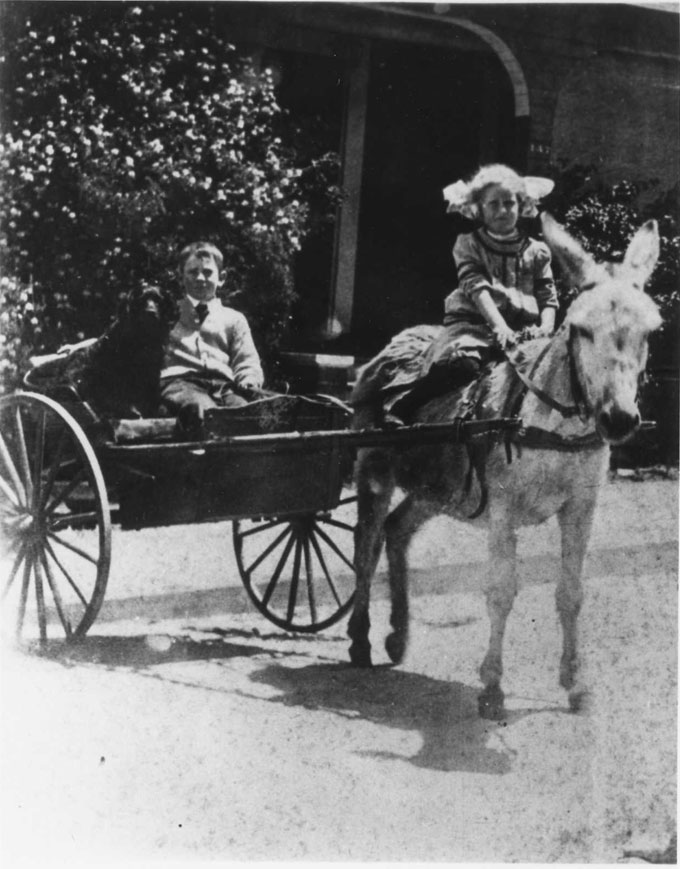
Historic photos are sometimes worth a million words, especially when the subject is Steinbeck’s storied life in Pacific Grove and Salinas, California. Unsurprisingly, San Jose State University’s Martha Heasley Cox Center for Steinbeck Studies has a Steinbeck historic-photo trove unrivalled in size and variety, and “John Steinbeck: A View from the Vault”—a sample from the San Jose State University collection—will be on display at the Martin Luther King, Jr. Library through October 3. Curated by Peter Van Coutren, the Center’s archivist, the exhibit can be viewed on the fifth floor of the downtown library, a joint venture of San Jose State University and the City of San Jose, weekdays from 11:00 a.m. to 6:00 p.m. (5:00 p.m. on Fridays) and 1:00-6:00 p.m. on Saturdays. Family pictures like this one of adolescent John and his baby sister Mary, taken near the family home in Salinas, California 100 years ago, can be cute; but the show has a serious side, too, and includes rare historic photos of Steinbeck’s adventures in New Orleans, Mexico, and the Soviet Union. See for yourself when you visit.

Pictures at an Exhibition: Event in Steinbeck Country Marries Nature Photography And Music by Mussorgsky

Image of High Sierra photograph by Charles Cramer

If you love Ansel Adams, John Steinbeck, and majestic music, mark your calendar for August 16, when Charles Cramer will perform and exhibit at a free event in Steinbeck Country. Like Adams, the visual poet of Yosemite’s High Sierra who was born in California in 1902 one week before Steinbeck, Cramer is a classically trained pianist who is equally masterful at music and nature photography. Each art form also attracted Steinbeck, a childhood piano student and Episcopal church choirboy who wrote the text for two books of photography, A Russian Journal and America and Americans. The marriage of sound and image being presented by Cramer on August 16 would hold particular appeal for Steinbeck, a lover of Russian music, California landscape, and the art of photography. A piano performance graduate of San Jose State University and the Eastman School of Music, Cramer played for Ansel Adams as a young photography student 30 years ago. Today he teaches photography, publishes his work in books and magazines, and exhibits at multiple venues, including the Ansel Adams Gallery.

Image of Charles Cramer, musician and master of nature photography

The August 16 event will begin at 3:00 p.m. with Cramer performing music including Modest Mussorgsky’s piano suite Pictures at an Exhibition on the concert grand at St. Mark’s Episcopal Church in Santa Clara, a San Jose-area city located midway between Ansel Adams’s hometown of San Francisco and John Steinbeck’s Salinas. The musical program will be followed by a reception and exhibition of Cramer’s distinctive nature photography, including dramatic images (like the one above) of Yosemite’s High Sierra. The title of Mussorgsky’s 1874 masterpiece—and Cramer’s August 16 performance and photography show—couldn’t be more appropriate. Mussorgsky composed Pictures at an Exhibition for piano in memory of the painter Viktor Hartmann. Maurice Ravel’s colorful orchestration, completed in 1922, magnified the visual power of Mussorgsky’s music and would have been familiar to Steinbeck, who collected records and listened to Symphony of Psalms, by Mussorgsky’s fellow-Russian Igor Stravinsky, while writing The Grapes of Wrath. “The Great Gate at Kiev,” the theme music for SteinbeckNow.com videos, can be heard in this audio sample of Charles Cramer’s recording of the complete Pictures at an Exhibition. (Pictures at an Exhibition is also the title of an award-winning novel by Sara Houghteling, a former Steinbeck Fellow at San Jose State University.) Attend the August 16 event at St. Mark’s if you can. John Steinbeck, who grew up singing in an Episcopal church, will be with you in spirit. Click to play:

Photo of Charles  Cramer by G. Dan Mitchell.