Did John Steinbeck Work as A Citizen Spy for the CIA?

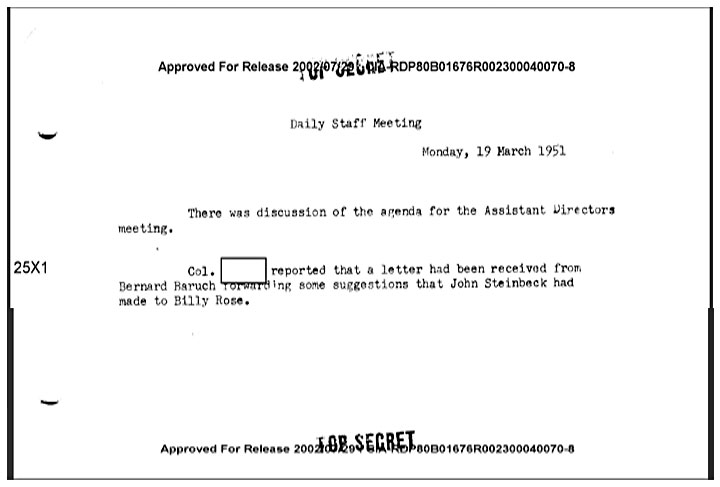
Redacted CIA memo mentioning John Steinbeck shownMy discovery of John Steinbeck’s connection to the CIA could be described as payback for a youthful indiscretion—my own, not the author’s. While reading The Grapes of Wrath in high school, I skipped the “turtle” and other chapters that seemed to me superfluous to the plot line of the Joads’ journey west. The punishment for my teenage sin of omission came years later, when it first occurred to me that John Steinbeck was a CIA spy. The insane-sounding proposition grew from incongruities in Steinbeck’s life that—unlike Tom Joads’ turtle—I found I couldn’t ignore.

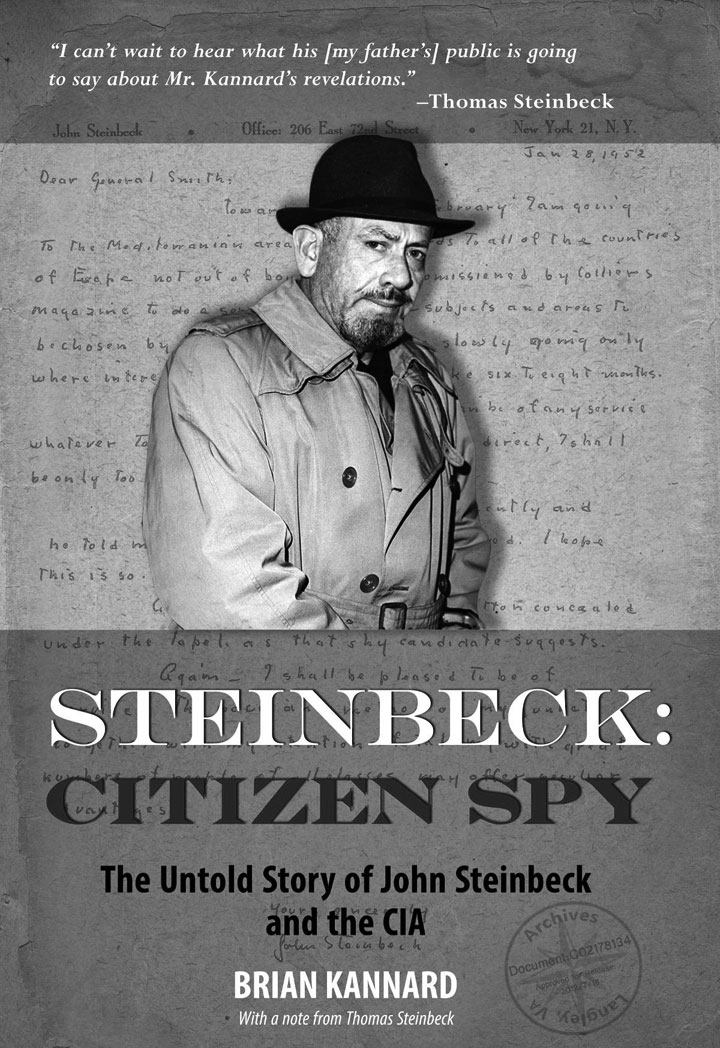
Steinbeck: Citizen Spy book cover shown with subtitle: The Untold Story of John Steinbeck and the CIA

FOIA to the CIA: What Do You Have on John Steinbeck?

Why was Steinbeck never called before the House Select Committee on Un-American Activities, despite his alleged ties to Communist organizations? Why did the CIA admit to the Church Committee in 1975 that Steinbeck had been a subject of the illegal CIA mail-opening program known as HTLINGUAL? Did Steinbeck’s connections to known CIA front organizations, such as the Congress of Cultural Freedom and the Ford Foundation, amount to more than mere coincidence? Did the synchronicity continue when Steinbeck did freelance writing for the Louisville Courier-Journal and New York Herald Tribune? Both newspapers were linked to MOCKINGBIRD, another CIA operation, in Carl Bernstein’s 1977 Rolling Stone article “The CIA and the Media.” Why did the CIA redact portions of Steinbeck’s FBI files before they were released under the 1966 Freedom of Information Act (FOIA), the law that permits full or partial disclosure by government agencies of previously classified documents on request?

Why was Steinbeck never called before the House Select Committee on Un-American Activities, despite his alleged ties to Communist organizations?

There was only one source—the CIA itself—that could definitively answer my questions and confirm or disprove my developing conclusions. I submitted my FOIA request to the CIA in January 2012. With characteristic bureaucratic speed, the CIA responded after eight months, in August 2012, sending me copies of two letters written in 1952. In the first, penned on personal stationery in his own handwriting, Steinbeck offers to work for the CIA. In the second, then-CIA Director Walter Bedell Smith accepts Steinbeck’s offer. The text of these letters and others can be found in my book, Steinbeck: Citizen Spy, at my website or in the FOIA Electronic Reading Room.

The CIA Director Accepts the Author’s Offer of Help

Jan 28, 1952

Dear General Smith:

Toward the end of February I am going to the Mediterranean area and afterwards to all of the countries of Europe not out of bounds. I am commissioned by Collier’s Magazine to do a series of articles—subjects and areas to be chosen by myself. I shall move slowly going only where interest draws. The trip will take six to eight months.

If during this period I can be of any service whatever to yourself or to the Agency you direct, I shall be only too glad.

I saw Herbert Bayard Swope recently and he told me that your health had improved. I hope this is so.

Also I wear the “Lou for 52” button concealed under the lapel as that shy candidate suggests.

Again—I shall be pleased to be of service. The pace and method of my junket together with my intention of talking with great numbers of people of all classes may offer peculiar advantages.

Yours sincerely,
John Steinbeck

‘If during this period I can be of any service whatever to yourself or to the Agency you direct, I shall be only too glad.’

ER 2-5603
6 February 1952
Mr. John Steinbeck
206 East 72nd Street
New York 21, New York

Dear Mr. Steinbeck:

I greatly appreciate the offer of assistance made in your note of January 28th.

You can, indeed, be of help to us by keeping your eyes and ears open on any political developments in the areas through which you travel, and, in addition, on any other matters which seem to you of significance, particularly those which might be overlooked in routine reports.

It would be helpful, too, if you could come down to Washington for a talk with us before you leave. We might then discuss any special matters on which you may feel that you can assist us.

Since I am certain that you will have some very interesting things to say, I trust, also, that you will be able to reserve some time for us on your return.

Sincerely,
Walter B. Smith
Director

O/DCI:REL:leb
Rewritten: LEBecker:mlk
Distribution:
Orig – Addressee
2 – DCI (Reading Official) [“w/Basic” has been handwritten beside this line and scratched out]
1 – DD/P [a check mark and w/Basic handwritten in]
1 – Admin [This has been scratched out] handwritten is “w/Basic”

‘You can, indeed, be of help to us by keeping your eyes and ears open on any political developments in the areas through which you travel.’

Did Steinbeck’s CIA Connection Start in Russia?

Reread A Russian Journal  with the possibility that Steinbeck was working for the CIA prior to 1952 in mind. When Steinbeck traveled to the USSR with Robert Capa in 1947—the second of three trips the author made to the Communist state during his lifetime—Walter Bedell Smith happened to be the U.S. Ambassador to Russia. Steinbeck notes in his account of his and Capa’s Russian journey that they dined with Smith during their stay.

This experience helps explain the personal tone of familiarity expressed in Steinbeck’s 1952 letter to Smith offering to help the CIA. It also suggests the possibility that Steinbeck used his access while in the USSR to gather intelligence for the U.S. government from the Russian interior. While visiting a factory in Stalingrad, Steinbeck observes that the Russians are still melting down hulls from German tanks to make tractors fully two years after the end of World War II, lamenting his frustration at not being able to get current production figures for the facility. Such information would have been particularly important to the U.S. government in 1947, as the Cold War became hotter and American travel behind the Iron Curtain more difficult.

While visiting a factory in Stalingrad, Steinbeck observes that the Russians are still melting down hulls from German tanks to make tractors fully two years after the end of World War II, lamenting his frustration at not being able to get current production figures for the facility.

The 1952 exchange between the author of The Grapes of Wrath and the Director of the CIA provides a new set of parameters for understanding John Steinbeck’s life. In my book I carefully examine each of the letters resulting from my FOIA request to the CIA, the writer’s heavily CIA-redacted FBI files, Thomas Steinbeck’s thoughts on the matter, and likely avenues through which the elder Steinbeck could have served his government covertly both before and after 1952. Viewing the author’s life in terms of possible links to the CIA opens vistas for better comprehending certain works, such as The Short Reign of Pippin IV, that his literary agent, editor, and others discouraged him from writing. In recommending my book to a Steinbeck blogger, a noted Steinbeck scholar described the possible CIA-Steinbeck connection detailed in Steinbeck: Citizen Spy as “a potential game-changer.”

Time will tell.

Father Junipero’s Confessor

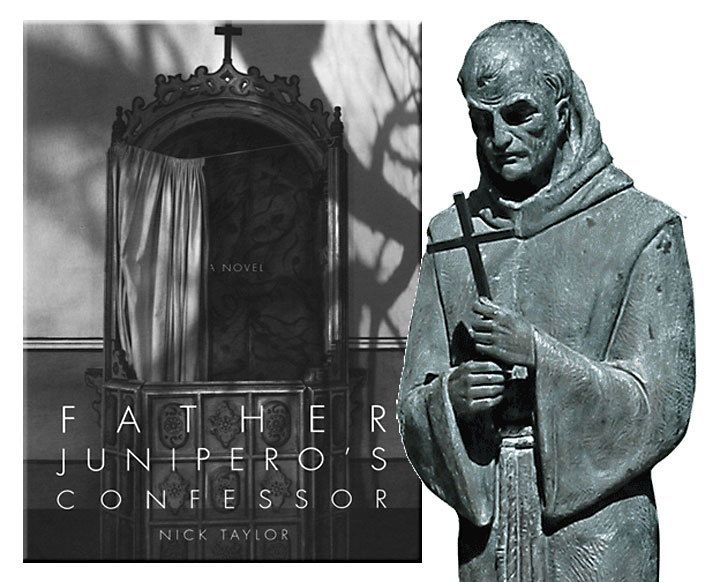
Father Junipero's Confessor book cover with image of Father SerraWhatever you think you know about Junipero Serra—the 18th century founder of California missions and current candidate for Catholic sainthood—hold that thought. Father Junipero’s Confessor, Nick Taylor’s second novel, won’t shatter your faith if you’re the kind of Catholic who still believes that ends justify means in the work of the Lord. But whether your inner space is sacred, secular, or skeptical about religion, this taut theological thriller will blow your mind.

San Francisco de Asis, Junipero Serra, and God Almighty

A five-foot Franciscan zealot on a 40-year Mission Impossible from Almighty God, Junipero Serra became the most famous follower of San Francisco de Asis since Clare, Francis’s hometown sister saint, and St. Bonaventure, the order’s greatest Doctor of Theology. Theologian and evangelist, mendicant and manipulator, flagellant and force unstoppable by soldier, serpent, or state, Junipero Serra made Monterey’s Carmel Mission headquarters for Operation God in Spanish California. Juan Crespi, Serra’s seminary student back in Majorca, became his closest companion in the quest to win souls for Christ among the native people of Old California. Francisco Palou—Juan Crespi’s fellow seminarian and competitor for Serra’s affection—became the boss’s COO, administering the dearest of California missions to Serra’s heart—San Francisco de Asis, aka Mission Dolores—and serving as his personal confessor. He needed one.

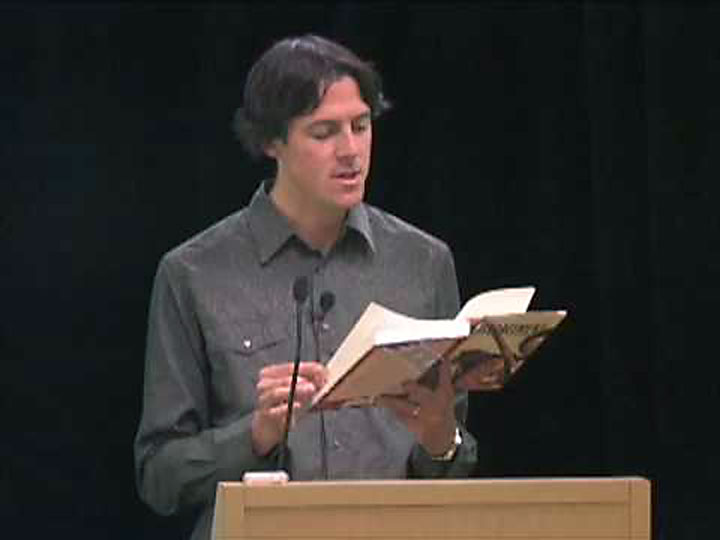
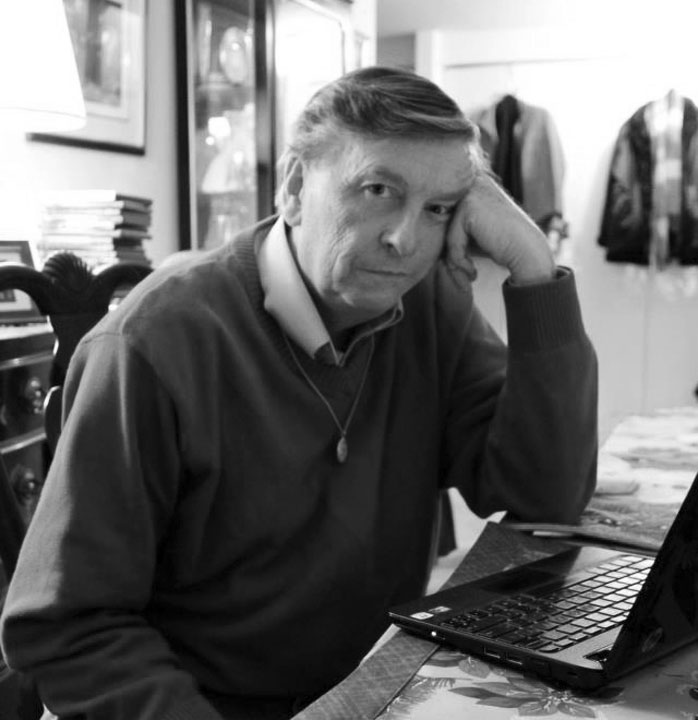
Nick Taylor shown reading from his novel about Junipero Serra

Nick Taylor: Born to Bring California Missions to Life

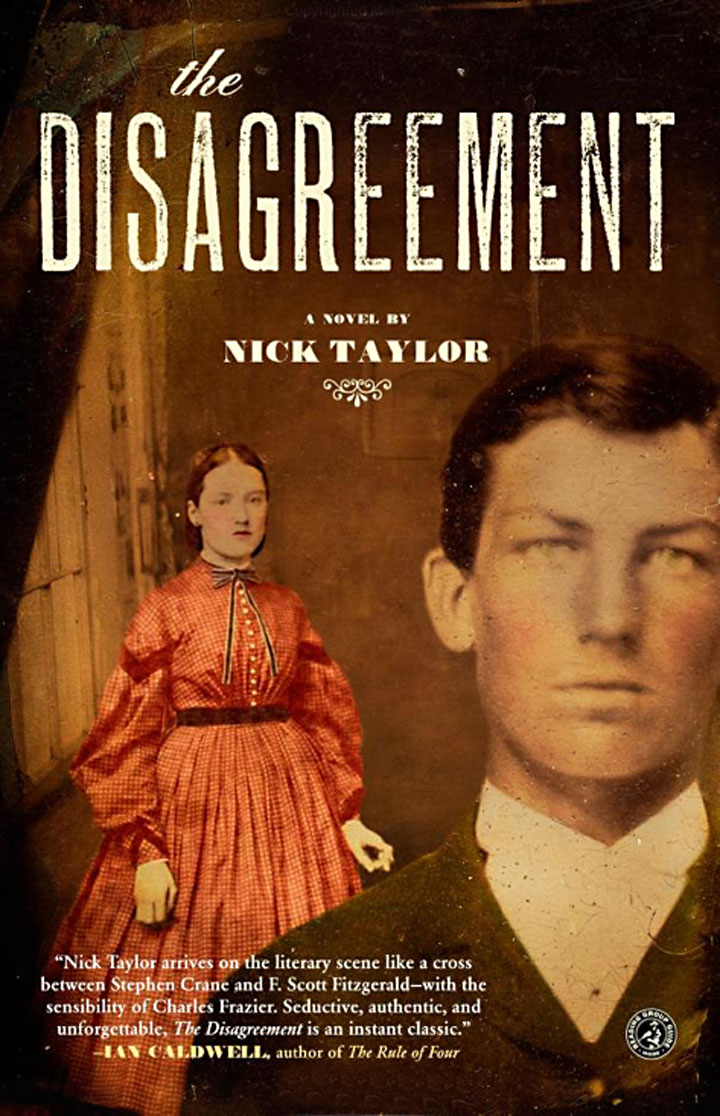
The author of The Disagreement—a celebrated first novel with a Civil War setting—Nick Taylor is a popular creative writing teacher at San Jose State University, where he is on sabbatical as director of the Martha Heasley Cox Center for Steinbeck Studies. A Californian reared in a Catholic home, he’s perfect for the task of bringing Junipero Serra back to life through the consciousness of his right-hand man, a talented manager and self-doubter born before his time. Junipero Serra, a figure molded by the High Middle Ages of San Francisco de Asis, founded California missions and feared neither man nor mountain in his fight with the world, flesh, and devil. Polou, Taylor’s protagonist, is a modern type who learns too little too late.

Nick Taylor's first novel cover, The Disagreement

In the End, a Stunning Secret That Survives Junipero Serra

It reminded me of Watergate. What did Francisco Polou know and when did he know it? Like Deep Throat, Taylor saves his secret for the last page. Enjoy the journey, savor the moment, and don’t look ahead. But be warned before you begin: I finished reading Father Junipero’s Confessor long after midnight, in a hotel room near one of Serra’s nine California missions. I didn’t sleep well.

Autumn Is Steinbeck Country

Joseph McKenna shown at computer pondering Travels with CharleyAs I sit at my computer, a single sentence from Travels with Charley perfectly frames autumn in my mind: “It isn’t only color but a glowing, as though the leaves gobbled the light of the autumn sun and then released it slowly.”

Over the years I’ve marveled at Steinbeck’s description of autumn light, as well as other lyrical and poignant passages of Travels with Charley in Search of America. Words, Steinbeck writes, “should be wind or water or thunder.” So it’s no surprise that this particular book, written in the autumn of the author’s life, is a wonderfully colorful and welcome recasting of our seasonal landscape. Travels with Charley is the compline of an exceptional American wordsmith.

Without question, autumn is Steinbeck Country.

It isn’t only color but a glowing, as though the leaves gobbled the light of the autumn sun and then released it slowly.

The moment I sense the season sidestepping toward center stage, I fetch my copy of Steinbeck’s travelogue and hitch a ride. Mine is an irresistible ritual that goes back more than a few autumns; the trip never gets old, which speaks well of our country and its core character and says much about the enduring influence of Steinbeck himself. As The Saturday Review noted in 1962, Travels with Charley is “a book to be read slowly for its savor, and one which, like Thoreau, will be quoted and measured by our own experience”:

“When I was very young and the urge to be someplace else was on me, I was assured by mature people that maturity would cure this itch. When years described me as mature, the remedy prescribed was middle age. In middle age I was assured greater age would calm my fever and now that I am fifty-eight perhaps senility will do the job. Nothing has worked. Four hoarse blasts of a ships’s whistle still raise the hair on my neck and set my feet to tapping. The sound of a jet, an engine warming up, even the clopping of shod hooves on pavement brings on the ancient shudder, the dry mouth and vacant eye, the hot palms and the churn of stomach high up under the rib cage. In other words, once a bum always a bum. I fear this disease incurable. I set this matter down not to instruct others but to inform myself.”

When I was very young and the urge to be someplace else was on me, I was assured by mature people that maturity would cure this itch.

And so begin my travels, again, with Steinbeck and Charles le Chien, “a very big poodle, of a color called bleu.”  Once more I relish the notion of keeping company with such knights of the road, even if only vicariously. I suspect I have not been alone with my two peripatetic companions these many decades. Admitting guilt to having “at best a faulty, warpy reservoir” of a memory, the mature and celebrated author decided to visit his nation afresh in 1960. The journey covered almost 10,000 miles and aimed to ferret out “the small diagnostic truths which are the foundations of the larger truth.” For today’s aspiring and established writers alike, there can be no better standard of integrity than that set by the ailing author of The Grapes of Wrath and East of Eden:

“I stayed as much as possible on secondary roads where there was much to see and hear and smell, and avoided the great wide traffic slashes which promote the self by fostering daydreams. I drove this wide eventless way called U.S. 90 which bypassed Buffalo and Erie to Madison, Ohio, and then found the equally wide fast U.S. 20 past Cleveland and Toledo, and so on into Michigan.”

I stayed as much as possible on secondary roads where there was much to see and hear and smell.

Folks ask why Travels with Charley remains my favorite book. To read it carefully, I respond, is to learn—and relearn—that the so-called American character has not been transformed wholesale by faster fast food or personal high-tech hardware, only disguised. Midway, Steinbeck talks aloud to Charley and makes my point with conviction:

“In the eating places along the roads the food has been clean, tasteless, colorless, and of a complete sameness. It is almost as though the customers had no interest in what they ate as long as it had no character to embarrass them….We’ve listened to local radio all across the country. And apart from a few reportings of football games, the mental fare has been as generalized, as packaged, and as undistinguished as the food.”

In the eating places along the roads the food has been clean, tasteless, colorless, and of a complete sameness.

During this analysis Steinbeck acknowledges that he has to use his foot to keep Charley awake. Unlike my own unimpressed canine companion, I eagerly take in Steinbeck’s every word and observation:

“In the bathroom two water tumblers were sealed in cellophane sacks with the words: ‘These glasses are sterilized for your protection.’ Across the toilet seat a strip of paper bore the message: “This seat has been sterilized with ultraviolet light for your protection.” Everyone was protecting me and it was horrible.”

“It is possible, even probable, to be told a truth about a place, to accept it, to know it and at the same time not to know anything about it.”

“They refused seconds and I insisted. And the division of thirds was put on the basis that there wasn’t enough to save. And with the few divided drops of that third there came into Rocinante a triumphant human magic that can bless a house, or a truck for that matter– nine people gathered in complete silence and the nine parts making a whole as surely as my arms and legs are a part of me, separate and inseparable.”

It is possible, even probable, to be told a truth about a place, to accept it, to know it and at the same time not to know anything about it.

At the risk of revealing my bias for the author and his book, I am not surprised that Travels with Charley was and remains a commercial publishing success. Nor am I overly concerned with recent reports that Steinbeck took liberties with fact in a book categorized as non-fiction. As Steinbeck biographer Jay Parini noted in Steinbeck’s defense, “I have always assumed that to some degree it’s a work of fiction. Steinbeck was a fiction writer, and here he’s shaping events, massaging them. He probably wasn’t using a tape recorder. But I still feel there’s an authenticity there. Does this shake my faith in the book? Quite the opposite. I would say hooray for Steinbeck. If you want to get at the spirit of something, sometimes it’s important to use the techniques of a fiction writer.”

Be it resolved, therefore, that Steinbeck never claimed to be recreating the Congressional Record: his is just one man’s astute perceptions of his country, and his country-to-be.

Holly, Joseph McKenna's beagle, shown before reliving Travels with CharleyFor this scribbler, Travels with Charley has been a lucky charm and a writing model. In 1989, a Penton Publishing executive who was handling the final phase of my job interview process at Industry Week magazine asked me to tell him about my favorite book. Within a week I was passing my fellow Steinbeckian on the corporate floor. Two years ago Travels with Charley was my inspiration for an article I wrote about regular turnpike shuttles between Cleveland and Pittsburgh. The hook of this human-interest feature was our family’s loud and loveable Beagle, Holly, aka The Duchess of Hollingsworth.

Upon her arrival on Route 22 in Pennsylvania, Holly prepares for days of adulation lavished upon her by family and strangers alike. As Steinbeck relates in his tales,“many conversations en route began with ‘What degree of a dog is that?” In 2011 America, the Duchess of Hollingsworth cocks her head at all she meets and elicits,‘”My, what a sweet dog! Do you live around here?”

“No, we’re just visiting from Cleveland,” Carol explains. “We’re here to visit family. Aren’t we, Holly?”

The typical response goes something like this: “So you’re part of the Browns’ Dawg Pound, eh? You’re a real cutie. Enjoy your visit, Holly.”

And the ancient animosity between Cleveland and Pittsburgh is momentarily forgotten.

Many conversations en route began with ‘What degree of a dog is that?’

For readers everywhere, Travels with Charley is a keystone of what another Steinbeck biographer, Jackson Benson, has called the moral trilogy comprised by Travels with Charley, The Winter of Our Discontent, and America and Americans. From his three-book literary bully pulpit in the 1960s, Steinbeck warned that “it is historically true that a nation whose people take out more than they put in will collapse and disappear.” Steinbeck could have written that just this morning.

It is historically true that a nation whose people take out more than they put in will collapse and disappear.

Here’s a final, timely observation shared by Charley’s owner with this reader in the early autumn of 2013:

“In the beginning of this record I tried to explore the nature of journeys, how they are things in themselves. . . .  I speculated with a kind of wonder on the strength of the individuality of journeys and stopped on the postulate that people don’t take trips—trips take people. That discussion, however, did not go into the life span of journeys. This seems to be variable and unpredictable. Who has not known a journey to be over and dead before the traveler returns? The reverse is also true: many a trip continues long after movement in time and space has ceased.”

The Seeds of Death

genetically-modified-food

Wherever he lived, John Steinbeck kept a garden. He believed that being close to nature and living in harmony with the earth’s ecology was an essential part of being human. What I learned about industrial agriculture on my recent trip through Steinbeck Country would make the author of The Grapes of Wrath spin in his grave.

How My Genetically Modified Food Education Began

Steinbeck—not genetically modified food—was on my mind when we set out for King City, Paso Robles, and San Luis Obispo—our ultimate destination—recently. There, on busy Monterey Street, a used bookstore beckoned with roomfuls of books on every imaginable subject. In the fiction area, high above the ‘S’ authors, hung huge photos of John Steinbeck and Ed Ricketts. A good sign! On the shelf below, between Gertrude Stein and Thomas Steinbeck—nothing. As the store’s manager explained, San Luis Obispo is an ecology-minded, Steinbeck-loving college town. Used copies of anything by Steinbeck are snapped up quickly. An even better sign for our Steinbeck Country weekend!

Monsanto, EPA, FDA, and Global GMO Food Disaster

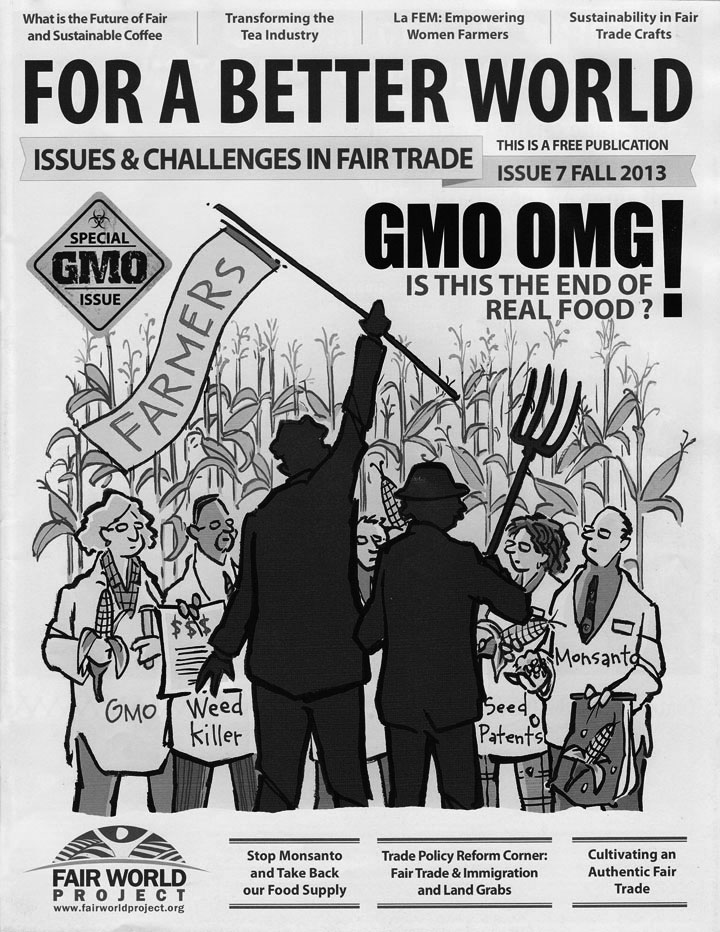
The store next door had an intriguing name: HumanKind Fair Trade. A handwritten sign by the door described the inventory and promoted the virtues of purchasing Fair Trade certified products. Inside, among colorful fabrics and hand-woven garments, a stack of For A Better World magazines caught my attention. With nothing by Steinbeck to occupy the rest of the trip, I decided to take a copy of the magazine’s special GMO (Genetically Modified Organisms) issues for bedtime reading. I didn’t sleep well. I kept thinking about the helicopters overhead on Highway 101 as we made our way south through the lettuce fields surrounding Soledad, Greenfield, and King City. They were spraying pesticides.

How Monsanto, the EPA, and the FDA Collude to Control

At home I watch the news and keep up with current events. I’d heard about the controversy over genetically modified food crops and genetically modified farm animals. But until I read my copy of For A Better World that night in San Luis Obispo, I had no idea that industrial agriculture and Monsanto have colluded successfully to control the world food supply with EPA, FDA, and USDA approval. I began to wonder why the terrifying genetically modified food story isn’t on the news every night. This GMO monster is a menace to global survival, and the battle against Monsanto may be the most important call to action the world faces today. So why are so-called consumer-protection agencies like the EPA, FDA, and USDA staying on the sidelines?

EPA +  FDA + USDA = Former Monsanto Executives, Monsanto Lobbyists, and Monsanto Board Members

Over the past 10 years, seven or more former Monsanto employees have held high-level positions at the FDA. Michael R. Taylor, currently the Deputy Commissioner of the FDA’s Office of Foods, was also Deputy Commissioner for Policy within the FDA in the mid 1990s. Between his last FDA job and his current one, Taylor was Monsanto’s Vice President of Public Policy. As an attorney for Monsanto, he advised the company on the legal implications of using the rBGH hormone on cattle. However, when Taylor left Monsanto for the FDA, he helped write the FDA’s rBGH labeling guidelines—guidelines which promote profits at the expense of public safety. Giant international chemical companies like Monsanto, Dupont, and Dow now effectively control the EPA, FDA, and USDA, helping push patented products—genetically modified food products, herbicides, pesticides, and hormones—past compliant legislators, regulators, and government agencies.

GMO and Roundup–Glyphosate–Are a Time Bomb

Remember Agent Orange, the Monsanto-made defoliant used in Viet Nam to kill nature and people? The company’s latest gift to ecology is glyphosate, the toxin used as a herbicide, which is now marketed worldwide under Monsanto’s friendly brand name Roundup. Here’s how Roundup works: As weeds become resistant to herbicides, genetically modified food crops require the application of more and more chemicals, including glyphosate. Glyphosate has the ability to disrupt soil ecology, effectively killing the earth where it is used. Glyphosate also binds-up soil nutrients, dramatically reducing the nutritional value of crops. Exposure to Roundup in animals has been linked to brain and immune disorders, reproductive problems, cancer, birth defects, diabetes, and more. Independent scientists warn that Roundup toxicity has been grossly underestimated by industry-friendly regulators at the EPA, FDA, and USDA. Instead of protecting the public from the threat of glyphosate toxicity, the EPA recently raised the allowable trace percentage of Roundup in farm-grown foods. You can read about it here.

GMO Food and Glyphosate: Threats to Global Health

Because the EPA, FDA, and USDA have failed to protect us, we have to do it ourselves—starting at the shelves of our local supermarket. Until the fight for mandatory GMO food labeling is finally won, anti-GMO activists advise consumers to buy only organic foods, avoid processed products, and—because you can’t tell from the label—assume that glyphosate is present unless goods are certified as organic. But glyphosate ingestion is only part of the problem with GMO foods. In independent lab tests, rats have developed horrible cancer tumors after being fed Monsanto genetically modified food products. Damage occurs at the molecular level, as the RNA from the GMO product being consumed binds with the RNA in the cells of the animal consuming the GMO. This process permanently changes the DNA of beneficial bacteria in the gut—another danger to bodily health. If you didn’t know better, you’d be right to ask why the EPA, FDA, and USDA haven’t intervened to stop this deadly cycle.

Same Old Story! Genetically Modified Food = Big Money

The United States Patent Office now allows Monsanto to patent organisms, issuing entire portfolios of patents to the company for the GMO seeds and glyphosate herbicide products Monsanto wants to see all over the world. When the company applies for a new patent, Monstanto’s attorneys claim that every GMO innovation is absolutely unique. Yet Monsanto lobbyists take the opposite position when the company petitions the FDA not to impose the GMO food labeling that is mandatory in most countries. With stunning illogic, Monstanto denies that GMO foods are any different from naturally grown products when the issue is labeling, while at the same time claiming that it has the right to patent GMO seeds as proprietary inventions.

Is Genetically Modified Food the Beginning of the End?

Once farmers convert fields to biotech crops like Monsanto’s, there is no turning back. Soil ecology is damaged by the increased application of Roundup. Genetically engineered plants are frequently sterile, so farmers must go back to the company to purchase the seeds and herbicides needed for next year’s crop. Monsanto prohibits farmers from replanting or cultivating their own seeds from patented GMO stock. Meanwhile, genetically modified pollen and seeds are spreading like a virus, carried by the wind to organically farmed fields miles away. The result? GMO pollen and seeds are now polluting organic food crops on neighboring farms, silently and without the affected farmer’s knowledge or approval. The process of contamination doesn’t end there. Glyphosate poison saturates the soil, enters streams, and may ultimately make its way into rivers and oceans. Our ecosystem is in peril today because GMO profiteers are kept in business by the compliance and collusion of EPA, FDA, and USDA officials in bed with Industrial Agriculture. It’s The Grapes of Wrath on steroids.

Act Now! Avoid GMO Foods and Glyphosate Products

Do three things today to help protect yourself from the global menace of genetically modified food and herbicide products:

  1. Google the words GMO, genetically modified foods, Monsanto, Roundup, glyphosate, Michael R. Taylor, EPA, FDA, and USDA.
  2. Pick up a copy of For a Better World and visit websites like Non GMO Project.
  3. Join the upcoming march against Monsanto.

To get a closer look at what ecocide by genetic modification means to you, check out this compelling video. It’s as dramatic as The Grapes of Wrath, except that its subject is the Seeds of Death being sown by Industrial Agriculture on an apocalyptic scale:

Steinbeck in Scotland

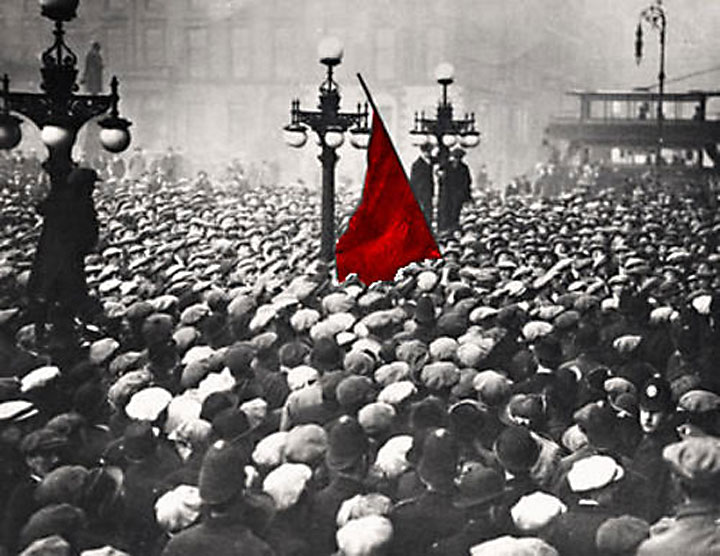
1919 street crowds pictured in Glasgow, ScotlandI live in Glasgow, Scotland, where I “discovered” John Steinbeck relatively late in life. It wasn’t until I was in my 30s that I sat down and actually read one of his books, my introduction being—as for generations of readers before me—The Grapes of Wrath. From then on I was hooked on Steinbeck, a writer with Scots-Irish roots that I believe are evident throughout his life and work.

Workers’ Rights in Glasgow, Scotland, and in Steinbeck

After moving from The Grapes of Wrath to other works by Steinbeck, I was struck by the parallels between Steinbeck’s themes and the Scottish nature, as well as by hints of Scotland’s strong radical working class tradition in Steinbeck characters who display distinctly Scottish traits. Among the most memorable are Tom Joad in The Grapes of Wrath, Jim Nolan—the protagonist of In Dubious Battle—and the young labour organizer who takes a beating in “The Raid.” In their willingness to sacrifice themselves for the good of their social cause, these protagonists clearly reflect the qualities of John Maclean and the Red Clydesiders of early 20th century Glasgow, Scotland.

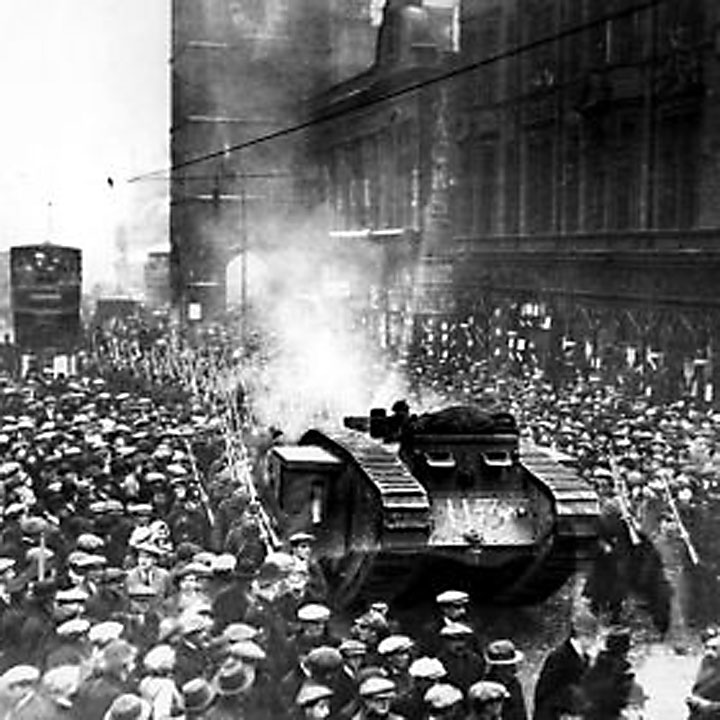
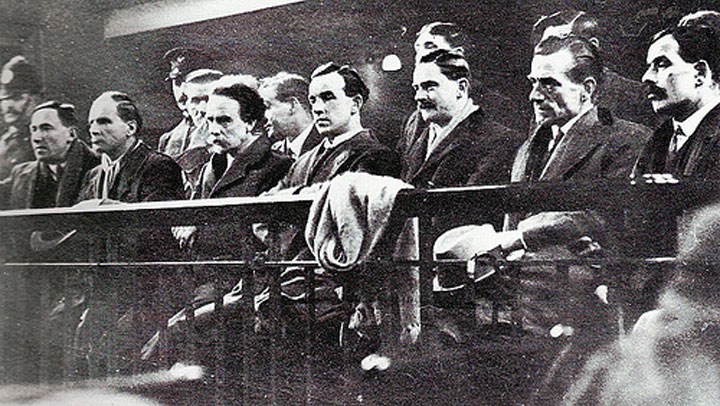
The accompanying photographs illustrate my point. Two were taken in 1919 at a rally attended by an estimated 90,000 men and women in Glasgow, Scotland, demonstrating their support of the campaign for a shorter working week and better conditions for workers. Unfortunately the police panicked and officials sent in tanks and soldiers to the city centre, fearing that the protests would lead to revolution and resulting in the Battle for George Square. The first image shows crowd members raising the red flag, the second Government tanks on the streets. The third records the trial of the Red Clydesiders.

Battle for George Square pictured in Glasgow, ScotlandKeeping The Grapes of Wrath Fresh Beyond School

As far as I am aware, no in-depth study exists of the Scottish links that became so apparent to me in my reading of Steinbeck. One thing that I think prevents many young people from appreciating Steinbeck’s work in Scotland is that he is required reading in many schools. Being forced to read something in the school environment is not, in my opinion, conducive to personal enjoyment.

I speak from experience. Almost 25 years after leaving school, I am still reluctant to get better acquainted with the works of Shakespeare! Not that Steinbeck or Shakespeare shouldn’t be taught in schools. To the contrary, I think both writers ought to be required reading. The question is whether the teacher’s enthusiasm becomes contagious, inspiring students to continue reading beyond the required introduction and the boundaries of the classroom.

Lessons from a Glasgow, Scotland, Bookstore

I am not alone in this belief. While browsing in a bookshop for Steinbeck titles after finishing The Grapes of Wrath, I got to speaking to with a store assistant. She had been put off from delving further into Steinbeck by being forced to read Of Mice and Men in school. Reversing the usual customer-advisor role relationship, I spent the next few minutes convincing her of Steinbeck’s artistic merit and persuading her to give him another chance! I bought The Winter of Our Discontent that day but haven’t been back to the bookstore to ask if she did. Meanwhile I’ve almost persuaded myself to give Shakespeare a second try.

Shakespeare may be English, but Steinbeck was Northern Irish on his mother’s side. Her family name of Hamilton is Scottish in origin, and seems likely that her ancestors arrived in Northern Ireland from Scotland sometime during the 18th century. Less certain is whether the spirit of John Maclean and the Red Clydesiders—or earlier Scottish movements like the Radicals of the 1820s—directly influenced Steinbeck’s fiction. What is undeniable, however, is the writer’s interest in Scottish affairs.

Trial of the Red Clydesiders pictured in Glasgow, ScotlandFrom Robert Burns to The Grapes of Wrath

Steinbeck’s February 1964 letter to Jacqueline Kennedy suggests the author’s sense of attachment to the homeland of his Hamilton ancestors and his familiarity with its history: “You talked of Scotland as a lost cause and that is not true. Scotland is an unwon cause.” Speaking in the spirit of Steinbeck’s statement, Alex Salmond, the First Minister of Scotland, noted that “every society is an unwon cause – the struggle for fairness, equality, tolerance, rights of free speech and thought – these are struggles which are never won – they require constant vigilance and courage.”

But Steinbeck’s books also show Scottish influence. His appropriation of the Scottish poet Robert Burns for the title of his novel Of Mice and Men conveys Steinbeck’s theme, along with a connection to Scottish populism. Like Steinbeck’s novel, Burns’ short poem “To A Mouse” reflects both compassion for humanity and uncertainty about the future. Ma Joad, the strong maternal figure in The Grapes of Wrath, is a recognizably Scottish type. Such women became a feature of the working class during the 1920s and 30s, particularly in the mining communities around Glasgow, Scotland, where large numbers of working men were flung onto the unemployment scrapheap, requiring wives and mothers to hold households together through the crisis that followed.

Support for My Steinbeck Journey in Search of Scotland

In the coming months, I would like to explore the similarities between the thinking of John Steinbeck and what I see as the Scots experience, building the case for the influence of Scottish history and values in the writer’s fiction. If I can find the necessary financial support, I will also gauge the mood of modern Scotland as the Scots people decide whether to reclaim their national independence. In September 2014, a general referendum will determine whether Scotland will become an independent nation or remain part of the United Kingdom. (Perhaps not coincidentally, Glasgow, Scotland, will host Britain’s Commonwealth Olympics in 2014.)

In 1960, Steinbeck set out across the United States to learn more about his country at the beginning of a the last decade of his life. For my part, I would like to learn more about my country as we approach a crucial point in the evolution of our identity, and to discover whether the Scottish traits I recognise in Steinbeck’s characters survive in the land of my birth. Are the Scots people up to the challenge of creating a fairer society? Are Tom Joad, Jim Casy, and Jim Nolan still to be found among the two-million-person population of Greater Glasgow, Scotland, and other parts of my country? It’s an ambitious but timely project—one that I look forward to beginning once I’ve identified private sponsorship or public financial support for my Steinbeck-Scotland journey.

Route 66 Features Added to Steinbeck Country App

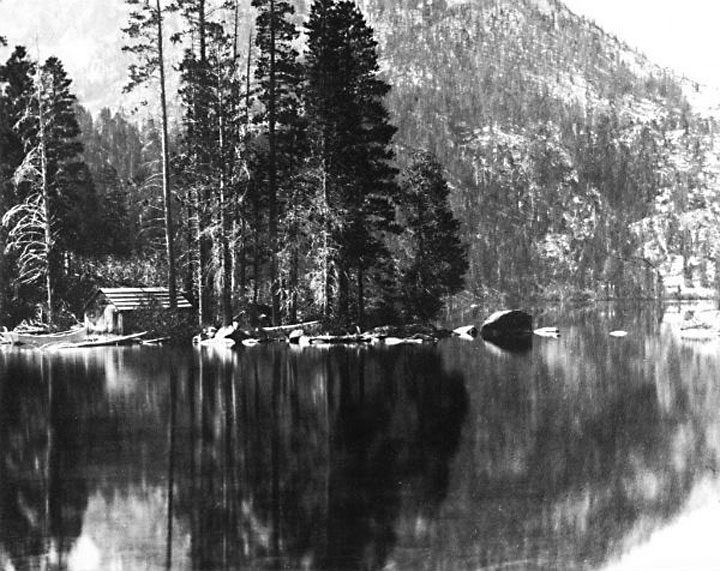
Cascade Lake, Tahoe, photo, a pre-Grapes of Wrath image on Steinbeck Country appThe Steinbeck Country & Beyond app—published by Windy Hill Publications in collaboration with the National Steinbeck Center—has been updated to include new photographs and additional entries about Route 66, the road followed by the Joad family in The Grapes of Wrath.

But the most unusual image added to the app is an historic view of the caretaker’s cabin at Cascade Lake near Lake Tahoe, where Steinbeck completed work on his first novel, Cup of Gold, a decade prior to The Grapes of Wrath. Although the cabin was removed some years ago, the current owners of the property provided the historic black-and-white photograph. Permission to reproduce it in the app was granted by the rights owner, photographer James Hill of Tahoe City, California.

Timed to coincide with the National Steinbeck Center’s upcoming Route 66 road trip along the “mother road and the road of flight” taken by Depression Era migrants to California’s Promised Land, three new entries cover communities along Route 66 described in The Grapes of Wrath. Part I covers Oklahoma; Part II covers Texas, New Mexico, and Arizona; and Part III lists California locations mentioned in The Grapes of Wrath.

A free version of the app describing approximately 200 sites worldwide associated with John Steinbeck’s life and work is distributed by Sutro Media through the iTunes App Store. It is also available for Android systems from Google play. For more information visit the app’s website.

Why Did George Orwell Call Steinbeck a Communist?

Steinbeck's Cold War Russian Journal Made Orwell Suspect He Was a CommunistWhy did George Orwell put John Steinbeck’s name on the list of “crypto-communists” he kept in his  notebook while writing 1984, his Cold War classic about totalitarian England under a Stalinesque Big Brother? As the troubled alliance between the USSR and the Free World collapsed following World War II, confirming Orwell’s deepest doubts and deadliest anxieties about Stalinist dictatorship, Steinbeck was living alone in California, dealing with personal depression, divorce,  and the death of Ed Ricketts, while Orwell worked frantically to finish 1984  on a remote island in Scotlandfilling his notebook with the names of public figures he considered potential collaborators in the Stalinist invasion he feared. Why was the author of The Grapes of Wrath, Bombs Away, and The Moon Is Down among those suspected by Orwell of being fifth-columnists for the communist cause in England and the United States?

Parallel Lives for Two World War Writers

In their personal lives and political views Orwell and Steinbeck weren’t so different, despite Orwell’s distinct Englishness and Steinbeck’s individualistic Americanism. Born too late to fight in World War I, their paths could have converged in London during the darkest days of World War II, though a meeting was unlikely for reasons that will become clear. As adults who came to age following World War I, each writer defied family expectations, rejected their Anglican faith, and dropped out of school to gain real-life experience for their writing among working class people during the turbulent period between 1919 and 1939. Both became pro-labor leftists in the 1930s and attempted, without success, to enlist in active service when World War II began. Both did their part in the world war against fascism using their best weapon—words.

Like George Orwell, John Steinbeck was an urban liberal activist with small-town conservative roots.

Like George Orwell, John Steinbeck was an urban liberal activist with small-town conservative roots. As a Stanford student following World War I, he witnessed America’s Big Red Scare, when hysteria about Bolsheviks, blacks, and labor unions created what Frederick Lewis Allen called a “reign of terror” by the federal government and local vigilante groups. When Red-Scare tactics were employed against Steinbeck following The Grapes of Wrath, the writer complained to the Roosevelt administration, incurring the wrath of J. Edgar Hoover, director of Roosevelt’s newly named Federal Bureau of Investigation. In post-World War II America, Steinbeck’s celebrated liberalism remained part of the public image of California’s famous pro-democracy writer. Yet George Orwell—a communist-inspired socialist with political views left of Steinbeck’s—accused Steinbeck of being the communist when the Cold War began. What change caused this charge?

Dangerous Developments in Post-World War II Events

George Orwell certainly understood the potential consequences of his Cold War list of “crypo-communists.” Wounded in 1937 while fighting with English volunteers against Franco’s fascists, Orwell was better educated and more experienced in European politics than Steinbeck, an American democrat who denied ever being a socialist or an –ist of any kind. Betrayed by Stalinist spies embedded in the anti-Franco coalition, Orwell barely escaped from Spain with his life. Who new better than Orwell the cost of being secretly accused by former comrades of taking the wrong side in an internecine struggle for partisan dominance? If Orwell’s list of suspected communists became public when the Cold War turned hot, as Orwell anticipated, those he named —including Steinbeck—could be expected to pay a price.

If Orwell’s list of suspected communists became public when the Cold War turned hot, as Orwell anticipated, those he named —including Steinbeck—could be expected to pay a price.

Why did George Orwell accuse John Steinbeck of sympathizing with Cold War Stalinism despite his own experience 10 years earlier? Part of the answer can be explained by certain elements of Orwell’s peculiar personality—extreme partisanship, English parochialism, and literary pique. As a professional book reviewer, Orwell disparaged American writing, including Steinbeck’s. His English pride was hurt by America’s rising dominance following World War I and Roosevelt’s treatment of Churchill in the closing days of World War II. His political partisanship led to paranoid illusions about the motives of opponents, particularly those within his own party. But there were more likely American writers for George Orwell accuse of being fifth-columnists for communism in the United States. What did he chose Steinbeck, whom he probably never met? Armchair psychology and what-if history aren’t always helpful, but a bit of both is required to answer this under-asked question.

Pre-World War I Babies; Pre-World War II Adults

George Orwell and John Steinbeck were born within a year of one another, middle-class children of dominant mothers and distant fathers who displayed an early aptitude to act out for the benefit of family and friends. As a boys both were bright, independent, and inventive—indulged by doting mothers and by sisters with whom they remained close. Like Orwell, Steinbeck grew up in domestic security, surrounded by hills and fields and the animals he loved. A restless college dropout, Steinbeck bummed his way to New York to haul cement and work as a reporter after digging ditches and picking crops back home. Like Steinbeck, Orwell was restless in school. Bored by life at Eton, his failure to study nixed his chances for the scholarship to Oxford or Cambridge his parents expected him to win. Enlisting at 18 in England’s Imperial Police, he was keeping an uneasy post-World War I peace in colonial Burma during the years Steinbeck dropped in and out of Stanford and worked as a day laborer with the Salinas Valley’s multicultural farm workers.

George Orwell and John Steinbeck were born within a year of one another, middle-class children of dominant mothers and distant fathers who displayed an early aptitude to act out for the benefit of family and friends.

By the late 1920s, Steinbeck was a jobless writer living in San Francisco with an unsuccessful first novel. During the same period, Orwell was washing dishes in Paris and harvesting hops in England, collecting material for Down and Out in Paris and London, his first book. Meanwhile Steinbeck married a freethinking leftist who introduced her husband to local labor organizers agitating for better conditions for field workers and Orwell married a brave socialist who joined him on the fighting front in the Spanish Civil War. Orwell’s wife died in 1945 during a botched hysterectomy. George Orwell wasn’t at her side. John Steinbeck and his wife divorced in 1943. She survived the marriage, but probably had a similar procedure at her husband’s insistence before it ended. Orwell remarried in 1949, shortly before his death. Steinbeck in 1950, the year Orwell died.

Why George Orwell and John Steinbeck Failed to Meet

Steinbeck published The Grapes of Wrath shortly before World War II erupted in Europe. It was his eighth book and became a bestseller at home and abroad. George Orwell published Coming Up for Air, his seventh, later the same year. It sold badly, both in England and in America. Ill and unfit for duty when England declared war against Germany in 1939, Orwell joined the Home Guard and worked as a writer, producer, and broadcaster for the BBC in London through 1943. When Hoover’s files on Steinbeck prevented him from getting a commission after America entered World War II, Steinbeck—like Orwell—put his writing in his nation’s service producing literary propaganda until he was cleared by his government to report on the war in 1943.

If the gods meant for George Orwell and John Steinbeck to meet, 1943 was their moment.

If the gods meant for George Orwell and John Steinbeck to meet, 1943 was their moment. Both writers were living in London during the early months of the year, socializing with foreign figures and writing for domestic consumption. But the 41-year-old American and the 40-year-old Englishman moved in alien worlds, distanced not by language or belief but by literary and cultural politics across the deepening Anglo-American divide. Orwell was an internationalist, a journalist who insisted that all prose—including fiction—is political. He disliked Huxley, Auden, and Isherwood, English writers of his generation who moved to America in the decade before World War I, and he considered American writers like Lewis, Anderson, and Steinbeck reactionary because their subjects were regional in focus. Chauvinistic to his core, Orwelll never traveled to America, criticized American consumerism, and publicly disparaged the decadent culture of the country he refused to visit. He also kept literary grudges, and The Grapes of Wrath had been a sensation.

Like ships passing in a storm, Orwell and Steinbeck were in London at a crucial moment without leaving a record of ever meeting. Both men were permanently changed by their World War II experience, and both went on to write books of continuing popularity that reflected the transformation produced by hot and cold world war in their political thinking. But the story behind Orwell’s accusation that Steinbeck was a communist didn’t end with World War II.

Read more in Animal Farm, 1984, and Steinbeck’s Russian Journey.

Animal Farm, 1984, and Steinbeck’s Russian Journey

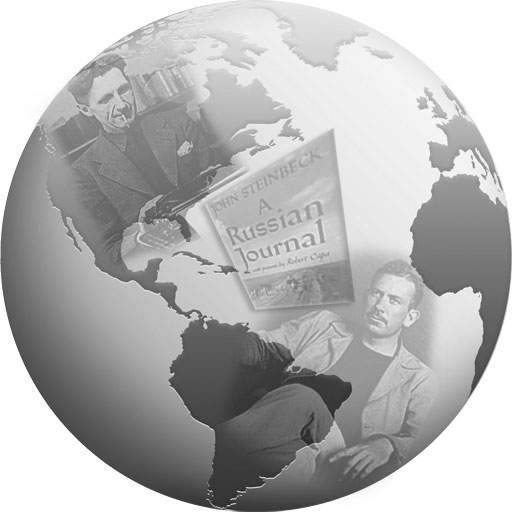
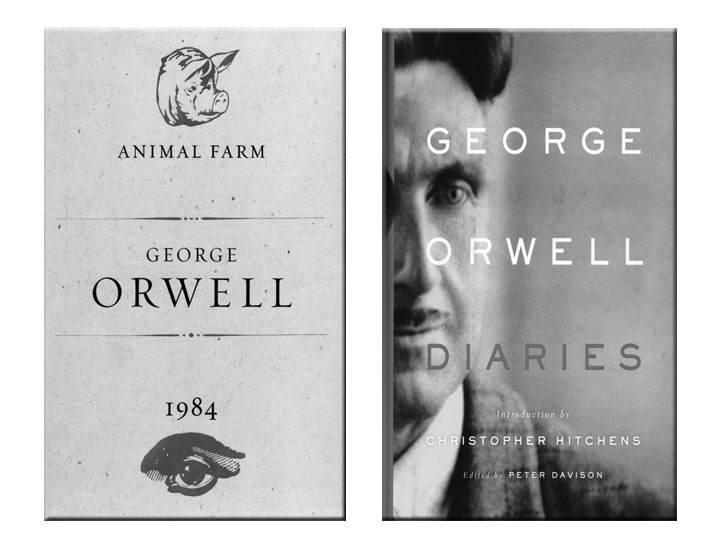
Orwell's Animal Farm, 1984, and Diary Selection Book CoversThree books published between 1945 and 1949—George Orwell’s twin tales of totalitarian tyranny, Animal Farm and 1984, and John Steinbeck’s collaboration with Robert Capa, A Russian Journal—help explain why Orwell accused Steinbeck of being a “crypto-communist” in 1948.  Orwell’s caustic critique of Stalinist state communism made Animal Farm and 1984 instant classics.  Steinbeck’s friendly focus on individual Russians in his text for the photos of Robert Capa humanized the USSR. The close chronology and contrasting content of Animal Farm, A Russian Journal, and 1984 suggest that Orwell singled out Steinbeck for reasons more troubling than literary pique or anti-American resentment.

Animal Farm Anxiety

With characteristic irony Orwell subtitled his 1945 novel Animal Farm a “fairy story.” As a result Orwell’s manuscript was turned down by the Dial Press on the grounds that Americans weren’t buying children’s books. Editors in England were equally obstinate, but for political, not literary, reasons. Their motives were mixed, to put it mildly.  Orwell’s London publisher Victor Gollancz—an unrepentant pro-Stalinist—deeply disliked Orwell’s depiction of politburo pigs exploiting sheep-like proletarians. T.S. Eliot—the Anglo-American editor at Faber & Faber who turned down Orwell’s first novel as pro-proletarian propaganda—rejected Animal Farm because it appeared to praise Trotsky.

In an act of semi-official censorship, a senior official in the British Ministry of Information (later exposed as a Soviet spy) warned London publishers not to accept Animal Farm because Stalin was England’s ally and publication could harm the war effort. As Russell Baker notes in his preface to the edition of Animal Farm published in America, the year Orwell wrote Animal Farm, “even conservatives were pro-Soviet” within England’s ruling class. Orwell neither forgave nor forgot, and 1943—the year he might have met Steinbeck but didn’t—marked the beginning of his obsession with writers, politicians, and snobs he found guilty of defending Stalin beyond the dictator’s past-due date.

Orwell neither forgave nor forgot, and 1943—the year he might have met Steinbeck but didn’t—marked the beginning of his obsession with writers, politicians, and snobs he found guilty of defending Stalin beyond the dictator’s past-due date.

Initially released in 1945 in a short print run by a small English press, Animal Farm was a bestseller on both sides of the Atlantic. Regular readers got the point missed by Eliot and Dial’s editors, and the allegory of Stalinist pigs and proletarian sheep made Orwell famous wherever it appeared. A group of exiles from Ukraine, the agricultural Russian heartland ravaged by a decade of famine and war, were among the book’s earliest fans. Understanding  Orwell’s anti-Stalinist message from painful personal experience, they contacted the writer, who allowed them to publish Animal Farm without charge and wrote an introduction to the Ukrainian edition.

Animal Farm was Orwell’s first bestseller, and his advance amounted to $2,000 in today’s currency. Cannery Row, published at virtually the same time, was Steinbeck’s fifth or sixth bestseller, as Orwell was painfully aware. Described by one critic as a lighthearted confection with a poison center, Cannery Row is the antithesis of Animal Farm in purpose, point, and politics. Although both books are parodies meant to make readers laugh, Steinbeck wrote Cannery Row as an entertaining diversion for war-weary Americans. Beneath its sardonic surface, Animal Farm delivers a dire warning about conditions in Europe under fascism and communism: Contemporary life is like a farm. Totalitarians are pigs and you sheep are fools to follow them.

Steinbeck’s Russian Journey with Robert Capa

Orwell  turned down invitations to visit the United States and never traveled to the Soviet Union, the subject of Animal Farm and 1984 and the cause of division among socialists following Stalin’s show trials and pact with Nazi Germany. When John Steinbeck visited Russian with his first wife in 1937, Orwell was fighting alongside his wife as an anti-Franco volunteer in the Spanish Civil War. In London six years later, Steinbeck became friends with Robert Capa, the photographer who accompanied him when he returned to Russia (without his second wife) in 1947. A Hungarian emigrant to France, Robert Capa—like Orwell—was on the scene during the savage civil war in Spain, photographing scenes that made him famous.  Like Steinbeck, Robert Capa was self-invented, sponataneous, and unconstrained by social boundaries or orthodoxy—a better match for Steinbeck than Orwell had the writers met. The Eton-educated Orwell, born Eric Blair, was an intellectual, a partisan, and a bit of a prig.

The Eton-educated Orwell, born Eric Blair, was an intellectual, a partisan, and a bit of a prig.

A Russian Journal was published in 1948—text by John Steinbeck, images by Robert Capa—as Orwell was completing the first draft of 1984. To Orwell’s likely dismay, Steinbeck and Capa chose to focus on personal portraiture rather than group context in a Russian snapshot where politics are kept (mostly) out of the frame and individuals dominate the picture. Like the Joads, the Ukrainian farmers who extend hospitality to Steinbeck and Capa are fully-realized fellow beings, not proletarian symbols displayed against an Orwellian landscape. State-planned famine, Soviet show trials, and Stalinist treachery in Spain soured Orwell on the Soviet experiment earlier than other English socialists. Steinbeck’s characteristically American failure to denounce Stalin’s sins while praising Russian virtue must have seemed unforgivable, given what Orwell knew and when he knew it.

1984 and Beyond

The political allegory of Animal Farm morphed into futuristic nightmare in 1984, Orwell’s last and greatest book. Originally titled “The Last Man in Europe,” his story began to take shape in 1946 as the Iron Curtain fell across Europe and the Cold War ended Stalin’s temporary alliance with England and the United States. Using his royalties from Animal Farm, Orwell rented a remote house on an island off the northwest coast of Scotland, where he completed the final version of 1984 in 1948. Following a course strikingly parallel and opposite to Orwell career almost to the end, Steinbeck was living in self-imposed isolation in California, depressed by divorce from his second wife, the death of his best friend, and disparagement by New York’s literary elite. Whether Steinbeck read Animal Farm or 1984 during this period is unclear. But Orwell still practiced literary criticism, and it seems certain he was reading Steinbeck.

Steinbeck recovered and remarried in 1950, the year that Orwell—also remarried—died from tuberculosis. Diagnosed in 1948, Orwell’s disease was successfully treated with streptomycin, a still-scarce wonder drug invented in America and procured for Orwell by David Astor, the wealthy English son of American-born parents. Another friend named Richard Rees was at Orwell’s side when the drug and the author’s health failed in 1949, checking Orwell into a private sanitorium where they talked together about life, politics, and the list of communist sympathizers the writer was keeping in his notebook. According to Rees, his friend was “very weak, though mentally as active as ever.” In other words, Orwell knew what he was doing when he wrote  Steinbeck’s name in the list of communist sympathizers the authorities should be watching.

Orwell knew what he was doing when he wrote Steinbeck’s name in the list of communist sympathizers the authorities should be watching.

According to Orwell biographer Michael Shelden, it was “a random list which mixes very famous personalities with obscure writers, and much of it is based on pure speculation.” Included with Steinbeck are two American artists of comparable celebrity: the expatriate singer-actor Paul Robeson and Orson Welles, creator of Citizen Cain and (like Steinbeck) outspoken critic of William Randolph Hearst and other demagogues of the Cold War American right. But most of Orwell’s suspects were English. Among them: Nancy Cunard, the socialist shipping heiress; C. Day Lewis, the future Poet Laureate and father-to-be of Daniel Day Lewis; Michael Redgrave, the knighted actor who founded a flourishing dramatic dynasty; and Britain’s perennial socialist playwright and journalist, George Bernard Shaw. Good company for a writer like Steinbeck, who enjoyed interesting associates, even when imaginary.

Orwell almost took his private list of suspected communists with him—but  not quite—to his grave. The story of its survival begs an important question for Steinbeck lovers today: Was there anything more to Orwell’s accusation against Steinbeck than anti-Stalinist partisanship, anti-American parochialism, and professional pique? Seeking a higher authority, I turned to my late friend Christopher Hitchens, Orwell’s fellow socialist, disciple, and ardent defender.

Read more in Author Christopher Hitchens Defends Orwell’s Accusation.

Author Christopher Hitchens Defends Orwell’s Accusation

Why Orwell Matters, a Book by Christopher Hitchens, This Blog Writer's FriendWhen Winston Churchill described the Soviet Union as dropping an Iron Curtain across Central Europe his speech to an American audience in 1946, George Orwell was living in London and imagining a future England under a Stalinist dictator. From Orwell’s paranoia about the Soviet Union came his masterpiece 1984. A less fortunate outcome was a set of accusatory, argumentative letters, diaries, and notebooks produced during the four years of Orwell’s remaining life, including a list of 100 or more suspected “crypto-communists” such as John Steinbeck. The late author Christopher Hitchens, Orwell’s intellectual heir and ardent defender, provided insights into the writer’s mindset in Why Orwell Matters, a convincing argument for Orwell’s continued relevance, despite lapses of judgment like the paranoid list. My friend Christopher Hitchens died in 2011. I regret now that I never asked him about Orwell’s list while he was alive.

Why Christopher Hitchens Matters

I met Christopher Hitchens while moderating a debate about socialism during the dying days of the old Soviet Union. The Iron Curtain was falling throughout Europe, and the debate organizer explained that the challenging case for socialism would be made by Christopher Hitchens, an English-born journalist whose name was new to me. Trained in political debate at Cambridge, Christopher Hitchens rarely lost an argument on any subject that engaged his interest, including democracy movements behind the Iron Curtain, post-Soviet Union U.S. politics, and the questionable existence of God. I learned this in the course of a friendship that lasted until his much too early death.

Like Orwell, Christopher Hitchens was a master of irony, irreverence, and oxymoron. A loyal friend, he was relentless in print but respectful in person. Like Orwell, he remained faithful to his early socialist ideals while criticizing communism as it developed in the Soviet Union and its Iron Curtain satellites. He shared a tough, pared-down liberalism with Orwell and (I believe) with Steinbeck as well. Its basic principles (in my own words) are relevant to the case of Orwell vs. Steinbeck:

The Seven Laws of Liberalism

* Freedom is precious.
* Truth is objective.
* Reason is essential.
* Every individual has value.
* No authority is infallible.
* God is debatable.
* History happened.

Ten Questions for Christopher Hitchens

Liberal ideals inform everything Christopher Hitchens wrote, including his short book about Orwell. I find the same values in Steinbeck, a writer of fiction less partisan or politically sophisticated than either Englishman. Orwell accused Steinbeck of favoring the Soviet Union over democracy, and neither Hitchens nor Orwell acknowledged Steinbeck’s characteristically American liberalism. In compensation for their failure, here are the questions I would ask Christopher Hitchens, Orwell’s finest defender, if I still had the chance :

1. Like Steinbeck, Orwell was a religious skeptic who clung to the King James Bible and echoed liturgical language in the cadence of his prose. Like Steinbeck, Orwell requested and received a Church of England funeral. What should we make of this paradox in the behavior of these profoundly lapsed Anglicans?
2. Like Steinbeck, Orwell was an empiricist who preferred evidence over theory and was once described as having too much common sense to be  interested in philosophy. Yet Steinbeck’s thinking about teleology and group behavior reflect similar ideas in Orwell’s social writing. What meaning can we take from this coincidence in the thinking of these covert philosophers?

Orwell was an empiricist who preferred evidence over theory and was once described as having too much common sense to be  interested in philosophy.

3. Like Steinbeck, Orwell was an anti-imperialist democrat who distrusted centralized power. This position was well-established in both writers by 1943, when each was in London. Yet I find no record that they met when they had the opportunity. What conclusion can be drawn from Orwell and Steinbeck’s failure to connect?
4. In your book you describe Orwell as “a natural Tory.” Like Steinbeck, he held old-fashioned ideas about private ownership, self-sufficiency, and family loyalty absorbed from his upbringing in a small rural town. Yet both writers remained pro-labor, small-d democrats throughout their lives. What can be inferred from this inconsistency of liberal and conservative values?

Like Steinbeck, Orwell was an anti-imperialist democrat who distrusted centralized power.

5. Unlike Steinbeck, Orwell never visited the Soviet Union. In your book you explain that Orwell “never went through a phase of Russophilia or Stalin-worship or fellow-travelling.” What conclusions can we draw from Orwell’s distant opposition to the Soviet Union and his reaction to Steinbeck’s journey behind the Iron Curtain?
6. Like Steinbeck in Vietnam, you supported America’s invasion of a foreign country, and you became an American citizen in an act of solidarity with the administration of George Bush. Unlike you, Orwell disliked America and Americans, including Steinbeck. Yet he never visited the America. What motivated Orwell’s animosity-from-a-distance toward the United States?

Orwell never went through a phase of Russophilia or Stalin-worship or fellow-travelling.

7. Unlike Orwell, Steinbeck resisted criticizing other writers in print. Orwell publicly denigrated American regionalists like Steinbeck as reactionaries by definition, and he disparaged Steinbeck’s work in his private writing. What motivated Orwell’s public criticism and private doubts about John Steinbeck?
8. Orwell’s Cold War list of “crypto-communists” included pro-Soviet Union American politicians such as Henry A. Wallace and Claude Pepper, despite their anti-imperialist, pro-labor domestic positions (also Steinbeck’s). Was there more to Orwell’s suspicions about these politicians than their support for the Soviet Union?

Unlike Orwell, Steinbeck resisted criticizing other writers in print.

9. Besides Steinbeck, Wallace, and Pepper, Orwell’s list included Charlie Chaplin, Paul Robeson, and Orson Welles. Yet each shared Orwell’s distrust of reactionary media moguls like Citizen Cain—William Randolph Hearst. Why did Orwell single out Steinbeck, Robeson, and Welles in his list of Iron Curtain sympathizers wihtin the United States?
10. Like Steinbeck, Orwell was deeply attracted to the ficton of Jack London, whose 1906 novel The Iron Heel—like Aldous Huxley’s Brave New World—clearly influenced the writing of 1984. Yet Steinbeck’s 1942 anti-fascist piece, The Moon Is Down, apparently lacked similar appeal for Orwell. In your book you note that Orwell lashed out at other writers—including Huxley—but apologized after the fact. Did Orwell have similar second thoughts about Steinbeck before he died?

How the Soviet Union Became Orwell’s Obsession

Christopher Hitchens notes that while working for the BBC, Orwell included “the grittier work of James T. Farrell, John Steinbeck, and Archibald MacLeish” in a radio program about new writers. Orwell’s scripts were scrutinized by BBC censors to avoid offending listeners, and his on-air words didn’t always reflect his real opinion. This was clearly the case with his views on Steinbeck, who is described in Orwell’s diary as a “spurious writer” and “pseudo-naif.” Unfortunately, Steinbeck is only one example of Orwell’s muddled opinions about literary quality. In a notorious case of poor judgment, he publicly criticized W.H. Auden’s “September 1, 1939” for lack of authenticity, credibility, or accuracy in its description of the Spanish Civil War. Today Auden’s anti-fascist masterpiece is considered by many his greatest poem.

Steinbeck is described in Orwell’s diary as a spurious writer and pseudo-naif.

Orwell’s public muttering about Auden provides another clue to his disapproval of Steinbeck. Like Aldous Huxley before him (and Christopher Hitchens years later), Auden emigrated to the United States, arriving in 1939 with the English writer Christopher Isherwood. Like Huxley and Hitchens, Auden and Isherwood were attracted by certain American freedoms—including sex—not found in England. Unlike Christopher Hitchens and George Orwell, both Auden and Isherwood were gay—card-carrying members of the “pansy left” publicly disparaged by Orwell. Orwell’s anti-American bias and anti-gay prejudice combined in his attack on Auden. In the case of Steinbeck, “anti-Soviet Union anti-Americanism” appears to have been sufficient cause for censure.

Why Christopher Hitchens’ Defense of Orwell Falls Short

In Why Orwell Matters, Christopher Hitchens defends Orwell’s list of “crypto-communists” as a harmless intellectual exercise, a game of “guessing which public figures would, or would not, sell out in the event of an invasion or a dictatorship.” He surmises that Orwell’s conservatism about sex in general and gay sex in particular was the result of Orwell’s boyhood experience as a student at St. Cyprian’s, a Dickensian hellhole where bullying, beating, and buggery were routine. But Orwell went on to Eton, where he perfected his French under Aldous Huxley and began his lifelong friendship Cyril Connolly, an openly ambisextrous editor who proved helpful to his career.

Christopher Hitchens defends Orwell’s list of crypto-communists as a harmless intellectual exercise, a game of guessing which public figures would, or would not, sell out in the event of an invasion of a dictatorship.

In the end, Christopher Hitchens’ argument fails to exculpate Orwell. Of  Orwell’s “crypto-communists,” he explains that “while a few on ‘the list’ were known personally to Orwell, most were not,” concluding that Orwell’s charge against people he didn’t know didn’t make him a “snitch.” Illiberal, inconsistent, and unconvincing. The world of 1984 is crawling with snitches whose testimony leads to torture and death at the hands of Big Brother. Every individual has value, truth is objective, and history happens. Orwell showed his list naming Steinbeck to influential friends, one of whom worked for an agency of government with the Orwellian name “Information Research Department.”

I agree with Christopher Hitchens that George Orwell still matters. But not always for the right reason. Unlike my late friend, Orwell was prejudiced against gays, Americans, and anyone he suspected of sympathy with the Soviet Union. Though if he hadn’t attacked Steinbeck, even that might not matter.

The Philosophy of Our Discontent

Image of title page from The Winter of Our DiscontentNovels by Steinbeck communicate differently to different eras, and The Winter of Our Discontent is no exception. Among all the books by Steinbeck that I have read, it is arguably the most philosophical and the least appreciated. Many critics wrote it off as the weakest of all the mature novels by Steinbeck when it was published, yet Steinbeck quotes Shakespeare in the book’s title—a sign of his seriousness and a key to his meaning—and the novel sold well despite doubtful reviews. Later readers have faulted the lack of social relevance on the scale of The Grapes of Wrath and other serious books by Steinbeck—from In Dubious Battle (where Steinbeck quotes Milton) through Sea of Cortez, the most obviously  philosophical of all the books by Steinbeck that survived his habit of aborting projects he felt were becoming shaky, stale, or redundant. Among my favorite books by Steinbeck written after East of Eden, The Winter of Our Discontent most rewards rereading as a philosophical text for our times—a monument of modern existentialism as impressive today as when it was written.

Shakespeare and Steinbeck on the Human Condition

As numerous books by Steinbeck explain, man’s moral problems never really change. Like other novels by Steinbeck—especially East of EdenThe Winter of Our Discontent is most meaningful when read as a contemporary restatement of this well-worn theme. Steinbeck’s story of greed, delusion, and dishonesty in Eisenhower’s America presents issues that precisely parallel current conditions: The payouts and game-show scandals of the 1950s and 60s are today’s privacy invasion and reality television. The hatred of foreigners by American nativists then is our fear of terrorists and illegal immigrants now. The easy resort to plagiarism depicted in The Winter of Our Discontent continues among students today, facilitated by Google and Facebook. Steinbeck quotes Shakespeare in his title for a reason. Ethan Hawley is Hamlet (yes, wrong play), his dilatory self-doubt deepened by the corruption, darkness, and betrayal growing like a Danish cancer.

The easy resort to plagiarism depicted in ‘The Winter of Our Discontent’ continues among students today, facilitated by Google and Facebook.

Three features of The Winter of Our Discontent—after East of Eden, the most autobiographical of all the surviving novels by Steinbeck—advance the book’s philosophy of existential discontent. These include (1) the externalization of the primary character’s internal process, (2) the prevalence of symbolic contrasts and dualities in other characters, and (3) the necessity of self-understanding and personal sacrifice to end cycles of social failure like that experienced by Ethan Hawley before the novel begins. Through skillful use of these materials Steinbeck captures the universal human condition in an unmistakably contemporary setting, communicating his personal anxieties about himself and the culture of his time and creating a screen upon which each of us can project our own feelings of personal failure, ambivalence, and remorse.

Three features of ‘The Winter of Our Discontent’—after ‘East of Eden,’ the most autobiographical of all the surviving novels by Steinbeck—advance the book’s philosophy of existential discontent.

As he recounts his daily thoughts and experiences in real time, Ethan interprets himself and the people around him, both living and dead. His memories of Aunt Deborah and Captain Hawley in particular serve as vehicles for his developing self-critique and his ongoing argument with contemporary culture.  Remember, Steinbeck quotes Shakespeare in the title for a reason. In doubt, dilation, and despair, Ethan is is more Hamlet than Richard. Although neither of Ethan’s dead ancestors is a Polonius, the imagined voices of his grandfather and aunt help Ethan understand both himself and his world as modes of being neither absolutely right nor absolutely wrong—a post-Polonius principle of existential ethics. Unlike Hamlet, Ethan listens, understands, and appears to think his way out of his crisis before it’s too late.

Externalizing the Inner Drama in Ethan Hawley’s Daily Life

Steinbeck externalizes Ethan’s internal drama through soliloquy, dialog, and place symbols for Ethan’s internal spaces. Ethan’s hiding place under the pier, for example, represents the secrecy of his mind, the mulling-place for his anxieties, and a means of escape from the moral pressure he experiences in his closest relationships. The grocery store where he works provides an interior stage peopled by imaginary players before he opens the door for daily business and buyers reality intrude. Of all the books by Steinbeck in which humor serves irony, The Winter of Our Discontent achieves this difficult effect the most subtly in minor scenes where Ethan is in fact but doesn’t act as if alone.  Using liturgical language, Ethan exercises imagined power over the commercial products lined up like acolytes on his shelves in a self-revealing rite of compensation for his family’s lost ownership of the store where he now clerks.

Of all the books by Steinbeck in which humor serves irony, ‘The Winter of Our Discontent’ achieves this difficult effect the most subtly in minor scenes where Ethan is in fact but doesn’t act as if alone.

Ethan’s friend Danny has his own hiding place—the old cellar where he recalls his happy childhood with Ethan before falling from grace as the town drunk. Margie Young-Hunt, too, has her symbol of escape from the boredom of daily life in Baytown, Long Island. The mirror she uses to apply her morning makeup provides time and means for self-reflection on her meaningless life and the men in it, including Ethan,  her best friend husband. Significantly, only Mary Hawley needs no hiding place. Other-directed and uncomplicated, she is a domestic type not found (by me, anyway) in the other novels by Steinbeck I’ve read.

Interpreting Dualities and Sacrifice in Novels by Steinbeck

The contrasts and dualities in novels by Steinbeck are often quite obvious. Here, too, The Winter of Discontent is no exception. Ethan’s attributes as a semi-responsible family man and quasi-productive citizen contrast with Danny’s habitual vagrancy and alcoholism. Mary’s loyalty and innocence are juxtaposed with Marjorie’s sexuality and deceit. Ethan and Mary’s children, Allen and Ellen, are polar opposites. Even Red the dog and the cat living behind the store enact a polarity of type and temperament.

But the most significant duality is represented by Captain Hawley and Aunt Deborah in relation to Ethan’s unfolding process of self-awareness. The ghost of the Captain is a pragmatic mentor figure who comes to Ethan’s aid with practical advice. Aunt Deborah is emotional, almost mystical, and encourages Ethan to seek his own answers inwardly by recalling moments of lost joy from the past. In philosophical terms, Ethan’s antithetical ancestors represent materialism and idealism, praxis and pathos, action and feeling, in forms not found in other books by Steinbeck with characters who are dead, or like the story’s dog and cat, animals.

Ethan’s antithetical ancestors represent materialism and idealism, praxis and pathos, action and feeling, in forms not found in other books by Steinbeck with characters who are dead, or like the story’s dog and cat, animals.

As with Shakespeare, Steinbeck quotes the Bible for a reason and usually a symbol. In the context of its numerous biblical references, The Winter of Our Discontent can be read as a symbolic story about man’s fall from innocence in which the warring halves of Ethan’s psyche are projected as both Adam and Eve. Are their sins visited on the Hawley children, as in the biblical account? In my reading of other novels in which Steinbeck quotes Genesis, the answer is usually yes.

When Ethan determines to accomplish his goal of reversing the decline in the Hawley family’s fortunef through will and effort—the method advised and exemplified by Captain Hawley—he avoids the irreversible corruption of spirit represented by betrayal, robbery, and suicide. But while passing Ethan by, the killing spirit touches his son Allen, a child of his decade who cheats on his essay without feeling remorse. Like other autobiographical novels by Steinbeck, The Winter of Our Discontent may also reflect the struggles of Steinbeck’s immediate family across the eternal father-son divide.

Like other autobiographical novels by Steinbeck, ‘The Winter of Our Discontent’ may also reflect the struggles of Steinbeck’s immediate family across the eternal father-son divide.

This moral chain reaction can only be broken by an act of sacrifice, another motif found in books by Steinbeck in which Steinbeck quotes the Bible to suit his purpose. Ethan’s decline began before the novel with his father’s reckless spending and his own bad investments. Caught in a crisis by bad luck and bad behavior, he struggles from the first page with growing economic insecurity—a cycle that can’t be broken until Danny becomes the living sacrifice, leaving his land to Ethan  in an act of self-expiation and self-sacrifice (Danny characters occur in earlier novels by Steinbeck, but never as an existentially convincing as in The Winter of Our Discontent.)

Why Steinbeck Quotes Shakespeare in His Titles

When Steinbeck quotes Shakespeare’s Richard III in the novel’s title, what does he want us to consider as we read? Ethan’s bad behavior, obviously—although as suggested, Ethan more resembles Hamlet than Shakespeare’s malevolent monarch. But Steinbeck’s title for The Winter of Our Discontent reminds us of the separate dilemmas faced by Danny and Mary and Margie (note the biblical names) as well as by Ethan in his Hamlet-like anguish. The evil usurper who reveals his inner thoughts in Richard III opens uses our to denote his status as king. Steinbeck’s characters are contemporary Americans, and their thoughts—like ours—are much more about me than we.

The evil usurper who reveals his inner thoughts in ‘Richard III’  uses ‘our’ to denote his status as king. Steinbeck’s characters are contemporary Americans, and their thoughts—like ours—are much more about ‘me’ than ‘we.’

The our of Richard’s discontent in the play Steinbeck quotes is isolated, the political and psychological paranoia of a one-man murder ring. In The Winter of Our Discontent, the attitude of discontent is philosophical—an existential anxiety embodied in the protagonist, his spouse, his best friend, his would-be mistress, and in the personal life of the author as well. Discontent in the play Steinbeck quotes for a reason is individual. In The Winter of Our Discontent it is dramatized as  a condition of existence for everyone involved—including us.