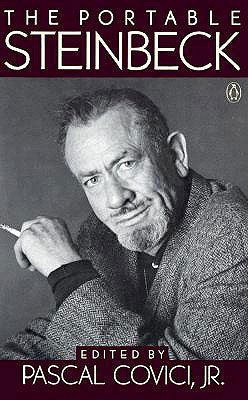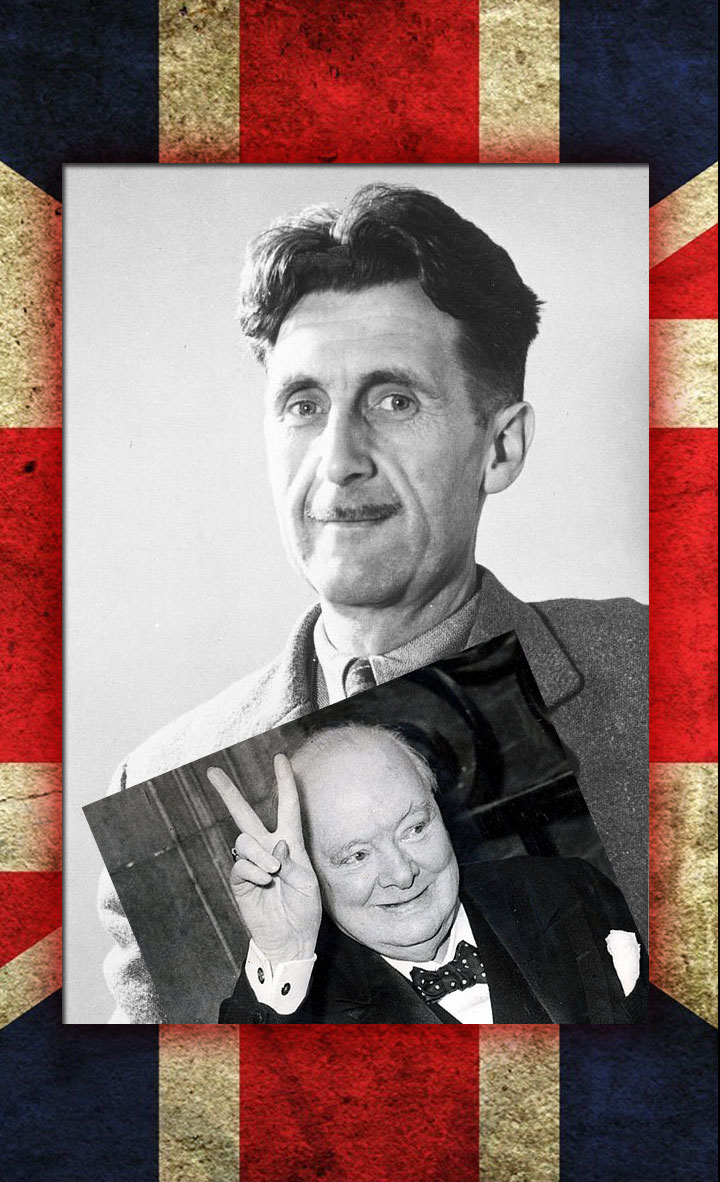
Winston Churchill, modern Britain’s greatest leader, had an American mother. Edward de Vere, the 17th Earl of Oxford, is believed by elitist Englishmen to be the real author of the works of William Shakespeare. Along with other American writers, John Steinbeck has been banished from United Kingdom schools. These outcomes have a common origin.
Was the Writer of William Shakespeare’s Works an Earl?
A recent review of the Who-Really-Wrote-the-Plays-of-William-Shakespeare theory prevalent in certain heady quarters of the United Kingdom reveals how members of the House of Lords and other English gentry-folk steadfastly refuse to believe that a country bumpkin from Stratford-upon-Avon could have created the poetry or plays attributed to William Shakespeare. From the House-of-Lords point of view, the genius behind William Shakespeare had to have been one of their own, and the Earl of Oxford is their preferred suspect. A busy school of William Shakespeare alternative biography has grown up around this notion, a United Kingdom export that has found favor with literary-minded lawyers who like to write daft books proving the case against Shakespeare’s authorship. To my knowledge, neither Winston Churchill nor John Steinbeck bought the idea. But Churchill was half-American and Steinbeck was half-Irish, both problematic from an English House-of-Lords perspective.
From the House-of-Lords point of view, the genius behind William Shakespeare had to have been one of their own, and the Earl of Oxford is their preferred suspect.
Fortunately, such House-of Lords thinking is largely confined to England, a green and pleasant land, which—if truth be known—would easily fit into the state of Wisconsin or Washington with room to spare.
The Members-Only Club at the United Kingdom’s Center
England’s small size deserves emphasis because at the crowded center of the once-great United Kingdom rests a nice little Club called London, where the people who own England live and work. For the most part they comprise a genteel alumni society of graduates from the universities of Cambridge and Oxford, neither of which William Shakespeare attended. At college they spend a considerable portion of their time learning the importance of denying one’s roots (if humble), one’s speech (if less-than-upper class), and one’s parentage (if lower than House-of-Lords). They have, to quote from a National Geographic article about Oxford University, “attended two years of higher education, and completed one year of preparing a lengthy paper about what they’ve studied, in order to become absolute snobs.” Upon graduation, they assume the confident air that England—like the United Kingdom in its heyday—is theirs by virtue of right and tradition.
For the most part they comprise a genteel alumni society of graduates from the universities of Cambridge and Oxford, neither of which William Shakespeare attended.
Like Winston Churchill, a number of these worthy Club members run successfully for political office. They also manage the nation’s finances, determine her rules and regulations, publish her books and periodicals, run her courts and culture, and decide how folks from the hinterlands like William Shakespeare eat, sleep, read, study, and are entertained. A recent report in London’s Independent newspaper detailed how those in the Club rule English affairs. Like William Shakespeare’s coarser comedies, or like John Steinbeck’s social fiction, little that occupies the attention of the humble multitude matters much to them. What isn’t in their interest just doesn’t count.
How England Sleeps: Crowding by Design
Take sleeping and driving arrangements in England, for example. Civic planners and urban architects—members of the Club—design housing for the lower orders that, by modern standards, is less than adequate. The schemes for jammed-together homes and flats are transmitted to a well-fed breed of bumpkins called Builders and Developers who, in the interest of higher profits, shrink building plans even further. Cost-cutting measures include the elimination of such non-essentials as spacious bedrooms, fitted bathrooms, insulated windows, proper heating, sufficient outlets and closets, garages with room for an automobile, and enough private space to entertain more than four guests at a time.
Civic planners and urban architects—members of the Club—design housing for the lower orders that, by modern standards, is less than adequate.
In the 1960s the Club decided that working bumpkins were cluttering the highways and that the number of cars purchased by commoners had to be controlled. Their solution? Restrict allowable garage space to one per five-person house. For new apartments, the B&D people further limited the number: only one garage per seven or eight flats. The result? Urban housing estates now look like car parks, with autos crowded onto sidewalks, lawns (those that are still left), and every inch of available road space. Even the treasured rose bushes and ubiquitous privet hedges that once graced the green heart of the United Kingdom are gone, replaced by gravel, asphalt and stones made from a product called Krazy-Pavement to provide public parking.
It’s easy to imagine what William Shakespeare would make of a “box room” scene of sleep-deprived sibling rivalry on the stage.
The average family’s private arrangements are similarly limited by design: one tiny bathroom fitted with a narrow bathtub but no shower, two modest bedrooms, and a 7′ x 8′ “box room” for the ironing board and the Hoover that doubles as a bedroom for the extra .5 child produced by the median married couple. In its report, the Independent fails to quantify the psychological effects of domestic crowding on English children, but it’s easy to imagine what William Shakespeare would make of a “box room” scene of sleep-deprived sibling rivalry on the stage.
Learning to Speak Like a Member of the House of Lords
The Independent article details the time spent at elocution lessons by upwardly mobile university students born outside the Club. Received Pronunciation—known in the United Kingdom as RP—is a style of pronunciation that, when mastered by ambitious bumpkins for public speech, proves that they were born, if not bred, to lead. We don’t how William Shakespeare or Edward de Vere sounded when they talked, but the broad vowels and clipped consonants of BBC radio commentators are the norm for today’s ruling class. No one in the United Kingdom believes this sound is God-given, but its acquisition is felt to be a sign of superiority once mastered. No one in the Club really wants to reveal his or her origins in Liverpool, Yorkshire, Lancashire, Bristol, Cornwall, Scots, Wales, Suffolk, Midlands, Newcastle, Birmingham, or London’s East End. As a result, only the standardized speech emanating from London (RP) is heard on the airwaves or in most public speech. Regional stations and local politicians may vary, but the rich linguistic diversity upon which William Shakespeare’s pointed puns depend is disappearing from England’s ear.
We don’t how William Shakespeare or Edward de Vere sounded when they talked, but the broad vowels and clipped consonants of BBC radio commentators are the norm for today’s ruling class.
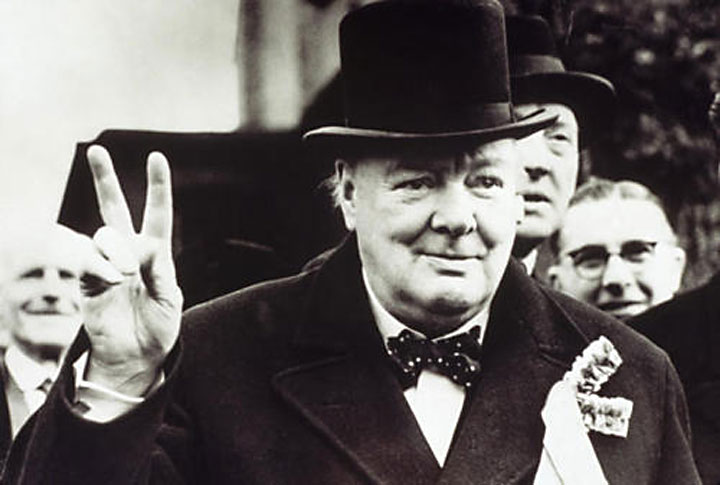
Winston Churchill was a Club member on his father’s side and overcame personal obstacles to become a forceful public speaker. But two later prime ministers who advanced from Churchill’s Conservative Party to the House of Lords—Margaret Thatcher and John Major—were famous for losing their outsider accents at university to hide traces of their non-Club origins. Thatcher’s parents operated a grocery store in Lincolnshire, far to the north of London; Major’s father puttered around the family’s minor South London residence making concrete garden gnomes. Commoners by birth, neither was ever totally accepted by the Club, and both were unceremoniously jettisoned after serving the Club’s purpose. Denying that a rustic could have written the plays of William Shakespeare is another way of making the same point.
Closing the Door on American Writers in English Schools
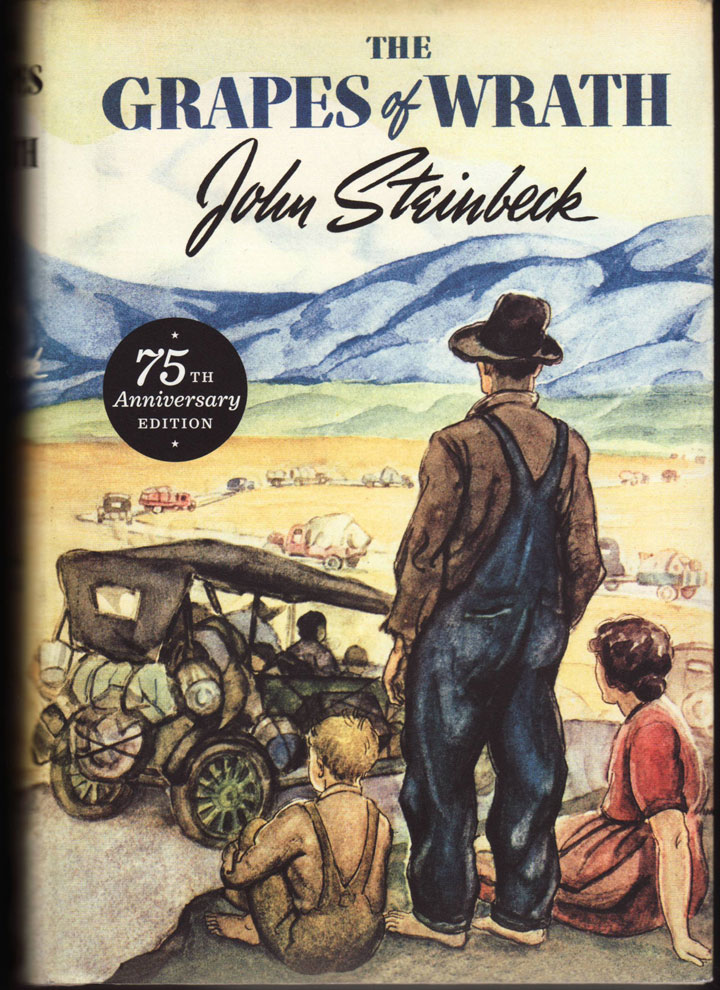
Having swapped Shakespeare for an earl, the Club’s education bureaucracy recently decided to put works by American writers—including John Steinbeck—on the Do-Not-Read list. (The education office order effects England, Wales, and Ireland, but not Scotland or other parts of the United Kingdom.) So in Great Britain, it’s out with Herman Melville, Edith Wharton, Willa Cather, Henry and Arthur Miller, and both Sinclairs—Upton and Lewis. Also banished from the classroom—despite their Pulitzer or Nobel status—are Carl Sandburg, F. Scott Fitzgerald, Sherwood Anderson, Ernest Hemingway, and Pearl S. Buck—like John Steinbeck, a double awardee.
Also banished from the classroom—despite their Pulitzer or Nobel status—are Carl Sandburg, F. Scott Fitzgerald, Sherwood Anderson, Ernest Hemingway, and Pearl S. Buck—like John Steinbeck, a double awardee.
In William Shakespeare’s sceptered isle, where a book selling five thousand copies is considered a best-seller, popular American writers like Edgar Allen Poe, J. D. Salinger, Langston Hughes, Frank L. Baum, and Kurt Vonnegut are now non grata. William Shakespeare’s sonnets are still in because their author (Edward de Vere?) was English, but those by the American poet Emily Dickinson are out. The literary pub has also closed for such rustic regulars as Jack London—like Steinbeck, a Californian—and Eugene O’Neil—like Steinbeck, half-Irish—as well as my hometown favorite, Thornton Wilder. It’s even time for T.S. Eliot, the clubbiest of Anglo-American literati since Henry James, to round up his cats and go home to St. Louis.
What Would William Shakespeare Say About the Ban?
We have no way of knowing of course—even if Shakespeare was really the Earl of Oxford—but I have my own ideas about the Club bureaucracy’s decision to drop American writers from the English-school reading list. While living in the rolling green hills of Warwickshire for a long period, I found most Englishmen to be both agreeable and sociable. But a minority viewed anyone not born in England as an intruder—particularly “overpaid, over-sexed, over-here” Americans who had overstayed the temporary welcome extended by Winston Churchill in World War II. Beginning in 1943, the villages of William Shakespeare’s island were stuffed to the scuppers with GIs being readied for the invasion of Normandy. Meanwhile, bombed-out London attracted pro-English American writers, including John Steinbeck, sent by press or government to report on the action and build confidence back home.
Beginning in 1943, the villages of William Shakespeare’s island were stuffed to the scuppers with GIs being readied for the invasion of Normandy.
But that was then. Today human nature—English nature—has returned to the pre-World War II habit of disliking the other guy because he isn’t one of us. Parts of the United Kingdom, such as Scotland, are more populist, but in England this elitist thinking is driven from the top down. Its accumulated force is powerful, supported by heavy taxes paid from the bottom up. At Westminster, the magnificent home of the Houses of Lords and Commons that together make the United Kingdom’s laws, there are 20 members-only bars subsidized by taxpayers—count them: 20—serving healthy pints of ale, generous snifters of brandy and port, and beautiful cut-glass tumblers of Scottish whiskey to insiders. According to the August 10 London Guardian, booze and food for ruling Westminster’s elite cost the British public more that six-million pounds last year, with the House of Lords imbibing the lion’s share of subsidized fare and accounting for an over-sized increase in tax-funded expenditures for lavish clubroom renovations.
The House of Lords: England Reflected in the Bar Mirror
Each of the private bars funded by the people serves one or another social class or political element exclusively. The bars maintained for the House of Lords are closed to members of Commons; those for House of Commons ministers are off limits to taxpayers. One bar tolerates visitors, but you have to be invited in by a member of the House of Commons, and it’s called The Strangers. To the House of Lords, all citizens are strangers equally. The House of Lords has 775 members, of whom 774 are white. Two-thirds attended public (in English, private) schools; 660 of them are life peers and 89 are hereditary peers; 635 of them are men, 181 women—a total (816) that doesn’t compute with the official number.
To the House of Lords, all citizens are strangers equally.
All of the private bars funded by taxpayers for the benefit of Westminster politicians allow only one or another class or political element in. Those for the House of Lords are closed to MPs from the House of Commons; those for House of Commons ministers are closed to members of the public who, in fact, pay the bills. There is one bar for visitors, but you have to be invited in by a Member of Parliament, and it’s called The Strangers. To those in the House of Lords, apparently all citizens are strangers, but there you are: that’s England for you—overwhelmingly white, over-educated at exclusive schools, and class-ridden; pampered at the top and neglected at the bottom. As noted, official figures sometimes fail to agree. Poor math or too much free booze? Whatever the cause, the notion that an English earl actually wrote the works of William Shakespeare is wacky enough, but it’s been around for some time. The banishment of American writers—including John Steinbeck—from schools in the United Kingdom is something new, and it’s totally idiotic. Winston Churchill must be turning in his grave.