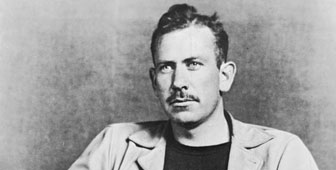
This recent TV miniseries is a superb adaptation of John Steinbeck’s intergenerational epic describing man’s responses to evil inclinations, by analogy with the Biblical Cain and Abel narrative, where Steinbeck concludes Cain is given the option to resist sin (reflected in the [mis-transliterated] word “Timshel” – ref 1). East of Eden also represents an intergenerational connection with Steinbeck’s family, as the Hamilton family parents in the book are based on Steinbeck’s own maternal grandparents. Series creator Zoe Kazan’s own grandfather, Elia Kazan, directed the 1955 movie of the book. Zoe has said she’s spent decades living with and thinking about this book.
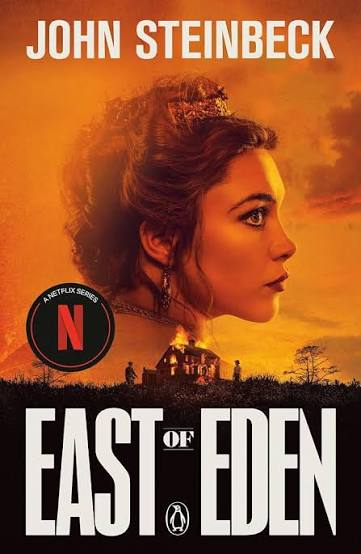
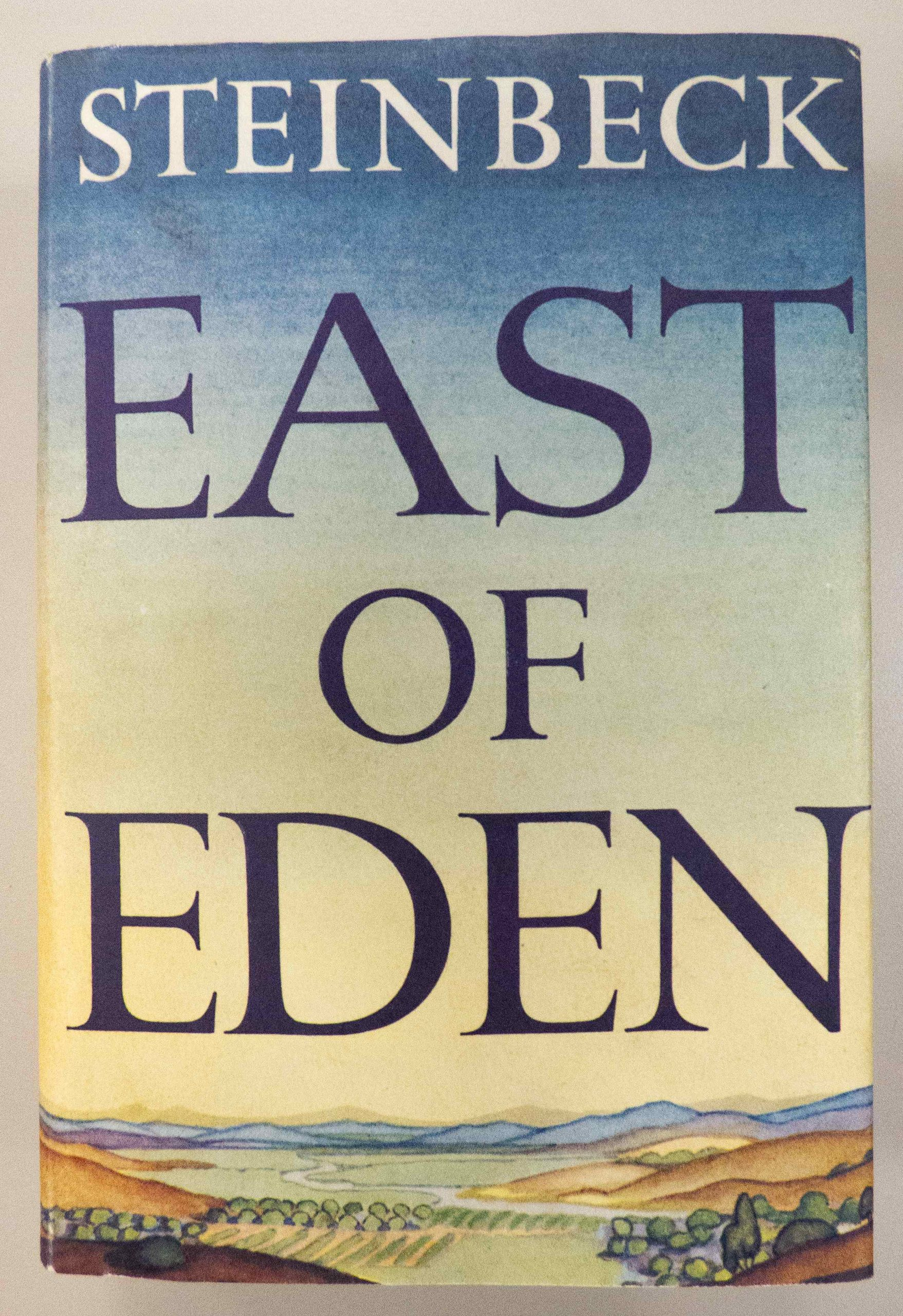
The Netflix seven-episode miniseries adaptation of East of Eden achieves an emotionally charged and moving portrayal of the essence of John Steinbeck’s monumental work, which Steinbeck himself regarded as “the first book” (saying that everything else he wrote was practice for that book).
The casting, the script, the acting, the cinematography, the lighting and the sets all work together in perfect synthesis to convey the essence of the original 1952 book; as well as the ambiance of the turn-of-the 19th to 20th century setting (including vintage buildings, automotive equipment, dark lighting, William Morris style wall decoration). The filmmakers have recreated Salinas’s surroundings at that time, even though most of the filming was reportedly done on New Zealand South Island.
Amidst this visual accuracy and comprehensive rendition of the Trask family (much of which was omitted from the 1955 movie), the series also manages to inject a more contemporary psychological interpretation and context for the behaviors of the main protagonists, which enhances its credibility for a 21st century audience (e.g. in augmenting the original book’s black-and-white presentation of Cathy Ames as purely evil, by instead also affording some insight into her motivations by suggestion of abuse suffered by her during childhood).
Some critics have complained about this saying that Zoe Kazan’s depiction of Cathy is overly sympathetic and at odds with Steinbeck’s presentation of a literary monster (ref 2) but the Zoe Kazan reinterpretation is nevertheless consistent with Steinbeck’s core theme in the book, that everyone has the opportunity for redemption in overcoming the urge to evil, no matter its origins. Affording insight into those origins perhaps serves to better help us recognize the dichotomy of choices, influenced by past and present, that faces each individual, as summarized in Steinbeck’s word Timshel.
Rather than agonizing over whether or not an artistic creation (such as this adaptation) is a mirror-accurate reflection of the book on which it is based, we should instead appreciate the end-product on its own merits. We should admire the artistic license that went into the many judgements needed to condense the 600 page magnum opus into seven wonderfully crafted, self-contained TV episodes that successfully convey the core themes of the book, whilst also captivating, entertaining, and leaving a broader audience with food for thought on the choices between good and evil.
Bravo to Zoe Kazan, Jeb Stuart, Garth Davis and Laure de Clermont-Tonnerre (directors), the cast, and the Netflix team as a whole, who brought us this great TV adaptation of East of Eden.
Dr Danny Levin, PhD, FRSC
10/8/26
Ref 1: Daniel Levin, Steinbeck Review (2015) 12 (2): 190-198
Ref 2: e.g. Inkoo Kang, The New Yorker, October 1, 2026;
Here are links to more information:
I’m a John Steinbeck Expert. This Is What I Really Think of Netflix’s ‘East of Eden’
https://www.today.com/popculture/tv/east-of-eden-netflix-steinbeck-scholars-review-rcna601682
Wyman, Lewis, “John Steinbeck: Precursors to East of Eden | Unfolding History” Library of Congress Blogs, October 8, 2026, https://blogs.loc.gov/manuscripts/2026/10/john-steinbeck-precursors-to-east-of-eden/